




Pull to refresh
Logo
Researchers take over five Treasury subdomains for $3 each

Researchers take over five Treasury subdomains for $3 each

New Capabilities

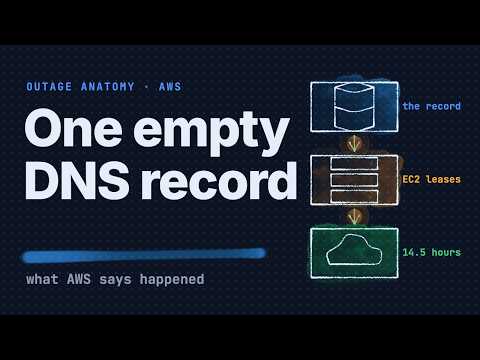
The records pointed at released AWS Elastic IP addresses; the firm found 28 hijackable domains before Amazon banned its account.

Overview

Updated 23 minutes ago

Security researchers claimed five US Treasury subdomains for $3 each. The records still pointed at Amazon Web Services addresses that had been released back to the cloud provider's pool, so whoever claimed an address controlled what the subdomain served.

The trick is an old one: dangling DNS, where a record points at a service the owner no longer controls. The cloud version is cheap and automatable, and it matters because.gov domains and HTTPS carry trust — a hijacked subdomain can host phishing, pass a certificate authority's domain check, and receive cookies scoped to the parent domain.

Why it matters

Any organization that retires a cloud server without deleting its DNS record can have its subdomain claimed by a stranger for a few dollars.

Questions about this story

Free account needed to ask — your question is kept and asked for you right after sign-up. Answers are public.

No questions yet — be the first to ask.

Key Indicators

$3
Cost to claim a hijackable address
Price of an Elastic IP that a dangling DNS record still pointed to.
5
Treasury subdomains controlled
Included ftp.treasury.gov and irssearch.treasury.gov.
28
Live takeovers found
Matches across public bug bounty scopes in a 48-hour campaign.
450,000
IP addresses cycled
Unique Elastic IPs claimed before AWS banned the account.
0.56%
Share of AWS IP space covered
Fraction of AWS's roughly 80 million Elastic IPs sampled.
80 million
AWS IPv4 addresses
The EC2 pool of public addresses the campaign drew from.

Voices

Curated perspectives — historical figures and your fellow readers.

Sign up to generate historical perspectives on this story.

Organizations Involved

Timeline

2 events Latest: Today
  1. Intruder details $3 takeover of five Treasury subdomains

    Today Disclosure

    The firm published its account of claiming 28 live records, including five at treasury.gov; the Treasury records were reported and since fixed.

  2. AWS declines to change Elastic IP policy

    Statement

    Amazon told the researchers it has no plans to change how Elastic IPs are allocated or how abuse bans are scoped.

Scenarios

1

AWS caps how many Elastic IPs an account can claim per month

Unlikely Resolves by End of 2027

Discussed by: Intruder researchers, who recommended the limit after their account was banned

Intruder proposed a monthly quota on Elastic IP allocation and organization-level abuse controls. AWS rejected both, saying the takeover depends on customer DNS records. This scenario resolves YES only if Amazon reverses that position and announces a hard cap.

2

A claimed cloud address is used in a live phishing campaign

Possible Resolves by End of 2027

Discussed by: Security researchers and the Intruder report, which described phishing and credential theft as the main risk

The report did not document any real attack. If someone repeats the sweep outside a bug bounty scope and uses a hijacked subdomain to serve a login page or collect credentials, this becomes a confirmed incident rather than a demonstration.

3

Dangling DNS stays a customer problem as AWS holds its position

Likely Resolves by Q2 2027

Discussed by: Amazon Web Services, which said the issue is customer-side

AWS treats rapid allocation and release as a policy violation but has not changed the allocation model. Under this scenario, subdomain takeover remains a known bug bounty category and organizations are left to audit their own DNS records.

Historical Context

2 moments from history that rhyme with this story — and how they unfolded.

2010s–present

Dangling DNS becomes a known takeover route (2010s)

Security researchers documented a recurring pattern: a company points a subdomain at a third-party service, then retires the service without deleting the DNS record. Anyone who can claim the abandoned endpoint can publish content on the company's domain.

Then

Researchers warned the technique could be used for phishing and credential theft.

Now

Subdomain takeover became a standard category in bug bounty programs, but fixing it still depends on each organization auditing its own DNS.

Why this matters now

The Treasury case is the same pattern, with a cloud IP address standing in for the abandoned service.

Ongoing

AWS recycles released Elastic IP addresses (ongoing)

When an AWS customer releases an Elastic IP, the address returns to a shared pool and can be reassigned. AWS often hands back recently released addresses first, so a DNS record pointing at a freed IP can be matched by anyone who claims that address.

Then

Intruder automated claiming and releasing addresses to find live matches.

Now

AWS says it treats rapid allocation as a policy violation but has not changed the allocation model.

Why this matters now

This recycling is why the Treasury subdomains could be claimed for the price of an IP address.

Sources

(5)