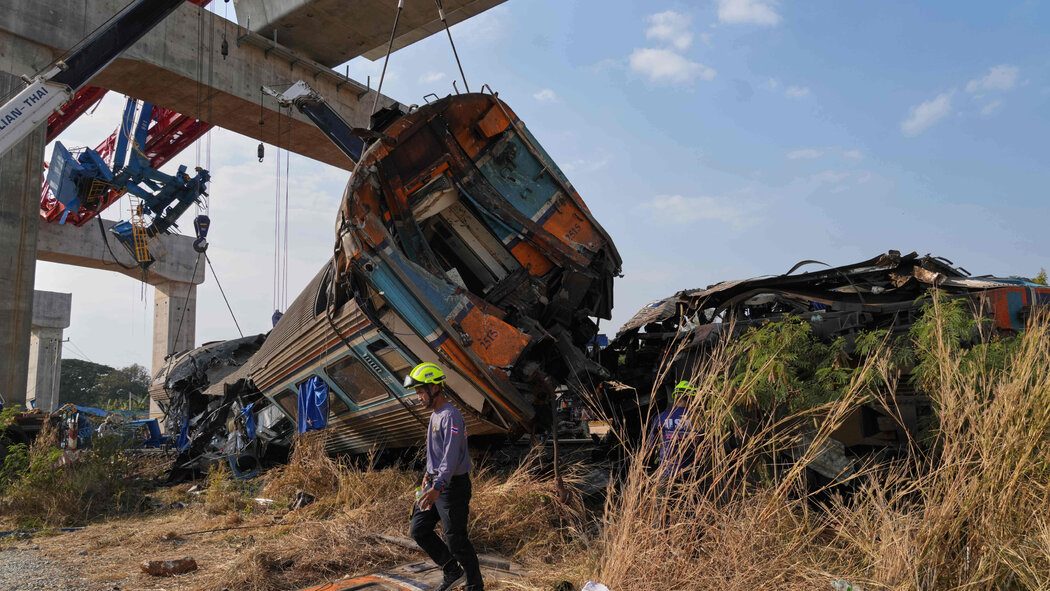
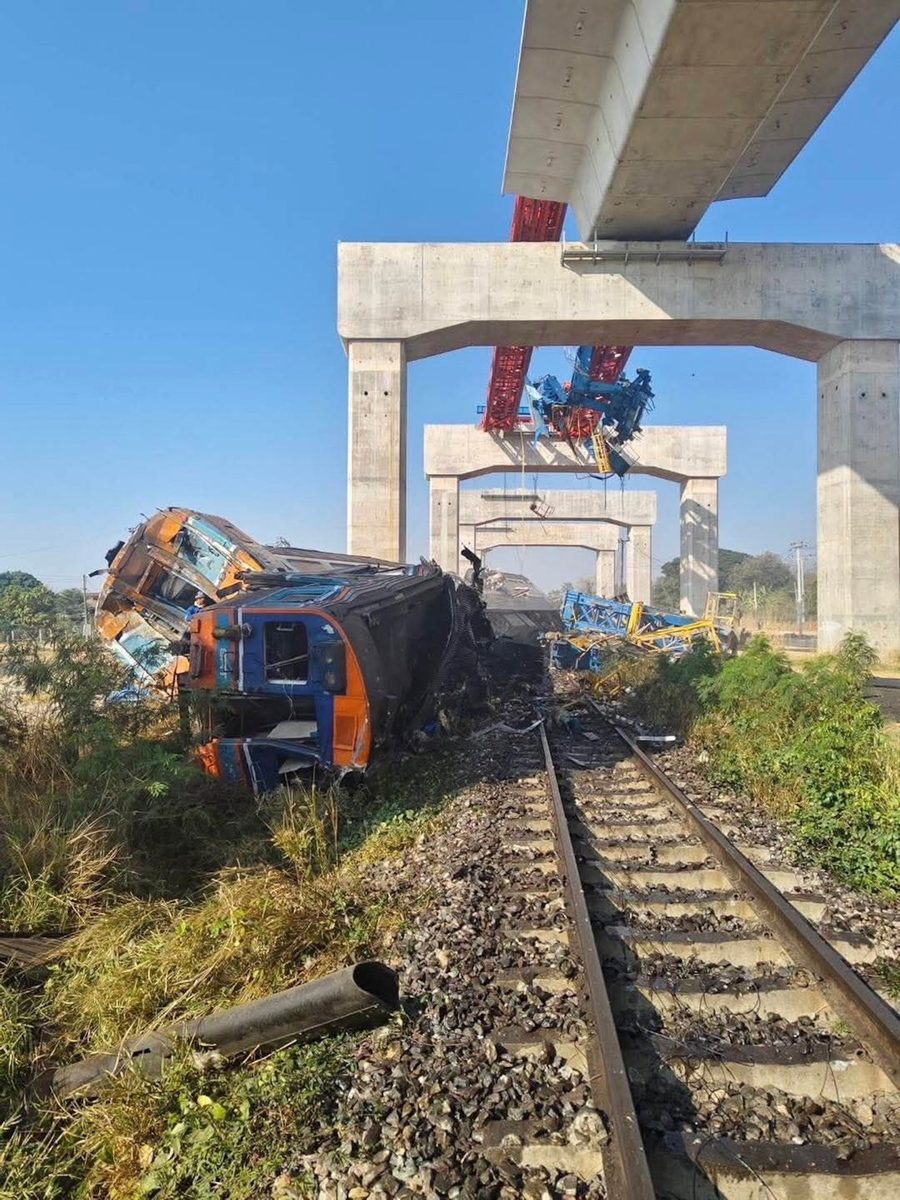
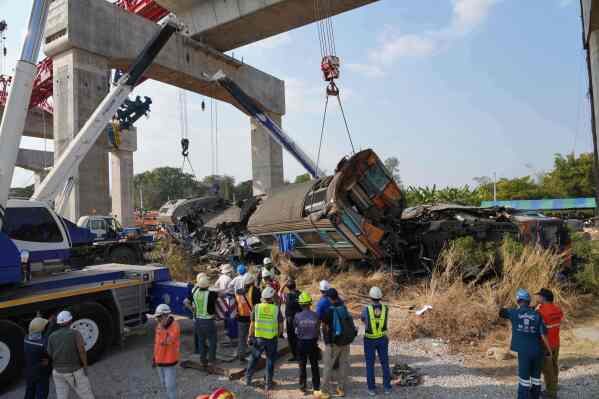
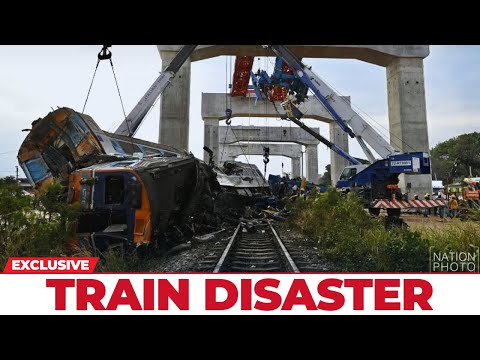
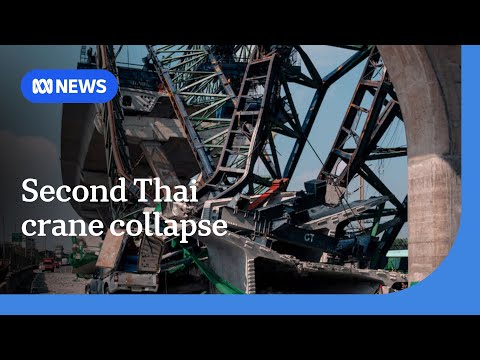
Italian-Thai Development has built much of modern Thailand—Suvarnabhumi Airport, the BTS Skytrain, major highways. For 65 years, it remained one of two contractors automatically considered for mega-projects. That changed on January 15, 2026, when Prime Minister Anutin Charnvirakul ordered the company permanently blacklisted after its second deadly crane collapse in two days killed 2 more people, following 32 deaths the day before when a crane fell onto a moving passenger train.
The blacklisting strips ITD of contracts worth hundreds of millions of dollars on the China-backed high-speed rail line and Rama II highway. Investigations revealed ITD failed to request the train stop before the crane collapse, and that the crane's inspection certificate had expired on January 4—ten days before the disaster. The Transport Ministry halted 14 ITD contracts for 15 days while the State Railway of Thailand consulted the Attorney-General on termination procedures. ITD's president Premchai Karnasuta, released on bail in November 2025 while facing criminal charges for a building collapse that killed 95 people in March 2025, now confronts new investigations. The company's stock crashed to THB 0.17 on January 16, a 15% single-day drop, as Thailand confronts whether its rapid infrastructure expansion has outpaced its ability to build safely.
Questions about this story
Free account needed to ask — your question is kept and asked for you right after sign-up. Answers are public.
No questions yet — be the first to ask.
Key Indicators
34
Deaths in 48 hours
Combined fatalities from two crane collapses on January 14-15, 2026
~130
Deaths linked to ITD since March 2025
Including State Audit Building collapse (95), highway collapse (5+), and crane disasters
THB 0.17
ITD stock price
Down 15% on January 16, 2026; 65% below 52-week high of THB 0.49
35.7%
Phase 1 completion
Progress on first segment of high-speed rail after 8 years of construction
22 events
Latest: January 29th, 2026 · 8 months ago
Showing 8 of 22
JK to step
Tap a bar to jump to that date
Jump to
January 2026
SRT refers contract termination to Attorney-General
LatestGovernment Action
State Railway of Thailand board voted to consult the Attorney-General on legal procedures for terminating ITD's Contract 3-4, rather than proceeding with immediate termination. SRT estimates a 14-month tender process to select replacement contractor if termination proceeds.
Rail operations resume at disaster site
Update
Regular train operations resumed after repairs to damaged tracks and clearing of debris from the January 14 crane collapse site were completed.
Transport Ministry orders 15-day construction halt on 14 ITD contracts
Government Action
Transport Ministry ordered all 14 ITD contracts under its jurisdiction suspended for 15 days to conduct comprehensive safety inspections. Ministry announced legal or regulatory action would follow if violations were found.
ITD acknowledges fault, requests to continue work
Company Response
Italian-Thai Development issued its first public statement acknowledging mistakes in safety procedures and requesting permission to continue work on projects. The company did not address the expired crane inspection certificate.
Three missing passengers from train disaster found alive
Update
Three passengers previously reported missing after the January 14 crane collapse onto the train were located safe, according to medical officials. Two were injured and one had missed the train.
ITD stock crashes 15% in single day
Market
Italian-Thai Development shares fell to THB 0.17, down 15% from the previous day's close of THB 0.20, as investors reacted to the blacklisting order and contract terminations. The stock now trades 65% below its 52-week high of THB 0.49.
Government announces contractor performance scorecard for February
Government Action
The government announced it is finalizing a 'performance scorecard' regulation for contractors, expected to take effect by February 2026, which will strictly monitor contractor safety records and compliance. The system was first announced after the March 2025 highway collapse.
Transport Ministry orders nationwide construction safety review
Government Action
Transport Minister Phiphat Ratchakitprakarn ordered a nationwide suspension and safety review of all elevated highway construction projects. All sites require immediate safety inspections before work can resume.
Preliminary investigation found ITD failed to coordinate safety measures with railway operations and that the crane's inspection certificate expired on January 4, 2026—ten days before the collapse. No evidence found of radio communication requesting the train to stop.
High-speed rail contract revealed 99.5% complete
Update
State Railway officials disclosed that ITD's Contract 3-4 sections (Lamtakong–Sikhio and Kutjik–Khok Kruat) were 99.5% complete when the crane collapse occurred, with only 0.5% of work remaining on schedule.
Second crane collapse kills 2 on Rama II highway
Accident
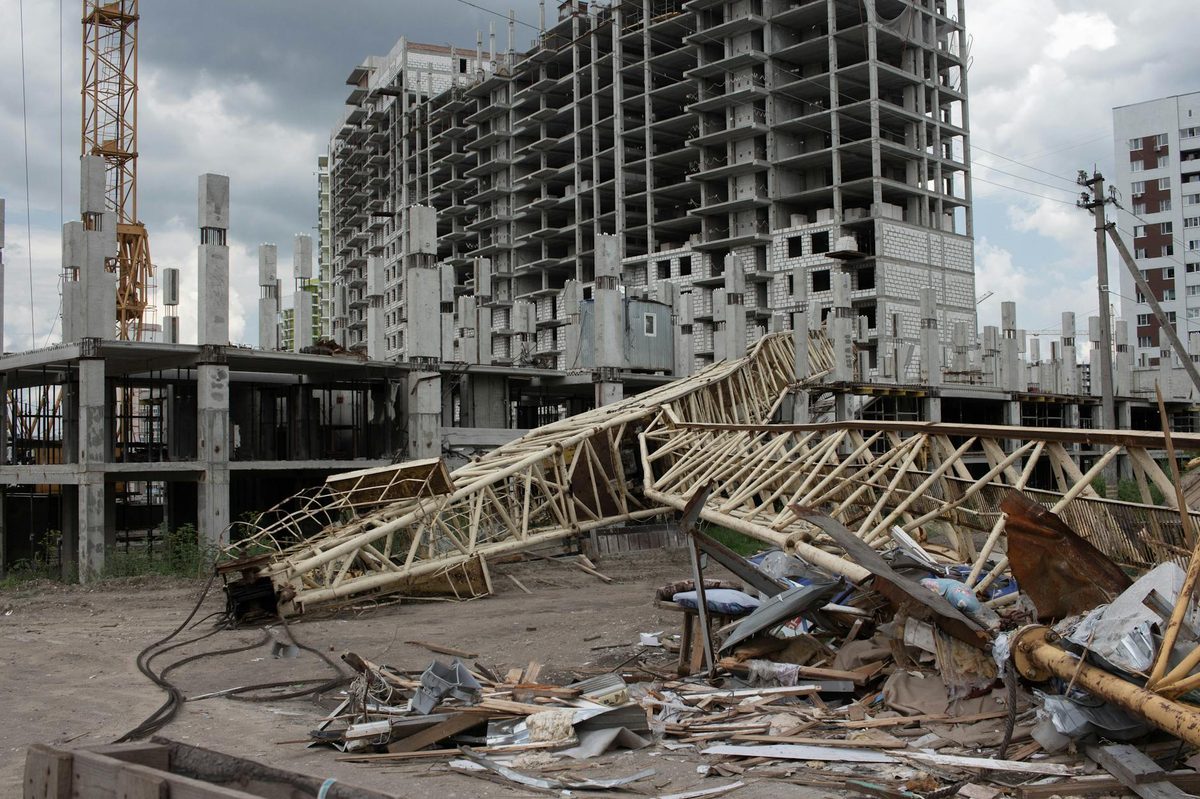
A crane of similar design collapsed onto Rama II Road in Samut Sakhon province, crushing two vehicles and killing 2 people while injuring 5. The crane was being used for the Motorway No. 82 elevated highway construction, also led by ITD. Initial reports suggest the crane's support leg settled.
PM orders ITD blacklisted, contracts terminated
Government Action
Prime Minister Anutin Charnvirakul ordered the Ministry of Transport to terminate all contracts with Italian-Thai Development and permanently blacklist the company from government projects. Transport Ministry suspended all aerial construction projects nationwide.
Crane collapses onto passenger train, killing 32
Disaster
A launching gantry crane lifting concrete slabs for the high-speed rail project fell onto Express Train No. 21 carrying 171 passengers in Sikhio district, Nakhon Ratchasima. At least 32 killed, 66 injured, 8 missing. Train was traveling at 120 km/h when 20-30 ton crane support struck coaches 1, 2, and 3, with coach 3 catching fire.
November 2025
Premchai Karnasuta granted bail in building collapse case
Legal
Criminal Court approved temporary release of Premchai Karnasuta on THB 1.5 million bail, citing low flight risk and poor health. Court ordered electronic monitoring bracelet and prohibited international travel without approval. Premchai faces one count as authorized director of defendant company.
September 2025
Anutin Charnvirakul becomes Prime Minister
Political
Parliament elected Anutin, whose family owns ITD competitor Sino-Thai Engineering, as Thailand's third prime minister in two years. He committed to dissolving parliament within four months for new elections.
August 2025
23 suspects indicted in building collapse case
Legal
Prosecutors indicted 23 individuals and companies including ITD's president and China Railway No. 10's local director for violations leading to the State Audit Building collapse. Government rolled out 'contractor report card' oversight system.
May 2025
Premchai Karnasuta surrenders to police
Legal
ITD chairman Premchai Karnasuta, 71, surrendered to police along with other executives and engineers. Court denied all suspects bail, citing flight risk.
Arrest warrants issued for ITD chairman and 16 others
Legal
Thai Criminal Court issued warrants for Premchai Karnasuta and 16 others connected to the State Audit Building collapse on charges of professional negligence causing death.
March 2025
State Audit Building collapses during earthquake, killing 95
Disaster
A 7.7 magnitude earthquake centered in Myanmar caused the 33-story State Audit Office building in Bangkok to collapse. The building, under construction by an ITD-China Railway joint venture, was the only structure destroyed in Thailand. Investigation found substandard Chinese steel used in construction.
Rama III-Dao Khanong expressway segment collapses
Accident
At least 5 killed and 27 injured when an under-construction bridge on the Rama III-Dao Khanong Expressway Project collapsed in Bangkok. ITD was part of the joint venture. Prompted government to announce 'contractor report card' system.
November 2024
6 workers killed in motorway crane collapse
Accident
Four Myanmar nationals and two Thai workers died in Samut Sakhon province when a concrete segment and crane collapsed during construction of an elevated motorway. Six others were injured.
August 2024
Tunnel collapse kills 3 workers on rail project
Accident
Three workers—two Chinese nationals and one from Myanmar—died when a tunnel collapsed during heavy rain in Nakhon Ratchasima province. The tunnel was part of the same Bangkok-Nong Khai high-speed rail project where the January 2026 crane collapse occurred.
With contracts worth hundreds of millions terminated, criminal charges against leadership, and stock at near-record lows, ITD may face insolvency. Its projects would need to be reassigned to competitors like CH. Karnchang or Sino-Thai Engineering, potentially delaying the high-speed rail project further. The company's remaining assets could be sold to satisfy creditors and legal judgments.
2
Criminal Convictions, Industry Overhaul
Likely
Discussed by: Thai legal experts and construction industry observers at Nation Thailand and Bangkok Post
Courts convict Premchai Karnasuta and other executives for the building collapse, with additional charges following crane disasters. The government implements the delayed 'contractor report card' system with actual enforcement power. Foreign contractors gain market share as Thai firms face heightened scrutiny. A new safety regulatory body with independent authority emerges.
3
Political Fallout Overshadows Reform
Possible
Discussed by: Political analysts noting Anutin's family ties to competing contractor Sino-Thai
Opposition parties or ITD supporters frame the blacklisting as politically motivated given Anutin's family connection to competitor Sino-Thai Engineering. Elections within four months shift attention from safety reform to political maneuvering. ITD challenges contract terminations in court. Structural reforms stall as they have after previous disasters.
4
High-Speed Rail Project Restructured Under Chinese Control
Uncertain
Discussed by: Infrastructure analysts at The Diplomat and SCMP covering Belt and Road projects
With Thai contractors facing credibility collapse, China Railway assumes greater direct control over the Bangkok-Nong Khai line. Phase 1 completion target slips further from 2028. Thailand's goal of maintaining ownership and operational independence erodes as Beijing gains leverage through the crisis.
5
ITD Wins Legal Battle, Resumes Operations Under New Management
Possible
Discussed by: Legal analysts at Khaosod English and corporate restructuring experts
ITD successfully challenges contract terminations in court, arguing the high-speed rail project was 99.5% complete and citing procedural irregularities in the blacklisting. The company undergoes leadership restructuring with Premchai stepping down, implements comprehensive safety reforms, and completes existing contracts under enhanced oversight. New regulations emerge allowing conditional rehabilitation of contractors who demonstrate改 systemic改 improvements.
Historical Context
3 moments from history that rhyme with this story — and how they unfolded.
1 of 3
June 1995
Sampoong Department Store Collapse, South Korea (1995)
A 5-story department store in Seoul collapsed, killing 502 people and injuring 937. Investigation revealed the owner, Lee Joon, had removed support columns to install escalators, used substandard concrete, and ignored engineers' warnings about cracks on the day of collapse. He refused to close the store to avoid losing profits.
Then
Lee Joon received 10.5 years in prison for criminal negligence. His son, the store's CEO, received 7 years. A city official was jailed for accepting bribes to approve the construction.
Now
National inspections found only 1 in 50 Seoul buildings fully safe. South Korea overhauled its construction regulations and enforcement. The disaster became a symbol of the dangers of prioritizing rapid development over safety during economic booms.
Why this matters now
Thailand faces a similar reckoning: a construction giant with political connections, a pattern of ignored warnings, substandard materials, and reforms that follow disasters rather than prevent them. The Sampoong case shows criminal prosecution is possible—and that real enforcement requires sustained political will.
2 of 3
September 2015
Mecca Crane Collapse, Saudi Arabia (2015)
A 1,350-ton crawler crane operated by the Saudi Binladin Group collapsed into the Grand Mosque during expansion construction, killing 111 people from 11 countries and injuring 394. High winds were blamed, though the crane should have been lowered during predicted storms.
Then
Saudi Arabia suspended Binladin Group from new contracts temporarily. The company's leadership was replaced. Families received compensation.
Now
The contractor eventually resumed operations after leadership changes. Saudi Arabia tightened construction oversight at holy sites but the company remained a dominant player in the kingdom's construction sector.
Why this matters now
Demonstrates that even catastrophic failures linked to national mega-projects rarely result in permanent exclusion of dominant contractors. Thailand's blacklisting of ITD would be unusually aggressive by comparison—and faces similar pressures given ITD's role in critical infrastructure.
3 of 3
April 2013
Rana Plaza Factory Collapse, Bangladesh (2013)
An 8-story commercial building housing garment factories collapsed in Dhaka, killing 1,134 workers and injuring 2,500—the deadliest garment-factory disaster in history. The building owner had added floors illegally and ignored evacuation orders after cracks appeared the day before.
Then
The building owner and factory owners received life sentences for culpable homicide. International brands faced boycott pressure.
Now
Created the Bangladesh Accord, a legally binding agreement between brands and unions on factory safety. Over 2,000 factories were inspected and upgraded. Set precedent for international supply chain accountability.
Why this matters now
Shows how catastrophic loss of life can trigger binding structural reform—but only with sustained international attention and legal mechanisms that outlast initial outrage. Thailand's construction crisis lacks equivalent international leverage, making domestic political will the key variable.