Anchor

Arctic sea ice melt season now a week longer than in the 1970s
New CapabilitiesUniversity of Washington research ties the extra melt days mostly to later autumn freeze-up
2 days ago: Research circulates widely on Reddit's r/scienceNew here? Follow stories to track developments over time. Create a free account to get updates when stories you care about change.
Overview
Updated 2 hours agoArctic sea ice now melts about 7.5 days longer each year than it did in 1979, according to new University of Washington research. Most of that extra melt time comes from ice forming later in the fall, when the ocean has absorbed too much summer heat to refreeze quickly.
The delay matters because sea ice reflects 60 to 90 percent of sunlight back into space, while dark ocean water reflects only about 7 percent. Every additional day of open water means more solar energy trapped in the Arctic system, thinning next year's ice and warming the region further.
Why it matters
Longer open-water seasons mean the Arctic absorbs more solar heat each year, accelerating regional warming and reshaping Arctic ecosystems.
Questions about this story
Free account needed to ask — your question is kept and asked for you right after sign-up. Answers are public.
No questions yet — be the first to ask.
Key Indicators
7.5 days
Increase in Arctic melt season length since 1979
Most of the lengthening comes from sea ice forming later in the fall rather than melting earlier in spring.
~108 days
Current Arctic melt season length
Since 2010 the melt season has plateaued near 108 days but swings by up to 11 days between years.
7%
Sunlight reflected by open ocean
Sea ice reflects 60 to 90 percent of sunlight; dark water reflects about 7 percent, so open ocean absorbs far more heat.
Related Media
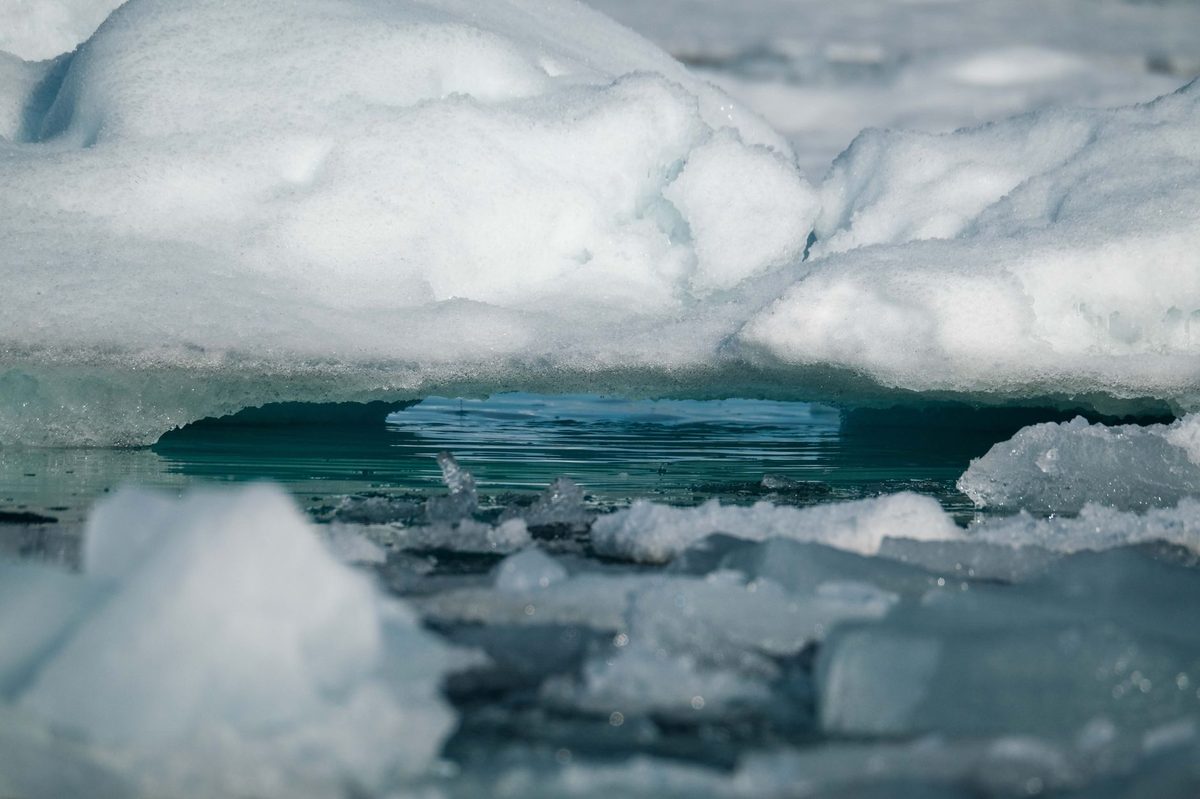
Chilling view of melting Arctic ice and turquoise blue ocean waters.
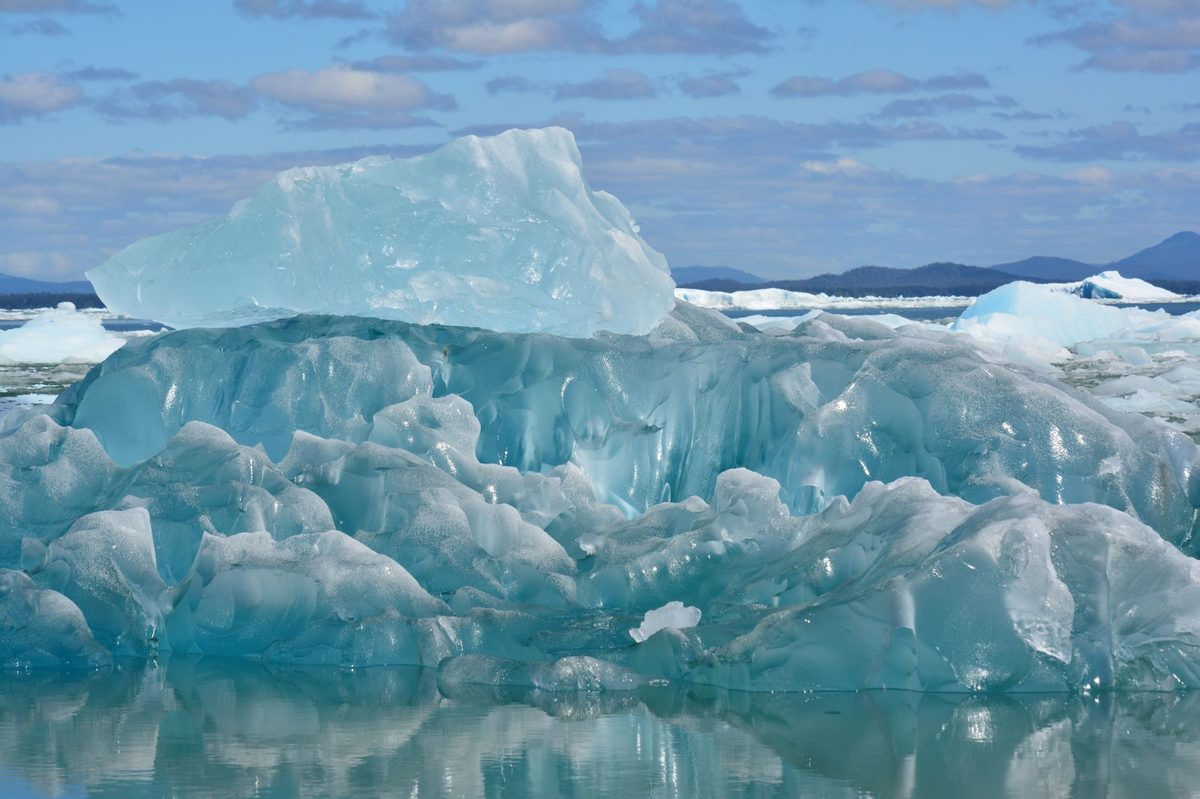
Stunning iceberg captured in clear Arctic waters, highlighting melting ice and climate change impact.
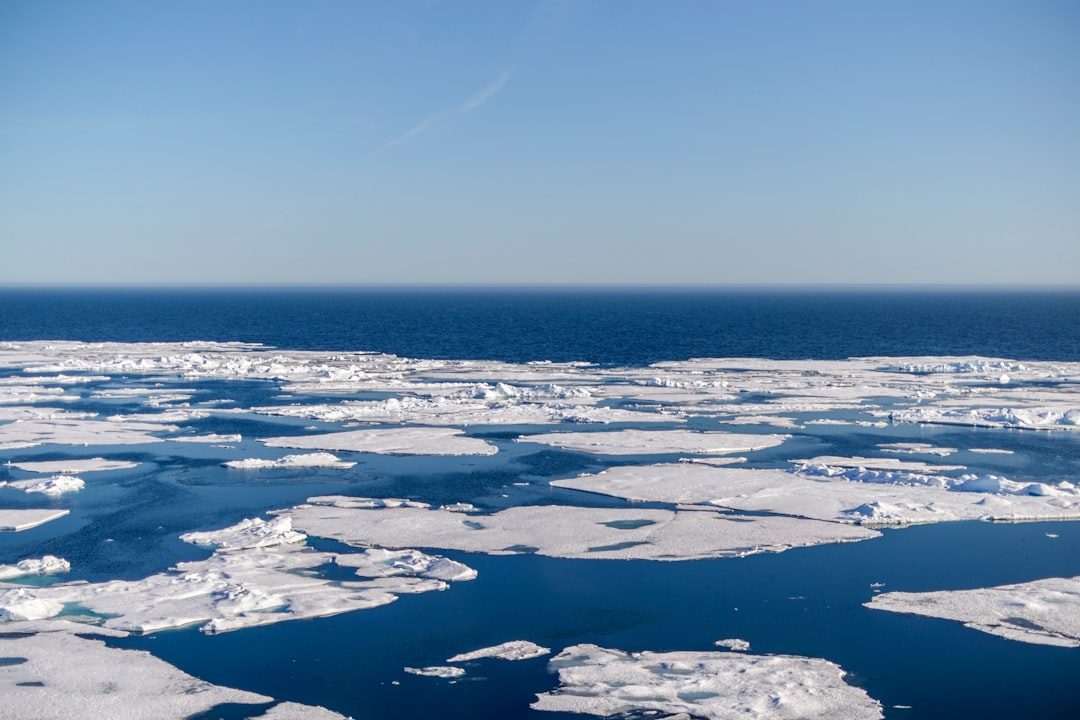
A sea of ice in Arctic Circle near Canada.
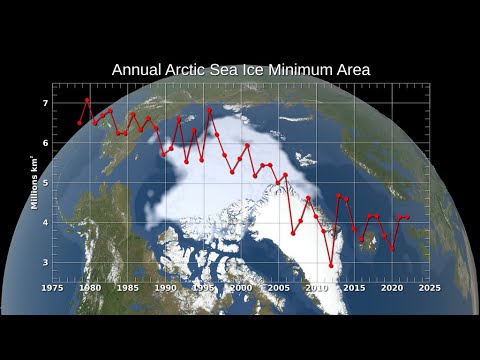
90.6K views
0:47
Annual Arctic Sea Ice Minimum Area 1979-2022, With Graph
ARCHIVED - NASA Climate Change
195.6K views
12:36
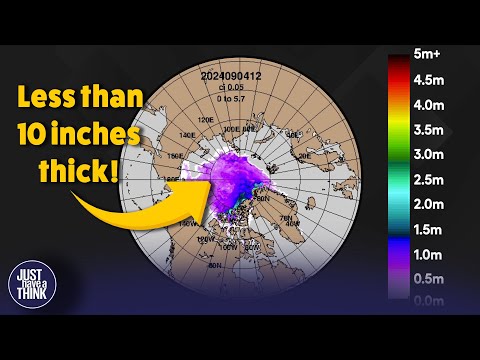
The US Navy knows how fast Arctic Sea ice is disappearing!
Just Have a Think
308.6K views
10:45
Why Greenland's melting ice sheet could plunge the UK into
Sky News
Images from Openverse under Creative Commons licenses. Videos from YouTube.
Voices
Curated perspectives — historical figures and your fellow readers.
Play
Exploring all sides of a story is often best achieved with Play.
Most of these play right now — no account needed. Sign up to save scores, keep a streak, and unlock Debate and Predict.
Log in
Sign Up
Higher or Lower
A number from this story, against one from elsewhere in the news — guess which is bigger, then keep the chain going. 5 rounds, 3 strikes; a miss costs a strike and resets your streak.
Example
Anchor
EU tariff revenue
$52B
Big for this kind of number
Mystery
Pentagon AI contract
?
Round 1
Streak: 0
Mystery
?
Keyboard: ↓/L lower · ↑/H higher
0 pts
Best streak: 0 · Rounds: 0
0 points — sign up to put that on the leaderboard.
Now try on this story
Connections
Sixteen names from the news. Find the four hidden groups of four. Four mistakes max.
Loading today's puzzle…
0/4 groups
Mistakes
Sign up to keep a daily streak — a new puzzle lands every day.
Now try on this story
Exit debate?
Your progress in this debate will be lost.
How it works
- 1 Two AI personas square off on this story.
- 2 You predict who'll win each round — correct picks earn XP.
- 3 One crossfire question is yours to fire. Pick it carefully.
Couldn't generate a topic
Select Your Champions
Choose one persona for each side of the debate
DEBATE TOPIC
Choose personas with different perspectives for a more dynamic debate.
SIDE A (PRO)
Select debater for this side:
No debate personas available right now.
SIDE B (CON)
Select debater for this side:
No debate personas available right now.
VS
Get ready to make your prediction...
Round of
Claim
Evidence
Stakes
Crossfire Answer
Closing Statement
Claim
Evidence
Stakes
Crossfire Answer
Closing Statement
Your Crossfire Question
Generating arguments...
Who's Got This Round?
Make your prediction before the referee scores
The referee scores both sides on
Correct predictions earn +20 XP
· Press 1 or 2 to pick
Evidence
40%
Logic
30%
Detail
20%
Style
10%
Round Results
Your Pick
Not this time
(%)
Overall Score
/10
Your Pick
Not this time
(%)
Overall Score
/10
Set the Crossfire
Pick the question both personas must answer in the final round
Crafting crossfire questions...
Choosing a question earns +10 XP crossfire bonus
🏆
Total XP Earned
Cred Change
Predictions
Debate Oracle! You called every round!
Sharp Instincts! You know your debaters!
The Coin Flip Strategist! Perfectly balanced!
The Contrarian! Bold predictions!
Inverse Genius! Try betting the opposite next time!
XP Breakdown
Base completion
+20 XP
Rounds played ( rounds x 5 XP)
+ XP
Correct predictions ( correct x 20 XP)
+ XP
Crossfire bonus
+10 XP
Accuracy
%
Prediction History
Round
You picked:
✓
✗
Now try on this story
Keep debating to level up your credibility and unlock achievements
Organizations Involved
University of Washington
University research institution
Published the 2026 research on melt season lengthening
Conducted the new study on Arctic sea ice melt season trends.
National Snow and Ice Data Center (NSIDC)
Federal research center
Tracks Arctic sea ice extent and melt season trends
The federally funded center that produces the authoritative monthly Arctic sea ice data used across climate research.
Timeline
January 1979 September 2026
4 events
Latest: 2 days ago
Tap a bar to jump to that date
-
Research circulates widely on Reddit's r/science
Latest Public discussionThe UW findings draw broad public attention on Reddit, highlighting the melt season lengthening and its climate implications.
-
University of Washington publishes new melt season findings
Research publicationUW researchers report the Arctic melt season is now about 7.5 days longer than in 1979, driven mostly by later fall freeze-up.
-
NASA and NSIDC document melt season lengthening
Research publicationResearch found Arctic melt season lengthened about five days per decade from 1979 to 2013, dominated by later autumn freeze-up.
-
Satellite monitoring baseline established
Measurement baselineContinuous satellite monitoring of Arctic sea ice begins, setting the baseline for all later melt season comparisons.
Historical Context
2 moments from history that rhyme with this story — and how they unfolded.
September 2007
2007 Arctic sea ice minimum
September 2007 saw Arctic sea ice extent drop to 4.14 million square kilometers, about 39 percent below the 1979-2000 average and far below the prior record. The Northwest Passage opened to navigation for the first time in recorded history.
Then
The collapse startled scientists, who had not expected such dramatic change for decades. It triggered a wave of research into the ice-albedo feedback that accelerates melting.
Now
The 2007 event showed the Arctic could change much faster than climate models projected, reframing assessments of polar climate risk.
Why this matters now
The same ice-albedo feedback that drove the 2007 collapse is what makes today's longer melt season matter: each additional day of open water adds heat that accelerates the next melt.
September 2012 - September 2013
2012 record low and the 2013 rebound
Arctic sea ice extent fell to 3.41 million square kilometers in September 2012, shattering the 2007 record. A powerful cyclone churned the thin, fragile ice pack, spreading it and accelerating melt. The following year, a cooler summer saw extent rebound by about 1.6 million square kilometers.
Then
The 2012 low became the benchmark for tracking ice decline, and the 2013 rebound demonstrated the influence of summer weather on the ice pack.
Now
The two-year contrast showed natural variability can swing outcomes dramatically when the ice is thin enough to be pushed either way by a single season's weather.
Why this matters now
That variability persists today: researchers describe the post-2010 melt season as stabilized but swinging widely between years, with the thinner ice pack vulnerable to anomalous summers.