
Pull to refresh
Logo
Quebec court reinstates the oath to the King for provincial legislators

Quebec court reinstates the oath to the King for provincial legislators

Rule Changes

A 2022 law that let Quebec's 127 legislators swear allegiance only to Quebecers is suspended, putting the National Assembly's Dec. 1 sitting in doubt

Overview

Updated 47 minutes ago

Quebec's 127 provincial legislators must swear allegiance to King Charles III before they can sit, after a Superior Court judge suspended the law that made the oath optional. Justice Ian Demers ruled on Nov. 23, 2026 that the 2022 change was an invalid unilateral constitutional amendment and suspended it immediately, despite an appeal.

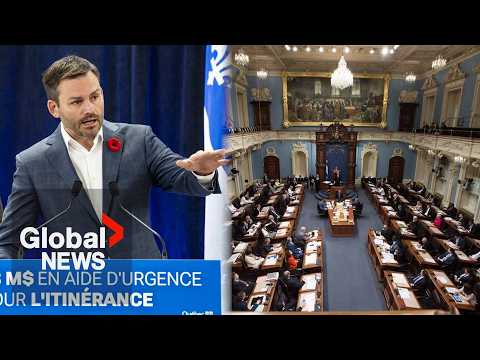
The National Assembly had been due to resume around Dec. 1. Its members now face a choice between an oath Premier Paul St-Pierre Plamondon says he cannot take and a legislature that cannot legally pass laws. Quebec is asking the Court of Appeal to set aside the order that applies the ruling now.

Why it matters

Quebec's legislature cannot pass laws until 127 members swear an oath its premier refuses to take.

Questions about this story

Free account needed to ask — your question is kept and asked for you right after sign-up. Answers are public.

No questions yet — be the first to ask.

Key Indicators

127
Legislators required to swear the oath
Every member elected on Oct. 5, 2026 must take the oath before occupying a seat.
10
Provinces whose consent the court says is needed
Changes to the lieutenant-governor's office require the ten provinces, the House of Commons and the Senate.
3
Parti Québécois members who refused the oath in 2022
Their refusal after the general election triggered the law the court has now suspended.
Dec. 18, 2026
Deadline to file the case schedule
The parties must submit a timetable or protocol for the case by that date.

Voices

Curated perspectives — historical figures and your fellow readers.

Sign up to generate historical perspectives on this story.

People Involved

Organizations Involved

Timeline

1867 November 2026

8 events Latest: Yesterday
Tap a bar to jump to that date
  1. Sitting postponed twice as the challenge proceeds

    Procedural

    The session start slipped from Nov. 17 to Nov. 24, then toward early December.

  2. Newly elected members swear only to Quebecers

    Statement

    All 127 members elected in the October election took an oath to the people of Quebec and not to the King.

  3. Three Parti Québécois members refuse the oath

    Statement

    After the general election, three PQ members declined to swear allegiance to the King; later PQ members did the same.

Scenarios

1

All 127 members swear the oath and the Assembly resumes sitting

Possible Resolves by End of 2026

Discussed by: Quebec government statements and reporting by CBC and Le Devoir on the Dec. 1 sitting date

Members return to the chamber and take the oath to the King, some under protest, clearing the legal barrier to a sitting. The court noted that those who swear cannot retract, so this path closes off a later reversal for the current legislature.

2

Court of Appeal lifts the immediate-execution order, letting the Assembly sit unsworn

Possible Resolves by Feb 28, 2027

Discussed by: Quebec's attorney general, which said it would ask the Court of Appeal to cancel paragraph 107 of the judgment

Quebec asks the Court of Appeal to suspend the order that applies the ruling now. If granted, the 2022 law would operate again during the appeal and members could sit without the oath, though the 2026 judgment left open whether their laws would later need re-adoption.

3

Superior Court upholds the 2022 law and the oath stays optional

Unlikely Resolves by End of 2027

Discussed by: The Public Interest Litigation Institute, which argues the law exceeds provincial amendment power under section 45

A hearing on the merits tests whether a province can exempt itself from section 128 at all. A ruling for Quebec would restore the exemption and validate any laws passed in the meantime, though the Court of Appeal and possibly the Supreme Court would likely follow.

Historical Context

3 moments from history that rhyme with this story — and how they unfolded.

1979

Attorney General of Quebec v. Blaikie (1979)

The Supreme Court of Canada ruled on Quebec's attempt to reshape its language legislation unilaterally. In doing so it held that swearing the oath formed part of the lieutenant-governor's charge, a piece of the Constitution Quebec could not change on its own.

Then

Quebec's unilateral changes to its language law were struck down.

Now

The reasoning became the anchor for the 2026 ruling that the oath sits outside provincial amendment power.

Why this matters now

Justice Demers cited Blaikie directly, saying the lieutenant-governor's charge has changed little since 1867 so the holding still applies.

1982

The 1982 amending formulas

The Constitution Act, 1982 split amendment powers. Section 45 lets each province amend its own constitution, while section 41 requires unanimous consent of Parliament and all ten provinces for changes to the office of the lieutenant-governor.

Then

Quebec used section 45 in 2022 to insert an exemption from the oath into the 1867 Act.

Now

The court found the oath falls under the unanimity requirement, not the provincial power.

Why this matters now

The case turns on which formula applies, so the 1982 text decides whether Quebec acted alone or exceeded its authority.

2022

Quebec's 2022 oath refusal

Three Parti Québécois members elected in 2022 declined to swear allegiance to the King, and later PQ members elected in byelections followed. The National Assembly responded with a law ending the requirement.

Then

The law took effect on Dec. 9, 2022, and members sat without the oath.

Now

It stood until the suspension ordered on Nov. 23, 2026.

Why this matters now

The refusal is the direct origin of the law now before the courts and of the premier's stated position that he cannot swear.

Sources

(10)