
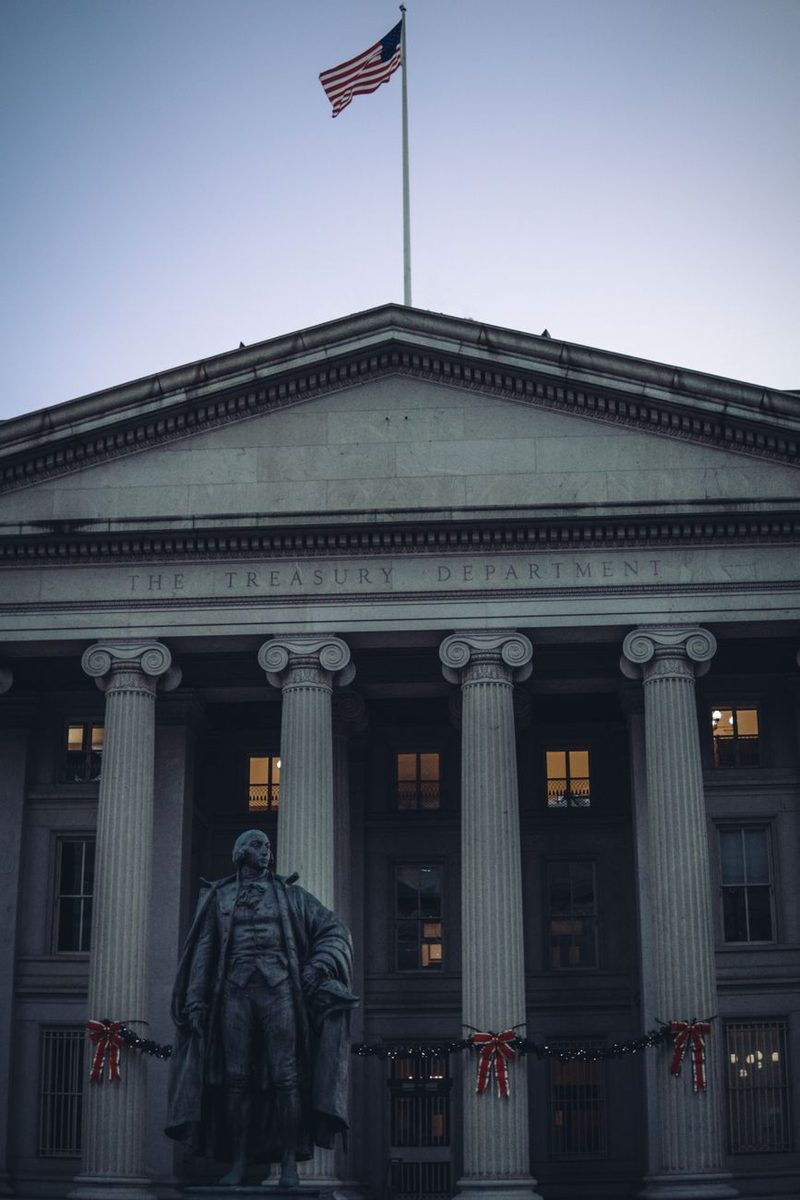


Treasury proposes rule to strip tax-exempt status from schools with race-based programs
Rule ChangesProposal would end federal tax exemption for private schools that consider race in admissions, scholarships, or other programs
Today: Proposal published in Federal RegisterNew here? Follow stories to track developments over time. Create a free account to get updates when stories you care about change.
Overview
Updated 48 minutes agoThe Treasury Department proposed a rule on September 3 that would end federal tax-exempt status for private schools and colleges that give students any benefit based on race. The Internal Revenue Service estimates 18,000 institutions could be affected, along with 750,000 students holding race-based scholarships.
A school that loses tax-exempt status loses the deductibility of charitable donations, access to tax-exempt bonds, and other federal benefits. The rule would apply to admissions, scholarships, athletics, and every other school-administered program. It would take effect for taxable years beginning after May 31, 2027.
Why it matters
If this rule takes effect, donations to private schools lose their tax deduction unless schools end race-based admissions and aid programs.
Questions about this story
Free account needed to ask — your question is kept and asked for you right after sign-up. Answers are public.
No questions yet — be the first to ask.
Key Indicators
Voices
Curated perspectives — historical figures and your fellow readers.
Play
Exploring all sides of a story is often best achieved with Play.
WHO SAID WHAT?
Can you match the quotes to the right people?
- points for each correct match.
- time bonus when you answer in under seconds.
- streak bonus once you hit correct in a row.
— Who said this?
Tip: press 1– to answer.
points — sign up to put that on the leaderboard.
Higher or Lower
A number from this story, against one from elsewhere in the news — guess which is bigger, then keep the chain going. 5 rounds, 3 strikes; a miss costs a strike and resets your streak.
Keyboard: ↓/L lower · ↑/H higher
0 points — sign up to put that on the leaderboard.
Connections
Sixteen names from the news. Find the four hidden groups of four. Four mistakes max.
Sign up to keep a daily streak — a new puzzle lands every day.
Exit debate?
Your progress in this debate will be lost.
- 1 Two AI personas square off on this story.
- 2 You predict who'll win each round — correct picks earn XP.
- 3 One crossfire question is yours to fire. Pick it carefully.
Couldn't generate a topic
Select Your Champions
Choose one persona for each side of the debate
DEBATE TOPIC
Choose personas with different perspectives for a more dynamic debate.
Select debater for this side:
No debate personas available right now.
Select debater for this side:
No debate personas available right now.
Who's Got This Round?
Make your prediction before the referee scores
The referee scores both sides on
Round Results
Set the Crossfire
Pick the question both personas must answer in the final round
Debate Oracle! You called every round!
Sharp Instincts! You know your debaters!
The Coin Flip Strategist! Perfectly balanced!
The Contrarian! Bold predictions!
Inverse Genius! Try betting the opposite next time!
XP Breakdown
Prediction History
People Involved
Organizations Involved
Issued the proposed rule on September 3, 2026, alongside the IRS.
Co-issued the proposed rule and estimates 18,000 institutions could be affected.
Timeline
June 2023 September 2026
-
Proposal published in Federal Register
Today ProceduralProposed regulations published, opening the public comment period before finalization.
-
Treasury proposes tax-exemption rule
RegulationTreasury and IRS propose ending tax-exempt status for schools with race-based programs, covering 18,000 institutions and 750,000 scholarship students.
-
Supreme Court strikes down race-based admissions
LegalCourt rules Harvard and UNC admissions policies violate the Equal Protection Clause.
Historical Context
3 moments from history that rhyme with this story — and how they unfolded.
Brown v. Board of Education (1954)
The Supreme Court ruled that racial segregation in public schools violates the Fourteenth Amendment's Equal Protection Clause, overturning the separate but equal doctrine.
Desegregation orders followed; resistance was often violent and prolonged.
Established racial non-discrimination as fundamental public policy in American education.
Treasury cites Brown as the foundation of the public policy requiring non-discrimination in education.
Bob Jones University v. United States (1983)
The Supreme Court upheld the IRS's decision to deny tax-exempt status to Bob Jones University, a private Christian school that banned interracial dating. The Court ruled that tax exemption requires compliance with fundamental public policy, which prohibits racial discrimination.
The IRS retained power to deny tax exemption for racial discrimination. The principle became settled law.
Established that tax-exempt status is conditioned on non-discrimination, a standard Treasury says this rule simply codifies.
This is the direct legal precedent Treasury cites for linking tax exemption to anti-discrimination policy.
Students for Fair Admissions v. Harvard (2023)
The Supreme Court struck down race-conscious admissions policies at Harvard and the University of North Carolina, ruling they violate the Equal Protection Clause.
Colleges ended race-based admissions policies; some shifted to income or geographic criteria.
Provided the legal basis for arguing that race-based programs in education are unconstitutional under current law.
Treasury cites this ruling to argue that race-based scholarships and other programs are discriminatory, not merely admissions.
