



Pull to refresh
Logo
US solar module production passes 100 GW cumulative landmark

US solar module production passes 100 GW cumulative landmark

Built World

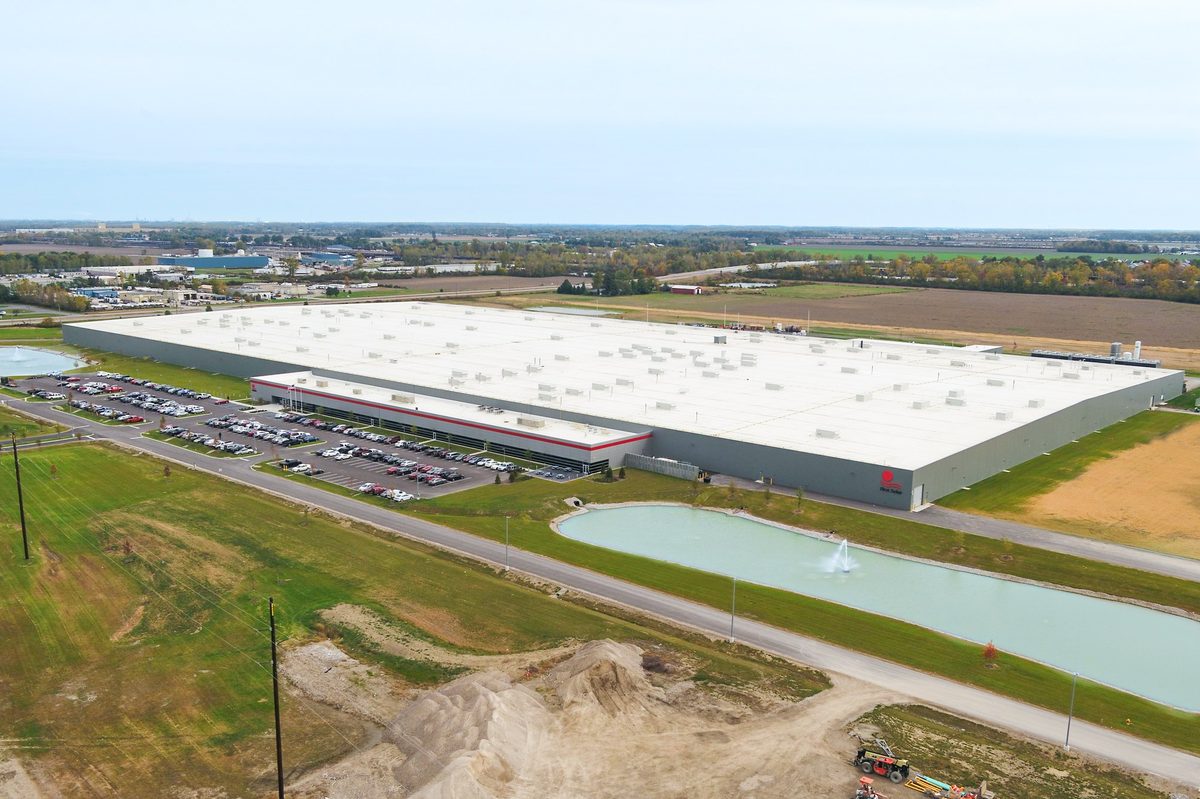
First Solar made 39% of all US panels; most production came after the 2022 Inflation Reduction Act

Yesterday: Cumulative production hits 100 GW

Overview

Updated 1 hour ago

American factories have made 100 gigawatts of solar panels since the 1970s, a milestone crossed in spring 2026. More than 70% of that production came after 2022.

The Inflation Reduction Act did this by paying 7 cents per watt to assemble panels in the US. First Solar alone produced 39% of all panels ever made in America. The harder step is upstream: the country still imports most of its silicon cells, wafers, and ingots.

Why it matters

The US can now assemble most of the panels it installs, but it still imports the silicon cells and wafers inside them. That is the next supply-chain risk.

Questions about this story

Free account needed to ask — your question is kept and asked for you right after sign-up. Answers are public.

No questions yet — be the first to ask.

Key Indicators

100 GW
Cumulative US module production
All panels made at US factories since the early 1970s, reached in Q2 2026.
39%
First Solar share of total US production
One company, built across Ohio, Alabama, and Louisiana plants over two decades.
70%
Production added since the IRA
More than two-thirds of all US panels came after August 2022.
$12.2B
IRA-stimulated manufacturing capex
Expected cumulative module and supply-chain investment by the end of 2026.
77.3 GW
Current annual module capacity
Including thin film, against 51.5 GW of actual production in the same period.

Voices

Curated perspectives — historical figures and your fellow readers.

Ever wondered what historical figures would say about today's headlines?

Sign up to generate historical perspectives on this story.

People Involved

Organizations Involved

Timeline

January 1973 September 2026

6 events Latest: Yesterday
Tap a bar to jump to that date
  1. Cumulative production hits 100 GW

    Latest Milestone

    Terawatt PV Research reports total US module output reached 100 GW in Q2 2026.

  2. US capacity surpasses 50 GW

    Milestone

    SEIA reports the US is now the world's third-largest solar module producer.

  3. First Solar opens Alabama plant

    Business

    A $1.1 billion, 3.5 GW factory pushes First Solar's US capacity toward 11 GW.

  4. Inflation Reduction Act signed

    Policy

    Biden signs the IRA, creating the 45X Advanced Manufacturing Production Credit.

  5. Section 201 tariffs applied

    Policy

    US tariffs on imported cells and modules prompt the first new c-Si assembly plants.

  6. Early US solar factories open

    Industry

    Solarex and Arco Solar begin panel-making in Maryland and California.

Scenarios

1

US builds out cells and closes the import gap

Possible Resolves by Q2 2028

Discussed by: pv-magazine USA's 2027 capex outlook; IOPscience supply-chain study

Module assembly scaled first because 45X pays 7 cents per watt for finished panels. Cells, wafers, and ingots carry higher technical barriers. The IOPscience study projects the US would still import 60% of its cells and 89% of its ingots and wafers even in a best case. New cell and wafer facilities are in development; if they complete and run, the US moves toward genuine self-sufficiency.

2

Module glut triggers consolidation

Possible Resolves by Q2 2028

Discussed by: PV Tech (c-Si plants running at about 61% utilization)

Fast module buildout is outpacing demand. PV Tech reports c-Si plants at roughly 61% utilization and thin film at 67%. If tariffs ease or the 45X credit weakens, marginal plants could close. A shakeout would concentrate production in the largest, most efficient players.

3

Congress modifies the 45X credit

Unlikely Resolves by End of 2027

Discussed by: Policy analysts ahead of the post-2026 midterm Congress

The 45X credit is the engine of the entire buildout. The 2026 midterm elections could change the balance of power in Congress, and the credit's budget cost has grown as production ramped. A repeal or a rate reduction would slow or reverse the manufacturing wave by removing the economic case for new plants.

Historical Context

2 moments from history that rhyme with this story — and how they unfolded.

2006-2011

Solyndra and the first US solar wave (2006-2011)

Solyndra, a California thin-film startup, received a $535 million federal loan guarantee. In 2011, with Chinese silicon production glutting the market and panel prices collapsing, it filed for bankruptcy and laid off about 1,100 workers.

Then

The collapse became a political scandal and scared investors away from US solar factories.

Now

It left a lasting belief that US plants could not beat Chinese costs, the exact problem the IRA was designed to correct.

Why this matters now

It shows the earlier failure mode: US factories that depended on market prices alone struggled against subsidized Chinese scale. The IRA changed the economics by paying for domestic production directly.

2022-present

CHIPS Act semiconductor onshoring (2022)

Passed months before the IRA, the CHIPS and Science Act offered $52.7 billion to build US semiconductor fabrication plants. Companies announced dozens of fabs in a wave of onshoring.

Then

Assembly and leading-edge fabs advanced quickly across several states.

Now

Advanced packaging and some materials remain dependent on Asia, the same pattern of partial self-sufficiency.

Why this matters now

Both laws aim to rebuild critical manufacturing through subsidies and tax credits, and both face the same question: can upstream links follow the final assembly steps?

Sources

(9)