

Pull to refresh
Logo
Supreme Court declines to review DEI research grant cuts

Supreme Court declines to review DEI research grant cuts

Rule Changes

Justices let stand a 9th Circuit ruling that the administration likely violated the First Amendment by terminating University of California research grants.

Overview

Updated 1 hour ago

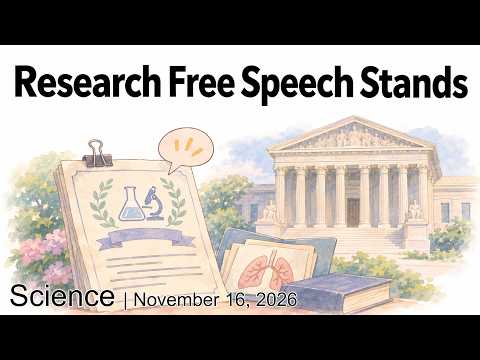
Neeta Thakur is a physician who studies health in marginalized communities. In 2025 the federal grants paying for that work were cancelled, along with hundreds of others across the University of California. On November 16, 2026, the Supreme Court declined to hear the government's appeal of a ruling that ordered the money restored.

The order leaves in place a 9th Circuit decision holding that the terminations probably violated the First Amendment. It is not a final ruling on the merits, and the government says it will keep litigating. Once the district court issues a final judgment, the case can return to the high court.

Why it matters

It keeps hundreds of university research grants flowing and tests how far an administration can cut funding by topic.

Questions about this story

Free account needed to ask — your question is kept and asked for you right after sign-up. Answers are public.

No questions yet — be the first to ask.

Key Indicators

$324M
Federal funding the government sought to end
Total University of California research money the administration moved to terminate, per NBC News.
$59M
Grants at issue in the 9th Circuit ruling
Value of terminations the appeals court found probably discriminated based on viewpoint.
0
Justices dissenting from the denial
No justice publicly noted a dissent when the court turned down the petition.
$19M
EPA grants restored by settlement
Agreement with the Environmental Protection Agency awaiting a hearing to approve it.

Voices

Curated perspectives — historical figures and your fellow readers.

Sign up to generate historical perspectives on this story.

People Involved

Organizations Involved

Timeline

June 2025 November 2026

9 events Latest: Yesterday
Tap a bar to jump to that date

Scenarios

1

District court issues final judgment for the researchers

Likely Resolves by Q3 2027

Discussed by: Legal observers following the case; plaintiffs' counsel

The preliminary injunction is not a final ruling. If Judge Lin converts it into a permanent judgment on the First Amendment claim, the government can appeal again, potentially returning the same question to the Supreme Court on a full record.

2

Settlements restore the grants and the case narrows

Possible Resolves by Q2 2027

Discussed by: Higher Ed Dive; plaintiffs' law firms

The Environmental Protection Agency has already agreed to restore $19 million, pending a hearing. Similar agreements with other agencies could shrink the dispute until little is left to litigate, even without a sweeping precedent.

3

A different grants case reaches the Supreme Court first

Uncertain Resolves by End of 2027

Discussed by: Appellate lawyers tracking NIH and NSF litigation

Other lawsuits over cancelled federal research grants are moving through separate circuits. If one produces a conflicting ruling, the Supreme Court could take that case instead and set a nationwide rule without revisiting Thakur.

Historical Context

2 moments from history that rhyme with this story — and how they unfolded.

May 1991

Rust v. Sullivan (1991)

The Supreme Court upheld a rule barring federally funded family planning clinics from discussing abortion with patients. The court held that when the government funds a program, it can define the program's scope, even if that limits what funded speakers may say.

Then

The rule took effect and clinics restructured or declined federal funds.

Now

Rust became the anchor for the government's argument that funding conditions are not viewpoint discrimination. Later cases narrowed it, holding that the government cannot impose conditions outside the funded program itself.

Why this matters now

The administration's core defense rests on this line of reasoning: paying for research is a subsidy, and subsidies can carry limits. The 9th Circuit distinguished it, holding that once a competitive grant program exists, the government cannot pick winners by viewpoint.

June 1998

National Endowment for the Arts v. Finley (1998)

Artists challenged a requirement that the endowment consider 'general standards of decency' when awarding grants. The Supreme Court upheld the standard, noting that the agency awards grants through a competitive process and that the criterion did not penalize any specific viewpoint.

Then

The endowment kept its decency standard and continued awarding grants.

Now

The decision left open whether a funding agency could refuse grants because it disapproved of the ideas expressed. Courts have since treated that as a separate First Amendment question.

Why this matters now

Finley is the boundary the current case tests. The 9th Circuit found the administration crossed from setting broad funding criteria to penalizing specific viewpoints, which Finley did not authorize.

Sources

(10)