

Pull to refresh
Logo
Cancer vaccine extends survival in recurrent leukemia trial

Cancer vaccine extends survival in recurrent leukemia trial

New Capabilities

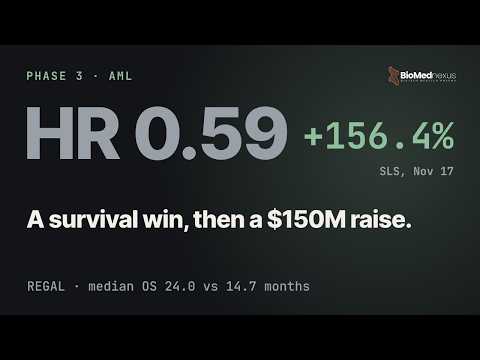
Galinpepimut-S cut the risk of death by 41% in a Phase 3 trial of acute myeloid leukemia, and Sellas plans to file for approval in 2027.

Overview

Updated 48 minutes ago

Most adults whose acute myeloid leukemia comes back after treatment have one durable option left: a stem cell transplant. On Nov. 17, 2026, Sellas Life Sciences reported that for patients who could not get one, a maintenance vaccine extended median survival to 24.0 months, against 14.7 months on the best available treatment.

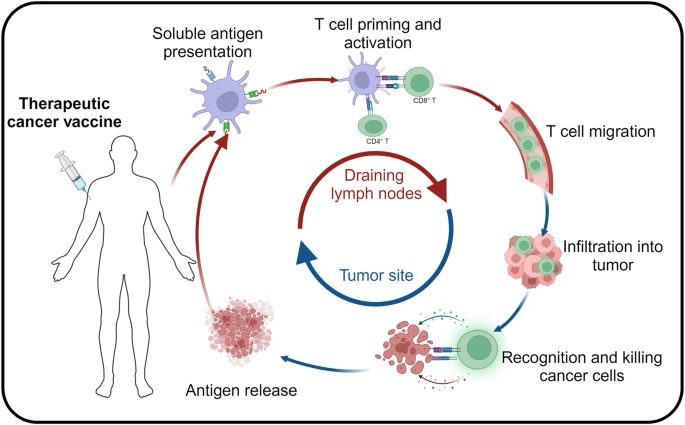
The vaccine, galinpepimut-S, is off-the-shelf. It targets a protein called WT1 found in the cancer cells of more than 95% of people with AML, and it trains both CD8 and CD4 T cells to hunt residual disease. The trial was open-label, the company released no confidence interval for the survival estimate, and secondary endpoints are still unpublished.

Why it matters

For AML patients in a second remission, an off-the-shelf vaccine would add a maintenance option to a disease that has few.

Questions about this story

Free account needed to ask — your question is kept and asked for you right after sign-up. Answers are public.

No questions yet — be the first to ask.

Key Indicators

41%
Reduction in the rate of death
Hazard ratio of 0.59 for overall survival in the Phase 3 REGAL trial.
24.0 months
Median survival, vaccine group
In patients in second or later remission who could not receive a stem cell transplant.
14.7 months
Median survival, control group
Investigator's choice of best available treatment, a mix of observation and several drugs.
0.59
Hazard ratio
Patients on the vaccine were dying at about 59% the rate of the control group at any given point.
0.035
p-value, two-sided
The company released no confidence interval around the survival estimate.
126
Patients enrolled
Final analysis ran after 80 deaths, down from 105 in the original plan.

Voices

Curated perspectives — historical figures and your fellow readers.

Sign up to generate historical perspectives on this story.

People Involved

Organizations Involved

Timeline

November 2022 November 2026

4 events Latest: 5 days ago
Tap a bar to jump to that date
  1. Vaccine meets its primary survival endpoint

    Latest Results

    Median survival 24.0 months versus 14.7; hazard ratio 0.59, p=0.035.

  2. Sellas sets a 2027 approval filing

    Regulatory

    Company to meet FDA on an accelerated path, with a license application in the first half of 2027.

  3. Trial records its 80th death

    Milestone

    The pre-specified trigger for the final overall survival analysis.

  4. REGAL redesign lowers the bar for the final analysis

    Trial design

    After a blinded review, Sellas cut required deaths from 105 to 80 and raised enrollment.

Scenarios

1

FDA approves the vaccine in 2027

Possible Resolves by End of 2027

Discussed by: Alliance Global Partners analyst James Molloy, in comments reported by Philstar Life

Sellas meets the FDA, files a biologics license application in the first half of 2027, and wins an accelerated approval on the strength of the survival result. A confirmatory obligation would follow, but the drug reaches patients in second remission first.

2

FDA wants more data before any filing

Possible Resolves by Q2 2027

Discussed by: Pharmacy Times and Peptide News Digest, both flagging the missing confidence interval and open-label design

Regulators look at a single trial of 126 patients, an open-label control arm, and a survival estimate with no published confidence interval, and ask for a confirmatory study or a full data package before accepting an application. Sellas's 2027 timeline slips.

3

Full data narrow the survival benefit

Uncertain Resolves by Q2 2027

Discussed by: Peptide News Digest and Pharmacy Times, which noted the unreleased confidence interval and secondary endpoints

The complete results arrive at a medical conference or in a journal and show a wide confidence interval, or leukemia-free survival and measurable residual disease results that do not separate from the control arm. The overall survival result holds, but the effect looks smaller than the topline suggested.

4

A larger drugmaker buys or partners on the vaccine

Uncertain Resolves by End of 2027

Discussed by: No named analyst has predicted a specific deal; the scenario follows from the readout and the 2027 filing plan

A positive Phase 3 in a cancer with few maintenance options makes Sellas a licensing or acquisition target before the filing. A partner would bring the sales force and manufacturing that a small developer lacks.

Historical Context

3 moments from history that rhyme with this story — and how they unfolded.

April 2010

Sipuleucel-T approval (2010)

The FDA approved sipuleucel-T, sold as Provenge, for advanced prostate cancer. It was the first therapeutic cancer vaccine to reach the market. Its pivotal trial showed a median survival gain of 4.1 months, 25.8 months against 21.7.

Then

Each dose had to be manufactured from the patient's own cells, which made the drug expensive and slow to deliver.

Now

Dendreon, the maker, filed for bankruptcy in 2014. The episode became the standard cautionary tale about cancer vaccines with modest survival gains.

Why this matters now

Galinpepimut-S is off-the-shelf and reports a 9.3-month median gain, so the questions facing it are about confirmation and durability rather than manufacturing.

2013

Tecemotide lung cancer trial (2013)

Merck KGaA's tecemotide, a vaccine aimed at a protein called MUC1, failed to meet its primary endpoint in a Phase 3 trial of stage III lung cancer. Earlier, smaller studies had suggested a survival benefit.

Then

The company halted the program's main path to approval and went back to subgroup analyses.

Now

The failure reinforced a view among investors that positive mid-stage vaccine data rarely survived a large randomized trial.

Why this matters now

It explains why Sellas's result is being read alongside the unpublished confidence interval and secondary endpoints rather than on the topline alone.

2026

Intismeran melanoma result (2026)

Moderna and Merck's intismeran, a vaccine made from a sample of each patient's tumor, succeeded in a Phase 3 trial for melanoma earlier in 2026.

Then

It gave the cancer vaccine field its first late-stage win in years and lifted expectations for the group.

Now

The result is recent enough that its effect on approvals and on investment in the field is still playing out.

Why this matters now

Two different designs, a personalized mRNA vaccine and an off-the-shelf peptide vaccine, cleared Phase 3 in the same year, which is why the Sellas readout is being treated as part of a pattern.

Sources

(8)