
Pull to refresh
Logo
Vir's hepatitis D combination succeeds in first Phase 3 trial

Vir's hepatitis D combination succeeds in first Phase 3 trial

New Capabilities

Elebsiran and tobevibart met the primary and key secondary goals, setting up a 2027 filing and a challenge to Gilead's Hepcludex.

Overview

Updated Yesterday

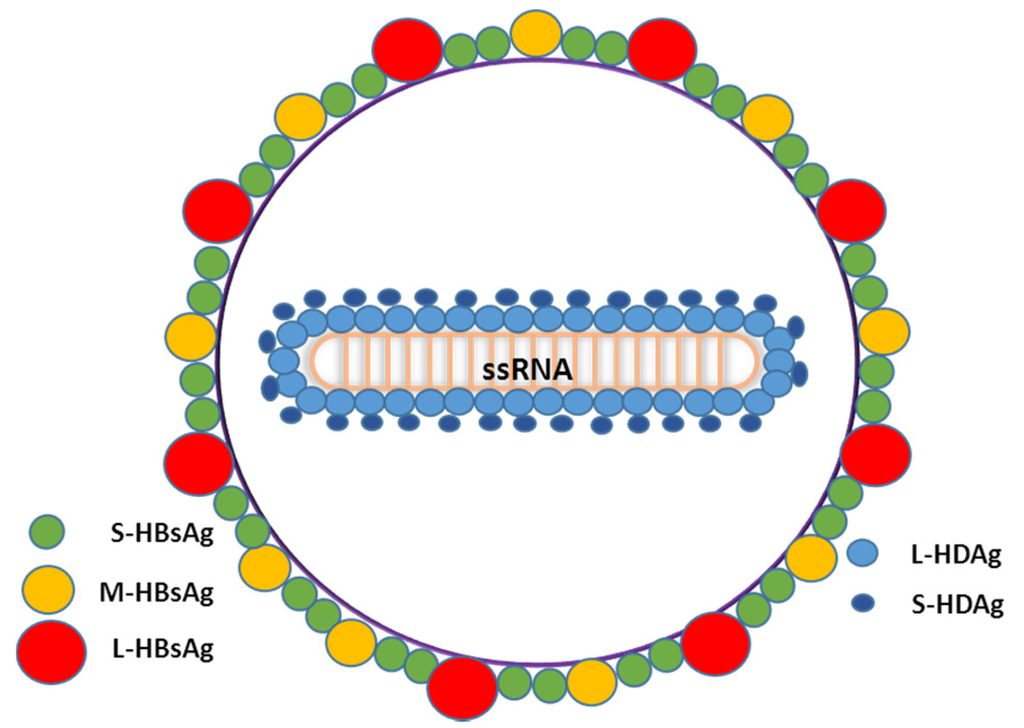
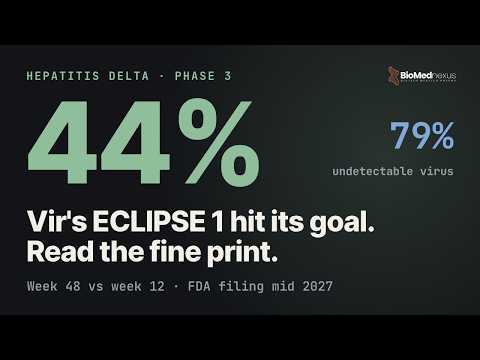
Hepatitis D only infects people who already have hepatitis B, and it is the more aggressive of the two. Until this year, the United States had no approved drug for it. On November 8, Vir Biotechnology reported that a two-drug combination cleared detectable virus and normalized levels of alanine aminotransferase, a liver enzyme, in 44% of patients after 48 weeks.

The result puts Vir back in infectious disease, a field it had largely left after restructuring around cancer drugs. It also puts pressure on Gilead Sciences, whose Hepcludex became the first approved U.S. treatment for chronic hepatitis D earlier in 2026, and on Mirum Pharmaceuticals, which reported positive Phase 3 data in September.

Why it matters

If approved, a monthly two-injection regimen could become front-line treatment for a liver infection that affects an estimated 5% of people with chronic hepatitis B worldwide.

Questions about this story

Free account needed to ask — your question is kept and asked for you right after sign-up. Answers are public.

No questions yet — be the first to ask.

Key Indicators

44%
Primary-endpoint response
Share of treated patients with undetectable hepatitis D virus RNA and normal alanine aminotransferase at week 48 in ECLIPSE 1.
79%
Undetectable virus
Share of treated patients with undetectable hepatitis D virus RNA alone at week 48.
100%
Virologic response
Share with undetectable virus or at least a 2-log reduction in viral levels.
0%
Delayed-arm response
Primary-endpoint response in the delayed-treatment group at week 12.
124
Patients enrolled
Total participants randomized in the ECLIPSE 1 trial.
5%
Global hepatitis D prevalence
World Health Organization estimate of people with chronic hepatitis B who also have hepatitis D.

Voices

Curated perspectives — historical figures and your fellow readers.

Sign up to generate historical perspectives on this story.

People Involved

Organizations Involved

Timeline

2021 November 2026

5 events Latest: Yesterday
Tap a bar to jump to that date
  1. Vir shares jump on hepatitis D data

    Latest Market

    The stock rose about 22% as analysts called the results competitive with Gilead and Mirum.

  2. Vir's combination meets Phase 3 endpoints

    Trial

    Elebsiran plus tobevibart produced a 44% primary-endpoint response at 48 weeks versus 0% in the delayed arm.

  3. Mirum's hepatitis D drug clears Phase 3

    Trial

    A drug Mirum acquired in a buyout met its primary endpoint, adding a second late-stage competitor.

  4. FDA approves the first U.S. hepatitis D treatment

    Regulation

    Gilead's Hepcludex, a once-daily injection, became the first approved therapy for chronic hepatitis D.

  5. Vir brings a COVID-19 antibody to market

    Product

    Xevudy became Vir's first marketed drug, built on its infectious-disease research platform.

Scenarios

1

FDA approves Vir's hepatitis D combination

Likely Resolves by Q2 2028

Discussed by: Evercore ISI analyst Cory Kasimov, who called it a potential dominant front-line product.

Vir plans a global regulatory package with an FDA submission in mid-2027, after ECLIPSE 2 and 3 report. The 44% primary-endpoint response and 79% undetectable-virus rate are the core of the case. Approval would make the monthly two-injection regimen a direct competitor to Hepcludex.

2

ECLIPSE 3 shows the combination beats bulevirtide head-to-head

Possible Resolves by Q2 2027

Discussed by: Vir Biotechnology, which designed ECLIPSE 3 as a head-to-head trial against bulevirtide.

ECLIPSE 3 enrolls patients who have not taken bulevirtide and compares the Vir combination directly against it. Results are expected in the first quarter of 2027. A win would support the argument that the regimen should be preferred first-line therapy and help with reimbursement.

3

A safety signal or trial failure blocks the filing

Unlikely Resolves by End of 2027

Discussed by: Standard regulatory risk; not a specific published forecast.

The combination had one Grade 3 treatment-related event in ECLIPSE 1, a temporary neutrophil decrease, and no discontinuations. Larger and longer exposure in ECLIPSE 2 and 3 could reveal problems that 124 patients cannot. A clinical hold or a missed endpoint would delay or end the mid-2027 filing.

Historical Context

3 moments from history that rhyme with this story — and how they unfolded.

1991-2013

Hepatitis C before direct-acting antivirals (1991-2013)

For two decades, chronic hepatitis C was treated with interferon-based regimens that cured roughly half of patients and caused flu-like side effects many could not tolerate. In late 2013, the FDA approved sofosbuvir, the first widely used direct-acting antiviral.

Then

Sofosbuvir-based regimens raised cure rates sharply and shortened treatment.

Now

Cure rates climbed above 90% for most patients as newer regimens followed, turning hepatitis C from a managed infection into a curable one.

Why this matters now

Vir's combination also pairs two mechanisms against one virus. The hepatitis C wave shows how quickly a chronic infection can become curable once that works.

1996

Combination antiretroviral therapy for HIV (1996)

In 1996, researchers reported that cocktails of three antiretroviral drugs suppressed HIV far better than single drugs. The regimens were demanding, but they changed a usually fatal infection into a manageable chronic condition.

Then

AIDS death rates fell sharply in wealthy countries within a few years.

Now

Combination therapy became the standard, and the principle that hitting a virus at multiple points prevents resistance shaped later antiviral development.

Why this matters now

Vir's regimen pairs a small interfering RNA that cuts hepatitis B surface antigen production with an antibody that blocks viral entry, the same multi-target logic.

2021

Vir's COVID-19 antibody and the pivot (2021)

Vir brought the COVID-19 antibody Xevudy to market in 2021. It later restructured and shifted primarily to T-cell engagers for cancer, while keeping hepatitis D and preclinical HIV work.

Then

The company's focus moved away from infectious disease.

Now

Hepatitis D remained one of its few late-stage infectious-disease programs.

Why this matters now

The Phase 3 result is a return on a program Vir kept while changing direction.

Sources

(5)