

Pull to refresh
Logo
Daily Brief
Following
Why
X builds integrated finance platform

X builds integrated finance platform

New Capabilities
By Newzino Staff |

Musk's Social Network Adds Stock and Crypto Trading to Payment System

7 days ago: X Announces Stock and Crypto Trading via Smart Cashtags

Overview

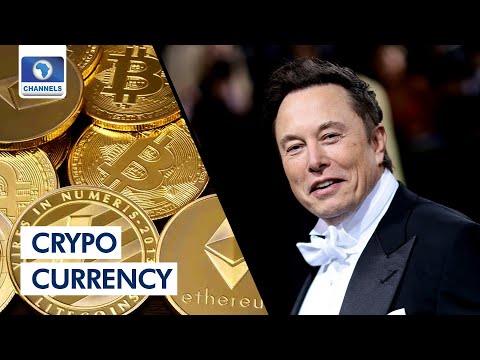
Elon Musk founded X.com in 1999 with a vision of building an all-in-one financial services platform. That company became PayPal, and he was ousted as chief executive. Twenty-seven years later, he's trying again. X, the social network formerly known as Twitter, announced on February 14, 2026 that users will soon be able to trade stocks and cryptocurrency directly from their timelines through a feature called Smart Cashtags.

The stakes are substantial. X claims 600 million monthly active users—roughly half the population of China, where WeChat proved that a messaging app could become the center of people's financial lives. If Smart Cashtags works as described, tapping a ticker symbol like $BTC or $TSLA will show live prices, charts, and a buy button. Combined with the X Money payment system already in beta, Musk is positioning X as a one-stop shop for earning, spending, and investing—the exact vision he pitched for X.com before the board replaced him in 2000.

Key Indicators

600M
Monthly Active Users
X's global user base that could potentially access trading features
41
State Licenses
U.S. states where X has obtained money transmitter licenses
1-2
Months to Beta
Timeline for limited external beta launch of X Money and Smart Cashtags
27
Years Since X.com
Time since Musk founded his original fintech venture, which became PayPal

Interactive

Exploring all sides of a story is often best achieved with Play.

Dorothy Parker

Dorothy Parker

(1893-1967) · Jazz Age · wit

Fictional AI pastiche — not real quote.

"Twenty-seven years to get his second chance at the same idea—some men collect ex-wives, Mr. Musk collects ex-companies. One can only admire the optimism of a man who, having been shown the door once, decides the solution is to buy the entire building."

Ever wondered what historical figures would say about today's headlines?

Sign up to generate historical perspectives on this story.

Sign Up

Debate Arena

Two rounds, two personas, one winner. You set the crossfire.

People Involved

Elon Musk
Elon Musk
Owner of X; CEO of Tesla, SpaceX, and xAI (Driving X's transformation into financial services platform)
Nikita Bier
Nikita Bier
Head of Product, X (Leading Smart Cashtags and product development)
Changpeng Zhao
Changpeng Zhao
Co-founder of Binance; former CEO (Welcomed Smart Cashtags but raised compliance concerns)

Organizations Involved

X (formerly Twitter)
Social Media Platform
Status: Expanding into financial services

Operates the X social network, formerly Twitter, and is building X Money payment and trading services.

VI
Visa Inc.
Financial Services Corporation
Status: Strategic partner for X Money payments

Global payments technology company enabling X Money's peer-to-peer transfers and debit card integration.

U.S. Securities and Exchange Commission
U.S. Federal Regulatory Agency
Status: Overseeing broker-dealer registration and securities trading regulation

Federal agency that regulates securities markets; X would need broker-dealer registration to offer stock trading.

Solana Labs
Solana Labs
Blockchain Technology Company
Status: Eager partner for Smart Cashtags integration

Developer of the Solana blockchain; highlighted that Smart Cashtags will support Solana-based tokens.

Timeline

  1. X Announces Stock and Crypto Trading via Smart Cashtags

    Product

    X announced Smart Cashtags will roll out in weeks, allowing users to tap ticker symbols to see live prices, charts, and execute trades without leaving the app. Beta planned for 1-2 months with global rollout to 600 million users targeted for mid-2026.

  2. Bier Teases Crypto-Aware Smart Cashtags

    Product

    X Head of Product Nikita Bier revealed that Smart Cashtags would be crypto-aware, allowing users to tag specific assets and smart contract addresses.

  3. X Confirms X Money Launch Timeline

    Statement

    CEO Linda Yaccarino confirmed X Money would launch in 2025, with the platform having secured money transmitter licenses in 41 U.S. states.

  4. Nikita Bier Named X Head of Product

    Personnel

    Serial app entrepreneur Nikita Bier, who sold TBH to Facebook and Gas to Discord, joined X as Head of Product after working at xAI on AI integration.

  5. Visa Partnership Announced for X Money

    Partnership

    X announced a partnership with Visa to power its X Money payment system, enabling instant wallet funding, peer-to-peer transfers, and bank withdrawals via Visa Direct.

  6. Twitter Rebranded to X

    Branding

    Musk replaced the Twitter bird logo with an X, signaling his intention to build an 'everything app' combining social media, payments, and financial services.

  7. Musk Acquires Twitter for $44 Billion

    Corporate

    After months of legal battles, Elon Musk completed his acquisition of Twitter, immediately firing top executives and beginning plans to transform the platform.

  8. Musk Reacquires X.com Domain

    Corporate

    PayPal sold the X.com domain back to Elon Musk, who reportedly had long wanted to revive his original fintech vision.

  9. X.com Renamed to PayPal

    Corporate

    The merged company abandoned the X.com brand and renamed itself PayPal, focusing exclusively on the online payment service.

  10. Board Removes Musk as CEO

    Corporate

    While Musk was on his honeymoon in Australia, X.com's board voted to replace him with Peter Thiel as chief executive due to disagreements over company direction.

  11. X.com Merges with Confinity

    Corporate

    X.com merged with rival Confinity, maker of the PayPal money transfer service, retaining the X.com name with Musk as chief executive.

  12. Musk Co-founds X.com

    Origin

    Elon Musk co-founded X.com as an online bank in Palo Alto, California, envisioning a one-stop shop for all financial services including checking accounts, insurance, mortgages, and investments.

Scenarios

1

X Becomes Major Retail Trading Platform by 2027

Discussed by: Crypto and fintech analysts at CoinDesk, BeInCrypto, and Finance Magnates

X successfully launches Smart Cashtags and X Money, obtaining necessary broker-dealer registration and building on its Visa partnership. The frictionless experience of tapping a ticker to trade—combined with 600 million potential users—draws significant retail volume away from Robinhood, Webull, and traditional brokerages. X captures meaningful market share in both crypto and stock trading, validating Musk's super app strategy.

2

Regulatory Hurdles Delay or Block Trading Features

Discussed by: Changpeng Zhao (Binance), securities lawyers, and regulatory analysts

X struggles to meet Securities and Exchange Commission and Financial Industry Regulatory Authority requirements for broker-dealer registration. Know Your Customer compliance proves difficult to implement across a social media user base. State-by-state licensing gaps limit rollout. The trading features launch in limited form or are indefinitely delayed, leaving X Money as a peer-to-peer payment service without securities trading.

3

Integration Succeeds but Adoption Remains Modest

Discussed by: Social media industry analysts and fintech observers

Smart Cashtags launches successfully but fails to attract mainstream trading volume. Users prefer dedicated trading apps with more sophisticated tools. The feature becomes popular among crypto enthusiasts already active on X but doesn't meaningfully expand X's revenue or competitive position. X Money gains traction for peer-to-peer payments but trading remains a niche feature.

4

Market Volatility Event Tests X's Trading Infrastructure

Discussed by: Securities regulators, fintech analysts, and retail investor advocates referencing Robinhood's 2021 GameStop crisis

A meme stock or crypto surge creates extreme trading volume on X. The platform faces the same collateral and liquidity pressures that forced Robinhood to halt GameStop trading in January 2021. X either restricts trading during high volatility—damaging user trust—or successfully handles the load, proving its infrastructure can compete with established brokerages.

Historical Context

WeChat Pay Launch (2013)

August 2013

What Happened

Tencent added mobile payments to WeChat, its messaging app with hundreds of millions of Chinese users. The feature allowed users to link bank accounts and send money through chat. In 2014, WeChat introduced Red Envelopes—digital versions of the traditional Chinese New Year cash gifts—that went viral and drove mass adoption.

Outcome

Short Term

WeChat Pay gained 400 million users within a year of launch, with 90 percent in China.

Long Term

WeChat became the template for 'super apps,' with 1.36 billion monthly active users using it for messaging, payments, ride-hailing, food delivery, and government services. China largely leapfrogged credit cards, moving directly to mobile payments.

Why It's Relevant Today

X is explicitly modeling itself on WeChat. If Musk can replicate the frictionless integration of payments and social features, X could similarly transform how Western users interact with money—though Western regulatory environments and consumer habits differ significantly from China's.

Robinhood GameStop Trading Halt (2021)

January 2021

What Happened

Trading app Robinhood halted buying of GameStop and other stocks on January 28, 2021, as a Reddit-fueled short squeeze sent prices soaring. Robinhood faced a $3 billion collateral call from clearinghouses that morning—far exceeding its $696 million on deposit. The company scrambled to raise emergency capital while millions of users were locked out of buying shares.

Outcome

Short Term

Robinhood raised $3.4 billion in emergency funding over the following days. The company faced congressional hearings, Securities and Exchange Commission investigations, and investor lawsuits alleging market manipulation.

Long Term

Robinhood survived but suffered lasting reputation damage. The incident accelerated industry discussions about moving to blockchain-based settlement to reduce counterparty risk. Robinhood's chief executive later called GameStop 'a wake-up call for tokenization.'

Why It's Relevant Today

Any platform offering retail trading must handle extreme volume spikes without restricting user access. X's integration of trading into a social feed—where viral discussions could trigger buying frenzies—creates similar systemic risks. Regulators and users will watch closely for how X handles collateral requirements and circuit breakers.

PayPal X.com Merger and Musk Ouster (2000)

March-September 2000

What Happened

Musk's online bank X.com merged with rival Confinity in March 2000, combining Musk's full-service financial vision with Confinity's PayPal money transfer product. Internal battles over company direction—Musk wanted to maintain X.com branding and Windows-based infrastructure; others preferred PayPal branding and Unix systems—led the board to remove Musk as chief executive in September while he was traveling.

Outcome

Short Term

Peter Thiel became chief executive. The company abandoned the X.com brand, renamed itself PayPal, and focused exclusively on peer-to-peer payments rather than full banking services.

Long Term

PayPal went public in 2002 and sold to eBay for $1.5 billion. Musk remained the largest individual shareholder and made approximately $165 million from the sale. He spent the next two decades building Tesla and SpaceX—but never abandoned his original financial services vision.

Why It's Relevant Today

Musk has explicitly framed X as a second attempt at his X.com vision. Twenty-seven years later, he controls the company outright with no board that can remove him. Whether the super app model that failed in 2000 will succeed in 2026—when mobile payments are mainstream and social commerce is proven—remains the central question of X's transformation.

12 Sources: