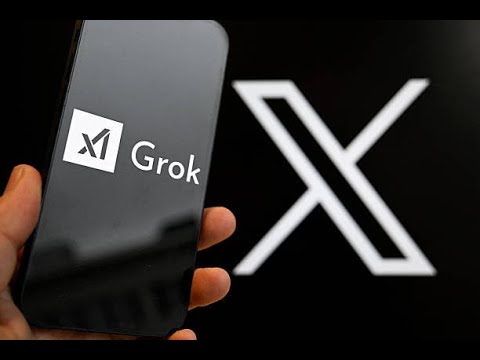
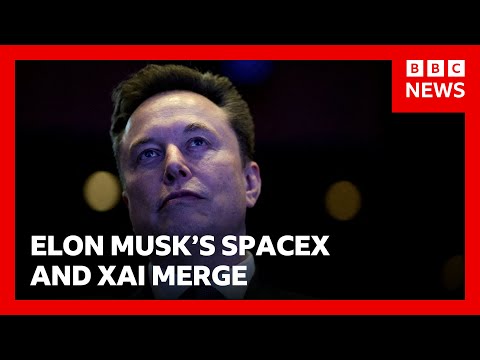
In February 2026, SpaceX bought xAI for $250 billion, the largest acquisition in corporate history. By mid-May, all 11 original xAI co-founders had left, and more than 50 SpaceXAI researchers and engineers had departed for Meta and Thinking Machines Lab.
SpaceX's prospectus, published around May 15, confirmed the cost: a $4.94 billion net loss on $18.67 billion in 2025 revenue. The loss stems from $14 billion in AI infrastructure spending.
SpaceX's IPO roadshow now targets a June 4 start, with pricing on June 11 and Nasdaq trading under ticker SPCX on June 12. The target valuation has grown to $1.75 trillion to $2 trillion. The prospectus confirmed Musk controls 79% of votes with about 42% of equity, through a dual-class structure: only he can vote himself out as CEO.
Why it matters
A $2 trillion listing would make SpaceX the most expensive company ever to trade publicly—and public investors would absorb its AI division's losses.
Questions about this story
Free account needed to ask — your question is kept and asked for you right after sign-up. Answers are public.
0
The xAI deal with anthropic was a way to produce revenue for the IPO, right? If the datacenter is now rented out, what does that mean for grok development?
The Anthropic deal is directly IPO-driven — $1.25B/month fills the revenue hole in SpaceX's S-1 — and Grok development can continue because SpaceXAI already moved training to the newer Colossus 2 facility before signing.
Why it matters: At $15B annually, Anthropic alone nearly quintuples SpaceXAI's 2025 revenue of $3.2B, transforming the AI division from a cash drain into a profit center right before the June 12 listing.
—SpaceX's S-1 showed SpaceXAI burning $14B in infrastructure while generating only $3.2B in revenue — the Anthropic contract at $1.25B/month through May 2029 (up to ~$45B total) directly addresses that gap for IPO investors.
—Grok's usage dropped sharply in recent months, leaving Colossus 1 (220,000+ Nvidia H100/H200 GPUs, 300MW) sitting underutilized — SpaceXAI had already shifted Grok training to Colossus 2, which runs next-gen GB200 hardware.
—The lease has a 90-day exit clause, so SpaceXAI retains the option to reclaim Colossus 1 capacity if Grok demand rebounds or Colossus 2 hits constraints.
—All 11 original xAI co-founders are now gone and 50+ researchers have departed — the deeper risk to Grok development is talent loss, not compute availability.
Some analysts argue renting Colossus 1 to a direct competitor signals Musk has effectively conceded the near-term AI model race to Anthropic/OpenAI and is pivoting SpaceXAI to an infrastructure-as-a-service play; others read it as a pragmatic cash move while Colossus 2 and the Terafab chip plant mature, with Grok development continuing unimpeded on newer hardware.
AI-generated with web search — may be wrong. Check the linked sources.
Key Indicators
$1.75T–$2T
Target IPO Valuation
SpaceX is targeting a valuation between $1.75 trillion and $2 trillion for its June 2026 IPO, up from the $1.25 trillion combined value when the xAI acquisition closed in February
$250B
Acquisition Price
The largest single acquisition ever, exceeding Vodafone-Mannesmann's $203 billion deal in 2000
$75B
Target IPO Raise
If successful at the targeted terms, SpaceX's offering would be the largest public stock sale in history, more than double Saudi Aramco's $29 billion record
$55B–$119B
Terafab Investment
SpaceX filed plans in May 2026 for a chip factory in Texas with a $55 billion initial commitment that could grow to $119 billion across all phases, built alongside Tesla
$4.94B
2025 Net Loss
SpaceX's first published financials, from the May 2026 S-1, show a $4.94 billion net loss in 2025 despite Starlink generating $4.42 billion in operating profit—the gap is SpaceXAI's $14 billion in infrastructure spending
Images from Openverse under Creative Commons licenses.
Videos from YouTube.
Voices
Curated perspectives — historical figures and your fellow readers.
Mark Twain
(1835-1910) ·Gilded Age · wit
Fictional AI pastiche — not real quote.
"I observe Mr. Musk has discovered the most elegant solution to raising capital: selling one pocket to the other, then inviting the public to buy shares in the trousers. It is a comfort to know that in our modern age of electric wonder, a man may still achieve immortality through the ancient and respectable art of spectacular bookkeeping."
100% found this insightful
Andrew Mellon
(1855-1937) ·Progressive Era · finance
Fictional AI pastiche — not real quote.
"Consolidation of capital under singular vision has its merits, though I observe Mr. Musk acquires his own enterprise at a valuation that would make even the most creative financier of my era blush. One wonders whether orbital data centers represent productive investment or merely the costliest method yet devised to cool machinery—the vacuum of space being rather expensive real estate compared to a Pennsylvania riverside."
100% found this insightful
Ever wondered what historical figures would say about today's headlines?
Sign up to generate historical perspectives on this story.
23 events
Latest: May 15th, 2026 · 5 months ago
Showing 8 of 23
JK to step
Tap a bar to jump to that date
Jump to
May 2026
SpaceX Public S-1 Shows $4.94B Loss and Musk's 79% Voting Control
LatestRegulatory
SpaceX's public S-1 shows $18.67 billion in 2025 revenue and a $4.94 billion net loss, with SpaceXAI burning $14 billion in infrastructure costs and generating $3.2 billion in revenue against Starlink's $4.42 billion in operating profit. A dual-class share structure gives Musk 79% of votes with about 42% of equity; only he can vote himself out as CEO.
SpaceXAI Brain Drain: 50+ Departures, All Co-Founders Gone
Corporate
More than 50 SpaceXAI researchers and engineers have left since the February merger, per The Information—at least 11 to Meta, seven to Mira Murati's Thinking Machines Lab. All 11 original xAI co-founders are now gone, including pre-training team lead Juntang Zhuang.
SpaceX Shares Hit All-Time High in Private-Market Trading
Market
SpaceX shares hit a record high on private secondary markets ahead of the June IPO, as investor demand grows for the listing.
Musk Dissolves xAI, Creates SpaceXAI Brand
Corporate
Musk announces xAI will be dissolved as a standalone company and its products (including Grok) will operate under a new sub-brand called SpaceXAI within SpaceX.
SpaceX Files $55 Billion Terafab Chip Plant Plans in Texas
Corporate
SpaceX files plans for a chip manufacturing facility in Texas called Terafab, a joint venture with Tesla targeting one terawatt of annual computing output. Total investment could reach $119 billion across all phases, with pilot production targeted for late 2026.
Anthropic Signs Deal to Rent Colossus 1 Supercomputer
Corporate
Anthropic agrees to use all compute capacity at SpaceX's Colossus 1 facility in Memphis (more than 220,000 Nvidia GPUs, over 300 megawatts) to run its Claude AI models. The deal also has the two companies exploring orbital data center development.
April 2026
NAACP Files Clean Air Act Lawsuit Over 33 Unpermitted Gas Turbines at Memphis Data Center
Legal
The NAACP sues xAI and subsidiary MZX Tech over 33 unpermitted methane gas turbines in Southaven, Mississippi, used to power the Colossus 2 data center near Memphis. The turbines can emit more than 1,700 tons of nitrogen oxides annually; the suit seeks an injunction and daily financial penalties under the Clean Air Act.
March 2026
Musk Admits xAI 'Not Built Right,' Pledges Rebuild
Corporate
Musk posts on X that xAI 'was not built right first time around, so is being rebuilt from the foundations up'—weeks after Tesla committed $2 billion to the company. Of the 12 original co-founders, only two remain.
February 2026
xAI Reorganization Announced After Co-Founder Departures
Corporate
Musk announces an xAI restructuring after at least 11 senior engineers, including multiple co-founders, leave the company in the weeks following the SpaceX merger close.
FCC Accepts Million-Satellite Filing, Sets Public Comment Period
Regulatory
FCC formally accepts SpaceX's application for up to one million orbital data center satellites and opens public comment period. FCC Chairman Brendan Carr publicly shares filing on X, signaling regulatory support.
Deal Structure Revealed
Corporate
Documents show merger structured as share exchange: one xAI share at $75.46 converts to 0.1433 SpaceX shares at $526.59.
Musk Details Orbital Data Center Economics on Podcast
Corporate
Elon Musk appears on Stripe co-founder Patrick Collison's 'Cheeky Pint' podcast with Dwarkesh Patel, arguing solar panels produce 5x more power in space than Earth, marking 2028 as tipping point year for orbital AI economics. Predicts within 5 years SpaceX will launch more AI annually than exists cumulatively on Earth.
SpaceX Acquires xAI in Largest Merger Ever
Acquisition
SpaceX announces acquisition of xAI for $250 billion, creating combined company valued at $1.25 trillion—the largest merger in corporate history.
January 2026
SpaceX Files for Million-Satellite Constellation
Regulatory
SpaceX submits FCC application for up to one million orbital data center satellites at altitudes between 500 and 2,000 kilometers.
Merger Talks Reported
Corporate
Reuters reports SpaceX, Tesla, and xAI are in talks to merge ahead of potential IPO.
December 2025
SpaceX Valued at $800 Billion
Valuation
SpaceX conducts secondary share sale at $800 billion valuation, more than doubling its value from $350 billion a year earlier.
xAI Completes $20 Billion Series E
Funding
xAI raises $20 billion at approximately $230 billion valuation, with Nvidia and Cisco among strategic investors.
March 2025
xAI Acquires X (Twitter)
Acquisition
xAI acquires X in an all-stock deal valuing the social media platform at $33 billion (enterprise value $45 billion minus $12 billion debt).
December 2024
xAI Series C Raises $6 Billion
Funding
xAI raises another $6 billion at $50 billion valuation from Fidelity, BlackRock, and Sequoia Capital.
July 2024
Colossus Supercomputer Begins Operation
Infrastructure
xAI's Colossus data center in Memphis begins operation with 100,000 Nvidia GPUs, built in just 122 days.
May 2024
xAI Raises $6 Billion Series B
Funding
xAI closes $6 billion funding round at $24 billion valuation, establishing itself as a major AI competitor.
March 2023
Musk Founds xAI
Company Formation
Elon Musk launches xAI as an artificial intelligence company to compete with OpenAI, recruiting researchers from DeepMind and Google.
May 2002
SpaceX Founded
Company Formation
Elon Musk founds Space Exploration Technologies Corp. with $100 million from his PayPal sale, aiming to reduce space transportation costs.
Scenarios
1
SpaceX IPO Raises $50 Billion, Becomes World's Most Valuable Company
Possible
Discussed by: Financial Times, Bloomberg, Morgan Stanley analysts
The merger proceeds smoothly and SpaceX executes its June 2026 IPO at the targeted $1.5 trillion valuation, raising $50 billion—the largest public offering in history. Starlink's growing profitability (projected 25% gross margins by 2026) and the orbital data center narrative attract massive institutional investment. The combined company's diversified revenue streams—launch services, satellite internet, AI infrastructure, and social media—justify the premium valuation.
2
Regulatory Scrutiny Delays or Blocks IPO
Possible
Discussed by: Columbia Law School professor Eric Talley, Campaign Legal Center, Congressional investigators
Conflict-of-interest investigations into Musk's DOGE role and his companies' government contracts create regulatory uncertainty. xAI's ongoing investigations in Europe, India, Malaysia, and California over Grok's deepfake capabilities add complexity. Securities regulators require extended disclosure periods or impose conditions that delay the IPO past its June target, potentially into 2027.
3
Orbital Data Centers Prove Technically Infeasible
Possible
Discussed by: Moffett Nathanson analysts, TMF Associates President Tim Farrar, aerospace engineers
The orbital data center concept faces insurmountable technical challenges: cooling systems that work in space vacuum, radiation-hardened chips that maintain performance, and launch costs that remain too high even with Starship. The narrative collapses as a marketing tool, but SpaceX's core businesses (launch and Starlink) remain profitable. Investors reassess whether xAI's $1 billion monthly burn rate is sustainable.
4
xAI Cash Burn Drags Down Combined Entity
Possible
Discussed by: Bloomberg, PitchBook analysts, venture capital observers
xAI's competition with OpenAI and Anthropic requires continued massive infrastructure spending. Despite the merger, the AI division's $1 billion monthly burn rate pressures SpaceX's profitability just as the company prepares for public market scrutiny. The IPO either raises less than targeted or values the company below expectations, reminiscent of how unprofitable divisions have historically weighed on conglomerate valuations.
Musk publicly admitted xAI 'was not built right' weeks after Tesla committed $2 billion to the company and after the $250 billion merger with SpaceX had already closed. Securities lawyers writing on D&O Diary note this raises questions about whether SpaceX's confidential S-1 adequately disclosed xAI's organizational and technical state to investors. If the SEC requires additional disclosures or issues comment letters on the draft, the IPO roadshow could slip past its June target.
6
SpaceXAI Falls Behind in AI Race as Talent Exodus Becomes Permanent
Possible
Resolves by Feb 1, 2027
Discussed by: The Information, TechCrunch
The departure of all 11 original xAI co-founders and more than 50 researchers leaves SpaceXAI without the team that built Grok. Rebuilding a pre-training organization typically takes 12 to 18 months. If SpaceXAI cannot close the model capability gap with GPT-5 and Claude within two years of the merger, its $3.2 billion in annual AI revenue could stagnate while infrastructure costs continue, dragging on the combined company's IPO-era financials.
Historical Context
3 moments from history that rhyme with this story — and how they unfolded.
1 of 3
November 1999 - February 2000
Vodafone-Mannesmann (2000)
British mobile operator Vodafone acquired German industrial conglomerate Mannesmann for $203 billion after a hostile takeover battle, creating the world's largest mobile telecommunications company. The deal involved Vodafone CEO Chris Gent convincing Mannesmann shareholders to accept an all-stock offer during the dot-com boom.
Then
Vodafone became the world's largest mobile operator with 42 million subscribers across 25 countries.
Now
The deal held the record for largest acquisition for 26 years until the SpaceX-xAI merger. Vodafone wrote down over $50 billion in value from the acquisition by 2006 as the telecom bubble burst.
Why this matters now
The previous record-holder demonstrates both the risks of all-stock mega-mergers during market exuberance and how quickly valuations can deteriorate when underlying assumptions prove wrong.
2 of 3
January 2000 - June 2009
AOL-Time Warner (2000)
America Online merged with Time Warner for $182 billion, promising to combine AOL's internet dominance with Time Warner's content empire. AOL's market capitalization at the time exceeded Time Warner's despite generating a fraction of the revenue.
Then
The dot-com bubble burst months after the deal closed. By 2002, the combined company reported a $99 billion loss—one of the largest in corporate history.
Now
Time Warner fully divested AOL in 2009. The merger became a cautionary tale about cultural clashes, overvaluation, and betting on technology shifts (dial-up to broadband) that undermined the acquirer's core business.
Why this matters now
The SpaceX-xAI merger similarly combines a profitable infrastructure business with a fast-growing but cash-burning technology company, raising questions about whether orbital data centers represent the future or an AOL-style bet on technology that may not materialize.
3 of 3
December 2019
Saudi Aramco IPO (2019)
Saudi Arabian Oil Company (Aramco) sold 1.5% of its shares on the Riyadh stock exchange, raising $25.6 billion at a $1.7 trillion valuation—the largest IPO in history. Crown Prince Mohammed bin Salman had originally targeted a $100 billion raise at $2 trillion valuation.
Then
Aramco's market cap briefly reached $2 trillion on its second trading day. The listing supported Saudi Arabia's Vision 2030 economic diversification plan.
Now
The IPO raised less than half the original target due to valuation skepticism from international investors. Aramco remained primarily held by the Saudi government and domestic investors.
Why this matters now
SpaceX's targeted $50 billion IPO would nearly double Aramco's record. The Aramco experience shows that even well-capitalized companies with dominant market positions can struggle to achieve aspirational valuations when international investors scrutinize the deal.