
Pull to refresh
Logo
China's Z.AI raises $5 billion in share placement and bond sale

China's Z.AI raises $5 billion in share placement and bond sale

Money Moves

Second financing in two months signals aggressive expansion in Chinese AI compute

Today: Z.AI confirms $5B raised

Overview

Updated 46 minutes ago

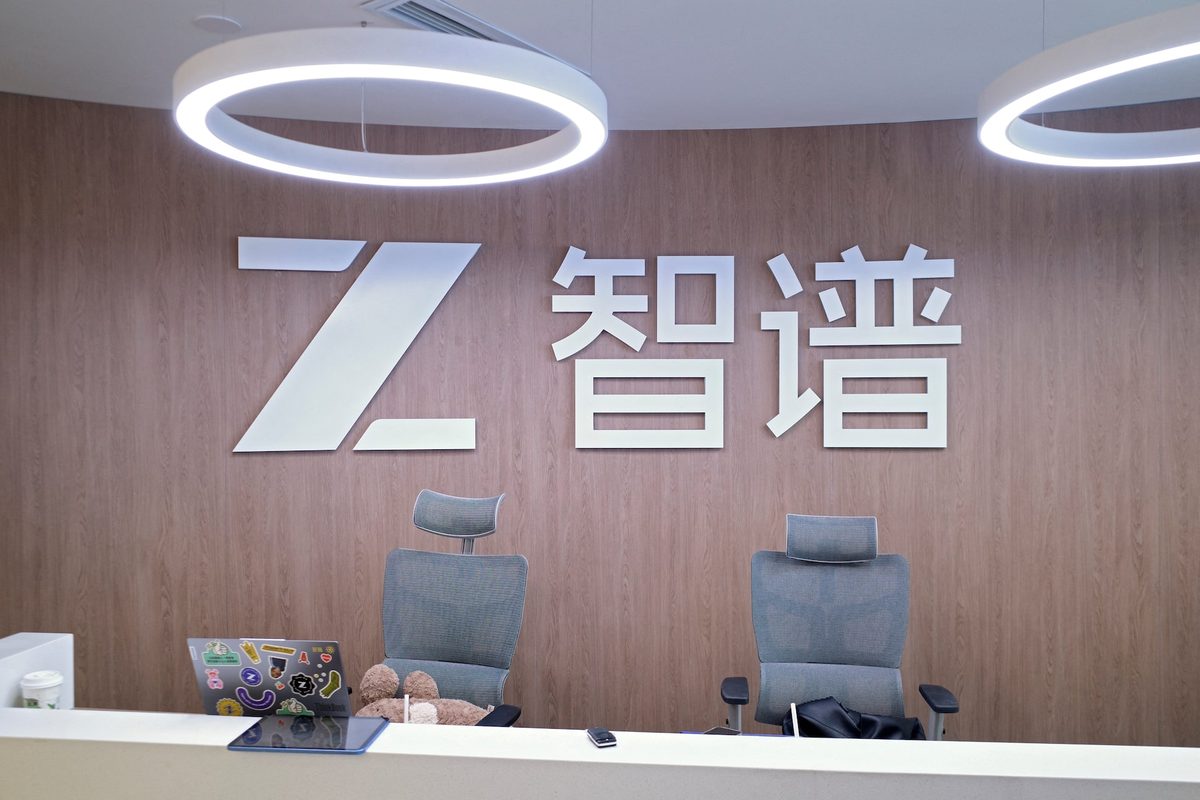
Beijing-based AI company Z.AI raised $5 billion this week, splitting the proceeds between a $2 billion share placement and $3 billion zero-coupon convertible bonds. The funds will go primarily to computing power and next-generation model research.

Z.AI is betting that the capital lets it train larger models faster than rivals. But the money arrives amid tight US export controls on advanced chips, forcing the company to source compute domestically or wait out restrictions.

Why it matters

A $5 billion bet on Chinese AI leadership hinges on whether Z.AI can get the computing power it needs to train next-gen models.

Questions about this story

Free account needed to ask — your question is kept and asked for you right after sign-up. Answers are public.

No questions yet — be the first to ask.

Key Indicators

$5B
Total funds raised
From share placement and convertible bonds combined.
21.97M
New H shares placed
Placed at HK$714 each, a 10% discount to the prior close.
10%
Discount to market price
Placement price of HK$714 vs HK$793 closing price on Sept 11.
60%
Share of proceeds for R&D and compute
Focused on next-gen GLM models, fully self-training, and infrastructure.
28.58%
Largest shareholder stake pre-dilution
Beijing Lianpai and concert parties will fall to about 25.89% after dilution.

Voices

Curated perspectives — historical figures and your fellow readers.

Ever wondered what historical figures would say about today's headlines?

Sign up to generate historical perspectives on this story.

Organizations Involved

Timeline

2 events Latest: Today
  1. Z.AI confirms $5B raised

    Today Filing

    HKEX filing shows $2B from placement and $3B from convertible bonds; proceeds to fund compute, R&D, and expansion.

  2. Z.AI launches $5B capital raise

    Financing

    Company markets 21.97 million new shares at HK$714 each and $3B in zero-coupon convertible bonds.

Scenarios

1

Z.AI launches GLM-5 with $5B compute boost

Likely Resolves by Q2 2028

Discussed by: Reuters, company statements

Z.AI deploys the new compute capacity, trains and releases a next-generation GLM-5 model by mid-2028, matching or beating western rivals. The model powers commercial products, generating revenue growth that justifies the capital.

2

US tightens chip export controls, capping Z.AI's compute plans

Possible Resolves by End of 2027

Discussed by: Bloomberg, industry analysts

The US Commerce Department expands export controls to cut off more AI chip supply to China, forcing Z.AI to rely on domestic chips like Huawei's Ascend, slowing training speed and model quality. The company may delay or scale back its deployment.

3

Z.AI stock underperforms, convertible bonds expire worthless

Unlikely Resolves by Q3 2027

Discussed by: Short sellers, market commentators

Investor enthusiasm for AI fades, pushing the share price well below the conversion price. The zero-coupon bonds mature in September 2027 unredeemed, leaving the company without the anticipated equity conversion and forcing it to repay debt or dilute further.

Historical Context

2 moments from history that rhyme with this story — and how they unfolded.

September 2014

Alibaba Group IPO (2014)

Alibaba raised $25 billion in its New York IPO, then the largest in history, to fund cloud computing and e-commerce expansion. The company used the capital to build out its ecosystem and international reach.

Then

Shares surged 38% on debut, giving the company a valuation near $230 billion.

Now

Alibaba became a global e-commerce and cloud leader, though subsequent regulatory actions and competition have pressured its growth.

Why this matters now

Like Alibaba, Z.AI is using a massive capital raise to fund aggressive expansion in a capital-intensive sector. The scale of the bet, for a company with no guarantee of market leadership, echoes Alibaba's 2014 move.

January 2023

Microsoft invests $10B in OpenAI (2023)

Microsoft announced a $10 billion investment in OpenAI to fund compute, research, and commercialization of GPT models. The deal gave Microsoft a 49% economic share in the company.

Then

OpenAI used the funds to accelerate GPT-4 training and deployment, cementing its lead in generative AI.

Now

The partnership reshaped the AI competitive landscape, sparking a wave of comparable investments in both US and Chinese AI labs.

Why this matters now

Z.AI's $5B raise is the Chinese echo of this dynamic: a national champion securing capital for compute-hungry model training. The outcome will test whether Chinese labs can match OpenAI-style progress under different regulatory and supply constraints.

Sources

(6)