
Pull to refresh
Logo
UK regulator extends zanidatamab approval to HER2-positive gastroesophageal cancer

UK regulator extends zanidatamab approval to HER2-positive gastroesophageal cancer

New Capabilities

The MHRA added stomach and esophageal tumours to Ziihera's UK licence nine months after clearing the drug for bile duct cancer, and three months after the FDA did the same

Overview

Updated 11 minutes ago

Adults in the UK whose HER2-positive stomach or esophageal cancer cannot be removed by surgery have a new drug option. On 27 November 2026, the Medicines and Healthcare products Regulatory Agency (MHRA) extended its approval of zanidatamab, sold as Ziihera, from bile duct cancer to gastroesophageal cancer.

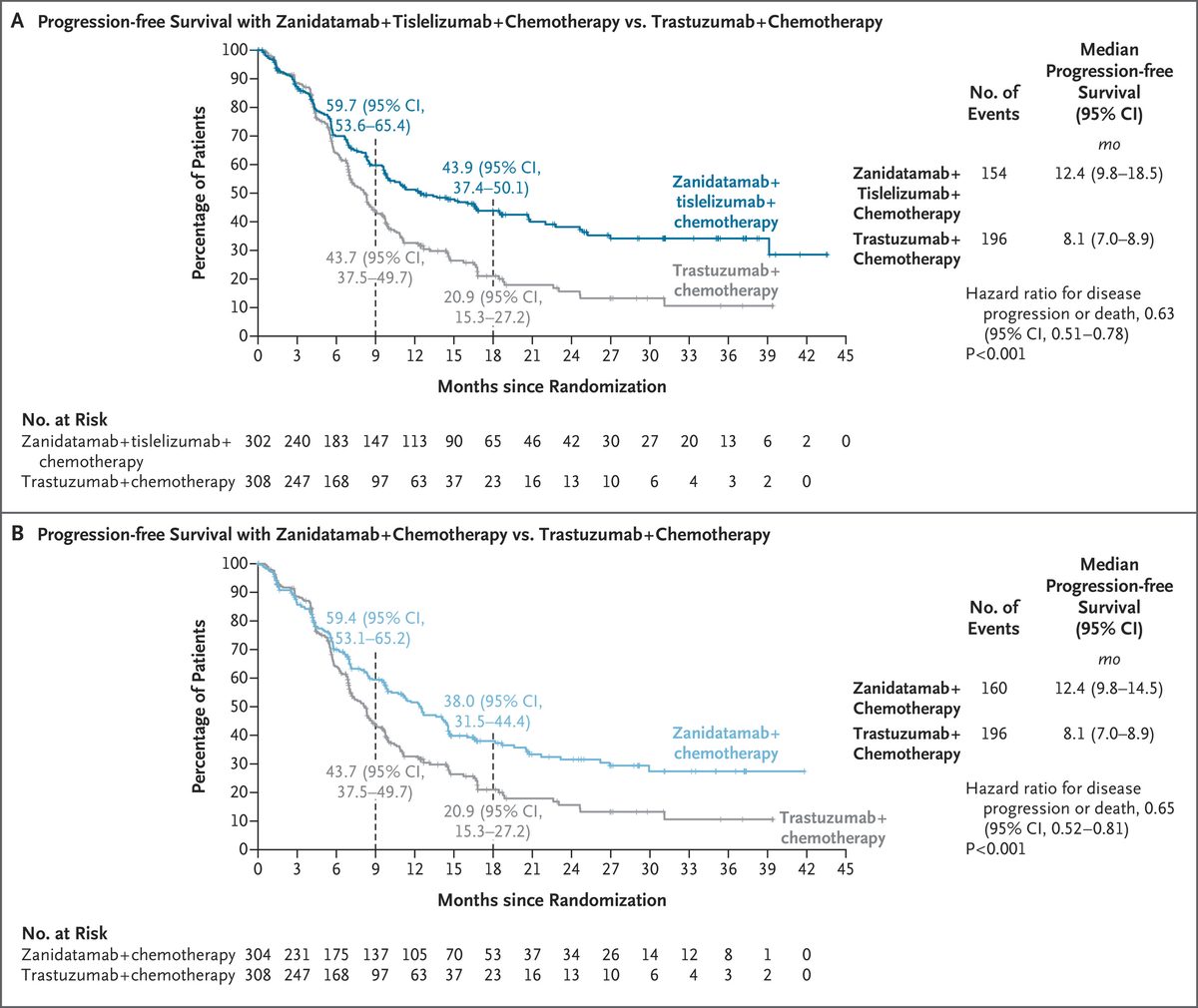
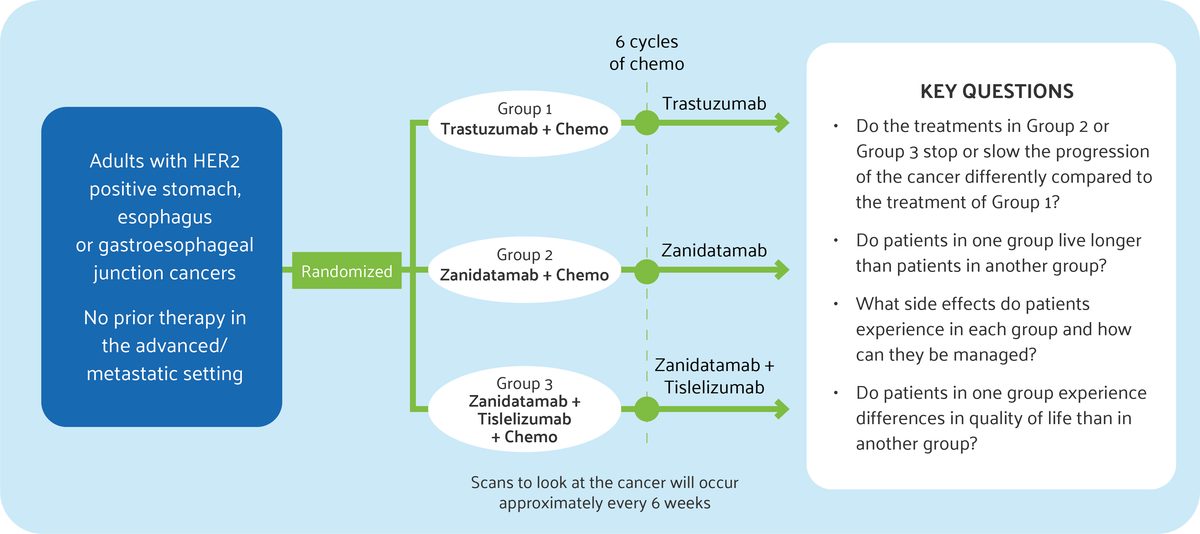
The evidence comes from a 914-patient trial in which zanidatamab plus chemotherapy and tislelizumab produced a median 26.4 months of survival, against 19.2 months for trastuzumab plus chemotherapy. The UK label covers two regimens: zanidatamab with chemotherapy, or with chemotherapy plus tislelizumab, depending on how much HER2 the tumour carries.

Why it matters

UK adults with inoperable HER2-positive stomach or esophageal cancer gain a second targeted option that extended median survival by about seven months in trials.

Questions about this story

Free account needed to ask — your question is kept and asked for you right after sign-up. Answers are public.

No questions yet — be the first to ask.

Key Indicators

26.4 months
Median overall survival, triplet arm
Zanidatamab plus tislelizumab plus chemotherapy in the 914-patient HERIZON-GEA-01 trial.
19.2 months
Median overall survival, comparator arm
Trastuzumab plus chemotherapy in the same trial, a gap of roughly seven months.
12.4 months
Median progression-free survival, triplet arm
Against 8.1 months for trastuzumab plus chemotherapy.
914
Patients in the HERIZON-GEA-01 trial
Randomised one-to-one-to-one across three treatment arms.
0.72
Hazard ratio for death, triplet versus comparator
95% confidence interval 0.57 to 0.90; p-value 0.0043.

Voices

Curated perspectives — historical figures and your fellow readers.

Sign up to generate historical perspectives on this story.

People Involved

Organizations Involved

Timeline

February 2026 November 2026

3 events Latest: Today
  1. MHRA extends the UK licence to gastroesophageal cancer

    Today Approval

    The variation covers inoperable, locally advanced or metastatic HER2-positive disease, with or without tislelizumab.

  2. FDA approves the same drug for gastroesophageal adenocarcinoma

    Approval

    Cleared with chemotherapy, with or without tislelizumab, for first-line HER2-positive disease.

  3. Zanidatamab cleared for bile duct cancer

    Approval

    The MHRA grants a conditional marketing authorisation for HER2-positive biliary tract cancer after prior chemotherapy.

Scenarios

1

NICE backs zanidatamab for routine NHS use

Uncertain Resolves by Jul 31, 2027

Discussed by: NICE's published project information and final scope for appraisal ID6672

The UK licence now covers the indication NICE is appraising, which was not true when the scope was written. If the committee accepts the survival gain as worth the price, zanidatamab with chemotherapy, with or without tislelizumab, becomes routinely funded for untreated HER2-positive advanced gastro-oesophageal adenocarcinoma in England. NICE lists guidance for 21 July 2027.

2

NICE limits funding to the highest-HER2 subgroup

Possible Resolves by Jul 31, 2027

Discussed by: NICE appraisal committee practice and the trial's subgroup results as reported by the FDA

The chemotherapy-only arm's benefit was concentrated in tumours with the strongest HER2 staining, where median progression-free survival was 14.2 months against 7.6 months on trastuzumab. That gives the committee a documented basis to fund only that subgroup, or to route the drug through managed access while more data arrive. A restricted recommendation would leave some patients in the trial's wider population without routine coverage.

3

The appraisal slips past its listed date

Possible Resolves by End of 2027

Discussed by: NICE's own published timeline for ID6672

Cancer appraisals routinely move when companies submit further evidence or the committee asks for analyses by subgroup. A slip would leave zanidatamab licensed but not routinely funded in England, so patients and clinicians would rely on other routes to access it. The listed date is a projection, not a commitment.

Historical Context

2 moments from history that rhyme with this story — and how they unfolded.

February 2026

Zanidatamab's first UK approval (February 2026)

The MHRA approved zanidatamab for adults with HER2-positive biliary tract cancer that had worsened after chemotherapy. It was a conditional marketing authorisation, granted on less data than usual because the need was acute, with the company obliged to submit confirmatory results. Among 62 patients whose tumours produced high HER2 levels, the cancer shrank or became undetectable in about 52% over an average 34 months of follow-up.

Then

The drug became available in the UK for a rare cancer with few targeted options.

Now

The conditional status ties the licence to further data, and it created the regulatory file that the gastroesophageal variation was built on.

Why this matters now

The November 2026 decision is a variation of that existing licence, not a new authorisation, which is why it arrived nine months later.

August 2026

FDA clears the same regimen (August 2026)

The US Food and Drug Administration approved zanidatamab with chemotherapy and tislelizumab as first-line treatment for HER2-positive gastric, gastroesophageal junction and esophageal adenocarcinoma, plus a chemotherapy-only version for tumours with the strongest HER2 staining. Both decisions rested on HERIZON-GEA-01, a three-arm trial of 914 patients that compared the regimens against trastuzumab plus chemotherapy.

Then

US patients gained a first-line bispecific option roughly three months before the UK licence was extended.

Now

The two labels differ in scope: the US chemotherapy-only indication is limited to IHC 3+ tumours, while the UK notice describes use with or without tislelizumab depending on HER2 level.

Why this matters now

Comparing the two labels shows how much discretion regulators keep even when they read the same trial data.

Sources

(6)