




Pull to refresh
Logo
Daily Brief
Following
Why Sign Up
3M carves out fire safety business in joint venture with Bain Capital

3M carves out fire safety business in joint venture with Bain Capital

Money Moves
By Newzino Staff |

The $1.95 billion deal continues CEO Bill Brown's rapid reshaping of the 124-year-old industrial conglomerate

Today: Fire safety joint venture with Bain Capital announced

Overview

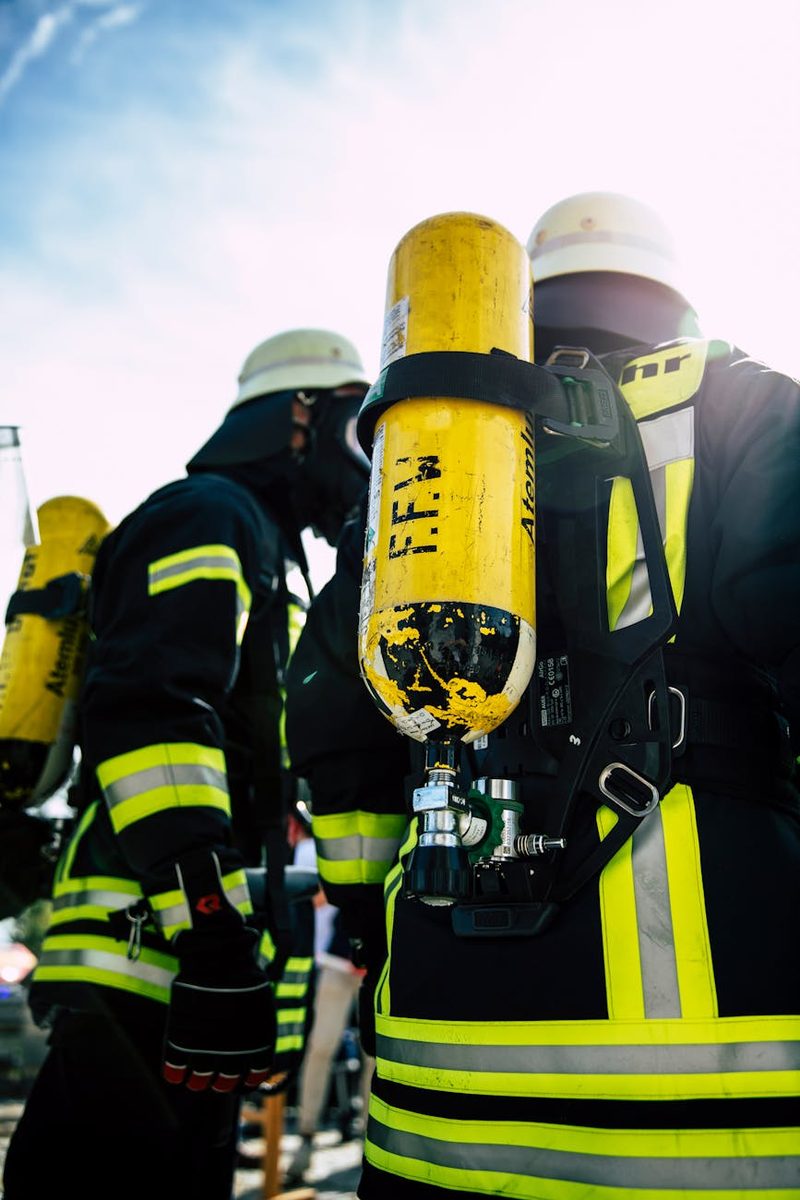
3M bought its Scott Safety breathing-apparatus business for $2 billion in 2017. Nine years later, the company is packaging it into a joint venture with Bain Capital, combining it with rescue-tool maker Madison Fire & Rescue in a $1.95 billion deal that hands 3M $700 million in cash while keeping 50.1% ownership. The new entity will sell everything a firefighter touches—breathing gear, hydraulic rescue tools, suppression nozzles, and portable wildland pumps—under brands including Holmatro, Task Force Tips, and Waterax.

Key Indicators

$1.95B
Joint venture transaction value
Total acquisition price for Madison Fire & Rescue, with 3M contributing Scott Safety to the combined entity
$700M
Cash to 3M at closing
Upfront payment 3M receives while retaining majority ownership of the venture
50.1% / 49.9%
Ownership split
3M retains consolidating control; Bain Capital takes a near-equal stake
$16.3B
Total litigation settlements since 2023
Combined PFAS ($10.3 billion) and combat arms earplug ($6 billion) settlement obligations
120+
Business units under review
Number of profit centers CEO Bill Brown has evaluated for growth potential and right-to-win

Interactive

Exploring all sides of a story is often best achieved with Play.

Ever wondered what historical figures would say about today's headlines?

Sign up to generate historical perspectives on this story.

Sign Up

Debate Arena

Two rounds, two personas, one winner. You set the crossfire.

People Involved

Organizations Involved

Timeline

  1. Fire safety joint venture with Bain Capital announced

    Deal

    3M announced it would acquire Madison Fire & Rescue for $1.95 billion in partnership with Bain Capital, combining it with Scott Safety in a new venture where 3M retains 50.1% ownership and receives $700 million in cash.

  2. 3M exits all PFAS manufacturing

    Restructuring

    3M completed its exit from production of all per- and polyfluoroalkyl substances, ending a business line that had generated billions in revenue but also billions in legal liability.

  3. 3M Investor Day lays out transformation targets

    Strategy

    Brown outlined three priorities—reinvigorate growth, drive operational performance, deploy capital—and set targets of 25% operating margins by 2027 and $10 billion in shareholder returns.

  4. PFAS settlement receives final court approval

    Legal

    A federal court in Charleston, South Carolina, gave final approval to 3M's $10.3 billion settlement for PFAS contamination of public water supplies, with payments spread over 13 years.

  5. Bill Brown takes over as 3M CEO

    Leadership

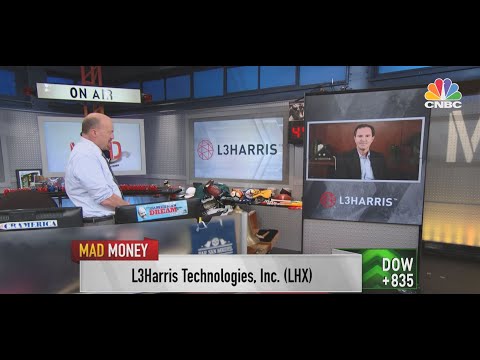
    Former L3Harris Technologies chief executive Bill Brown became 3M's new CEO, tasked with driving a post-litigation, post-spinoff transformation.

  6. Healthcare business spun off as Solventum

    Restructuring

    3M completed the spinoff of its healthcare division into a standalone public company called Solventum, removing roughly a quarter of its revenue.

  7. 3M announces $6 billion earplug settlement

    Legal

    3M agreed to pay up to $6 billion to resolve over 250,000 claims that its combat arms earplugs caused hearing damage in military veterans.

  8. 3M acquires Scott Safety for $2 billion

    Acquisition

    3M purchased Scott Safety from Johnson Controls, adding self-contained breathing apparatus and firefighter communications to its safety portfolio.

Scenarios

1

Joint venture becomes template for more 3M carve-outs

Discussed by: Industrial sector analysts tracking 3M's portfolio review of 120+ business units

If the fire safety venture succeeds in accelerating growth and improving margins with Bain's operational involvement, Brown could replicate the model—contributing a 3M business unit, bringing in a private equity partner, extracting cash while retaining majority control—across other divisions that don't fit 3M's core but aren't candidates for outright sale. This would effectively turn parts of 3M into a portfolio of jointly managed ventures.

2

Bain Capital eventually acquires 3M's remaining stake

Discussed by: Private equity observers noting the near-50/50 ownership structure

The 50.1/49.9 split gives 3M consolidation control now, but the structure resembles deals where the corporate partner gradually exits. If the fire safety business grows substantially or 3M needs capital for other priorities, Bain could exercise options or negotiate to buy the remaining stake, giving 3M a clean exit from fire safety entirely—possibly at a higher valuation than today's implied price.

3

3M transformation delivers on 2027 margin targets, stock re-rates

Discussed by: Wall Street analysts with hold ratings and price targets around $174-177

With the healthcare spinoff complete, PFAS manufacturing exited, litigation largely settled, and non-core businesses being restructured or partnered, 3M could hit Brown's 25% operating margin target by 2027. If it does, the stock—currently about 18% below its 52-week high—could re-rate as investors price in a leaner, higher-growth industrial company rather than a litigation-burdened conglomerate.

4

Integration challenges slow the fire safety venture

Discussed by: Industrial M&A analysts noting the complexity of combining brands from different parent companies

Merging Scott Safety's breathing apparatus and communications products with Madison Fire & Rescue's hydraulic tools, pumps, and suppression nozzles involves integrating businesses with different engineering cultures, sales channels, and manufacturing footprints. If the joint venture structure creates governance friction between 3M and Bain, or if customers resist bundled purchasing, the growth thesis could stall.

Historical Context

Honeywell's spinoffs and portfolio reshaping (2018-2024)

October 2018 - 2024

What Happened

Honeywell spun off its home products and turbocharger businesses as Resideo Technologies and Garrett Motion in 2018, then continued pruning its portfolio to focus on aerospace, building automation, and performance materials. CEO Darius Adamczyk and successor Vimal Kapur shifted the company toward higher-growth, higher-margin connected technology platforms.

Outcome

Short Term

The spinoffs initially underperformed as standalone companies, with Garrett Motion filing for bankruptcy in 2020, but Honeywell's core grew faster without them.

Long Term

Honeywell's market capitalization roughly doubled between 2018 and 2024, validating the portfolio-simplification thesis for diversified industrials.

Why It's Relevant Today

3M is following a remarkably similar playbook—spinning off healthcare, settling legacy liabilities, and now carving out niche businesses with private equity partners. Honeywell's experience suggests the strategy can work but that spinoff entities face real standalone risks.

General Electric's breakup into three companies (2021-2024)

November 2021 - April 2024

What Happened

GE CEO Larry Culp announced the breakup of the 129-year-old conglomerate into three public companies: GE Aerospace, GE Vernova (energy), and GE HealthCare. The plan followed years of divestitures, a dividend cut, and a sustained effort to pay down $75 billion in debt accumulated during the Jeff Immelt era.

Outcome

Short Term

Each spinoff traded independently by April 2024. GE Aerospace's stock roughly tripled from the announcement through the final separation.

Long Term

The breakup validated the thesis that industrial conglomerates often trade at a 'conglomerate discount' that can be unlocked by separating businesses with different growth profiles and capital needs.

Why It's Relevant Today

3M's transformation under Brown echoes GE's under Culp: a new CEO brought in to simplify a sprawling industrial company burdened by legacy liabilities. The fire safety joint venture is a variation on the theme—rather than a full spinoff, 3M is using private equity partnership to restructure a business while retaining control.

Johnson Controls' sale of Scott Safety to 3M (2017)

September-October 2017

What Happened

Johnson Controls sold Scott Safety to 3M for $2 billion as part of its own post-merger portfolio simplification following its 2016 combination with Tyco International. Scott Safety, which traced its roots to 1932 and a partnership with NASA in the 1970s, had been part of Tyco's fire and security division.

Outcome

Short Term

3M integrated Scott Safety into its personal safety division, gaining a leading position in self-contained breathing apparatus for firefighters.

Long Term

Nine years later, 3M is restructuring the same business it acquired—contributing it to a joint venture rather than operating it as a wholly owned division.

Why It's Relevant Today

The Scott Safety brand has now passed through four corporate parents in 60 years (Scott Aviation, Tyco, Johnson Controls, 3M, and now a JV). Each transaction reflected the parent company's changing strategic priorities rather than any problem with the business itself—a pattern common in fire safety, where niche leaders get traded among conglomerates.

Sources

(6)