



Pull to refresh
Logo
Daily Brief
Following
Why Sign Up
Private equity reshapes auto parts industry through carve-outs

Private equity reshapes auto parts industry through carve-outs

Money Moves
By Newzino Staff |

Apollo's €1.82 billion Forvia interiors deal extends a wave of legacy supplier breakups

Yesterday: Apollo agrees to acquire Forvia interiors for €1.82B

Overview

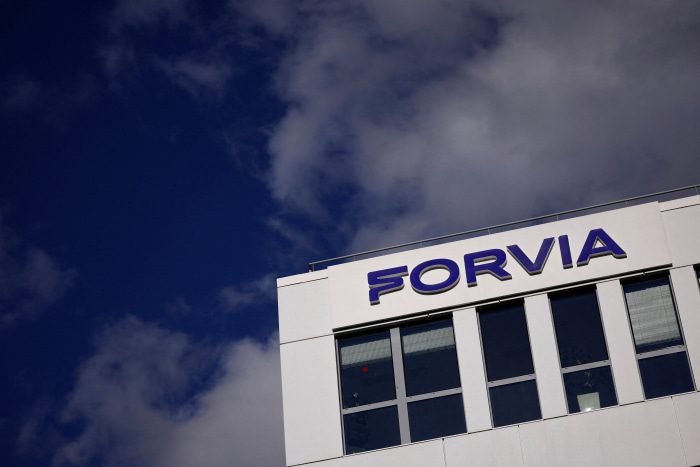
Apollo Global Management agreed on April 27, 2026 to buy Forvia's interiors business for €1.82 billion (about $2.1 billion)—the largest auto-supplier carve-out announced this year. The unit running 59 plants across 19 countries generated €4.8 billion in revenue last year making instrument panels, door panels and center consoles for nearly every major carmaker.

Why it matters

Private equity now owns large chunks of the supply chain behind every car sold in Europe and North America, shifting decisions about plants and jobs to financial owners with shorter time horizons.

Key Indicators

€1.82B
Forvia interiors deal value
Enterprise value Apollo agreed to pay for the carve-out, including assumed debt.
59
Plants changing hands
Manufacturing facilities across 19 countries transferring from Forvia to Apollo ownership.
€4.8B
Annual revenue acquired
2025 sales of the Forvia interiors unit, supplying instrument panels and consoles to global automakers.
€1B+
Forvia debt reduction
Net debt cut planned from sale proceeds, roughly half of the company's leverage.

Interactive

Exploring all sides of a story is often best achieved with Play.

Ever wondered what historical figures would say about today's headlines?

Sign up to generate historical perspectives on this story.

Sign Up

Debate Arena

Two rounds, two personas, one winner. You set the crossfire.

People Involved

Organizations Involved

Timeline

  1. Apollo agrees to acquire Forvia interiors for €1.82B

    Transaction

    Forvia and Apollo announced a binding agreement under which Apollo-managed funds will acquire Forvia's Interiors Business Group at an enterprise value of €1.82 billion. The unit operates 59 plants in 19 countries with about €4.8 billion in 2025 revenue. Closing is expected in the second half of 2026, pending regulatory approval.

  2. Forvia unveils Power25 plan

    Strategy

    Forvia announced its Power25 program calling for cost cuts, portfolio divestitures and a reorientation toward lighting, electronics and clean-mobility technology.

  3. Apollo closes Tenneco acquisition

    Transaction

    Apollo completed its take-private of Tenneco, taking ownership of brands including Monroe, Champion and Federal-Mogul.

  4. KKR's Marelli files for restructuring in Japan

    Restructuring

    Marelli filed an out-of-court restructuring under Japanese law, illustrating that private equity ownership did not insulate auto suppliers from pandemic-era and EV-transition stress.

  5. Apollo announces Tenneco take-private

    Transaction

    Apollo agreed to acquire US auto parts maker Tenneco for $7.1 billion including debt, marking its first large platform acquisition in the auto supplier sector.

  6. Faurecia completes Hella deal, forming Forvia

    Transaction

    Faurecia closed its €6.7 billion acquisition of German lighting maker Hella, creating Forvia as a top-seven global supplier and adding significant leverage to its balance sheet.

  7. KKR buys Magneti Marelli from Fiat Chrysler

    Transaction

    KKR agreed to acquire Italian auto parts maker Magneti Marelli for €6.2 billion, marking one of the first major private equity moves into European auto suppliers. The unit was later combined with KKR-owned Calsonic Kansei to form Marelli.

Scenarios

1

Apollo combines Forvia interiors and Tenneco into auto supplier platform

Discussed by: Industry analysts at Bloomberg Intelligence and Reuters Breakingviews have noted the strategic fit

Apollo brings the Forvia interiors unit alongside Tenneco under common ownership and pursues bolt-on acquisitions to build a vertically integrated supplier of cabin and chassis components. Cost-cutting follows a familiar private equity playbook: shared procurement, consolidated back-office, and selective plant closures in higher-cost regions. This outcome is most likely if European customers accept Apollo's stewardship and if EV transition pressure on legacy parts continues at its current pace.

2

Forvia carve-outs continue as Koller pursues full deleveraging

Discussed by: Sell-side equity analysts covering Forvia at JPMorgan, BNP Paribas Exane and others

Having banked roughly €1 billion in debt reduction from the Apollo deal, Forvia executes additional disposals in seating or exteriors to complete its Power25 plan. Buyers are likely to be other private equity firms or strategic players in Asia. This path is consistent with management's stated strategy and is supported by ongoing pressure to refocus on lighting and electronics, where margins are higher and EV demand is growing.

3

PE-owned suppliers face stress as EV transition reshapes parts demand

Discussed by: Restructuring practices at Houlihan Lokey, Alvarez & Marsal and law firms tracking the auto sector

Components like instrument panels and door panels remain commoditized through the EV transition, but volume pressure from automaker price cuts and Chinese competition compresses margins faster than Apollo can extract operational savings. The Marelli precedent shows that financial sponsors can encounter restructuring even in well-known auto names. This scenario is possible but not imminent, depending on how quickly EV pricing dynamics stabilize and whether customers honor existing supply contracts.

Historical Context

Delphi spinoff and bankruptcy (1999-2009)

May 1999 - October 2009

What Happened

General Motors spun off its parts division as Delphi Corporation in May 1999, creating what was then the world's largest auto supplier with about 200,000 employees. Saddled with high labor costs and pension obligations from its GM heritage, Delphi filed for Chapter 11 in October 2005—at the time the largest bankruptcy in US auto industry history. It emerged in 2009 dramatically smaller, with most US plants closed or sold.

Outcome

Short Term

Tens of thousands of jobs were lost and dozens of plants closed during restructuring. Hedge funds and private equity firms acquired pieces of the business at fire-sale prices.

Long Term

The post-bankruptcy company eventually split again: Delphi Technologies (powertrain) was sold to BorgWarner, while Aptiv emerged as an electronics-focused supplier worth tens of billions. The episode established the template for breaking diversified suppliers into specialized units.

Why It's Relevant Today

The Delphi arc shows how supplier conglomerates with diverse product lines tend to fragment over time, with commoditized businesses ending up in the hands of financial owners and tech-focused units commanding premium valuations. Forvia is pursuing a managed version of the same outcome before market forces compel it.

Visteon spinoff and bankruptcy (2000-2010)

June 2000 - October 2010

What Happened

Ford spun off its parts operations as Visteon Corporation in June 2000, with about 80,000 employees worldwide. Like Delphi, Visteon inherited expensive legacy labor agreements and could not adjust costs fast enough as auto production fell. The company filed Chapter 11 in May 2009 and emerged in October 2010 with a fraction of its original footprint.

Outcome

Short Term

Visteon shed most of its interiors, climate and lighting businesses through plant closures and asset sales. Many former Visteon plants were ultimately taken over by other suppliers or shuttered.

Long Term

The reorganized Visteon refocused on automotive electronics—particularly cockpit displays—and was eventually acquired in pieces. The pattern reinforced that suppliers carrying broad product portfolios tend to underperform versus tech-specialized peers.

Why It's Relevant Today

Visteon, like Delphi, illustrates the long arc of supplier carve-outs: the commoditized pieces churn through ownership and consolidation, while electronics-focused remnants thrive. Apollo is acquiring the Forvia equivalent of those commoditized pieces, betting it can run them more efficiently than a publicly listed industrial group.

KKR acquires Magneti Marelli (2018-2022)

October 2018 - June 2022

What Happened

KKR agreed in October 2018 to buy Italian auto supplier Magneti Marelli from Fiat Chrysler for €6.2 billion, then merged it with its existing Japanese supplier Calsonic Kansei to form Marelli. The combined company supplied lighting, electronics and powertrain components to global automakers. The pandemic-era collapse in auto production and rising debt costs strained the business, and Marelli filed for an out-of-court restructuring in Japan in June 2022.

Outcome

Short Term

Marelli underwent a court-supervised debt restructuring that converted lender claims into equity, effectively diluting KKR's ownership while keeping the company operating.

Long Term

The restructuring did not break Marelli apart but demonstrated that private equity ownership of auto suppliers carries real downside risk, particularly when leveraged buyouts coincide with industry-wide demand shocks.

Why It's Relevant Today

Marelli is the cautionary parallel for the Apollo-Forvia deal. It shows that even sophisticated sponsors can struggle when industry cycles turn against a leveraged auto supplier, and informs how lenders, customers and regulators will assess Apollo's plans for the Forvia unit.

Sources

(3)