

Pull to refresh
Logo
Danish 26-year study finds sperm counts stable, with a modest rise

Danish 26-year study finds sperm counts stable, with a modest rise

New Capabilities

Among 8,320 Copenhagen men sampled from 1996 to 2022, median sperm concentration edged from 44 to 49 million per millilitre — but 36% still fell below a key fertility threshold

Overview

Updated 1 hour ago

Every year since 1996, young Danish men have given a semen sample when they show up for the compulsory assessment that decides their military service. After 8,320 of them, the trend line is flat, with a small rise at the end. Median sperm concentration went from 44 million per millilitre in 1996–2000 to 49 million in 2017–2022.

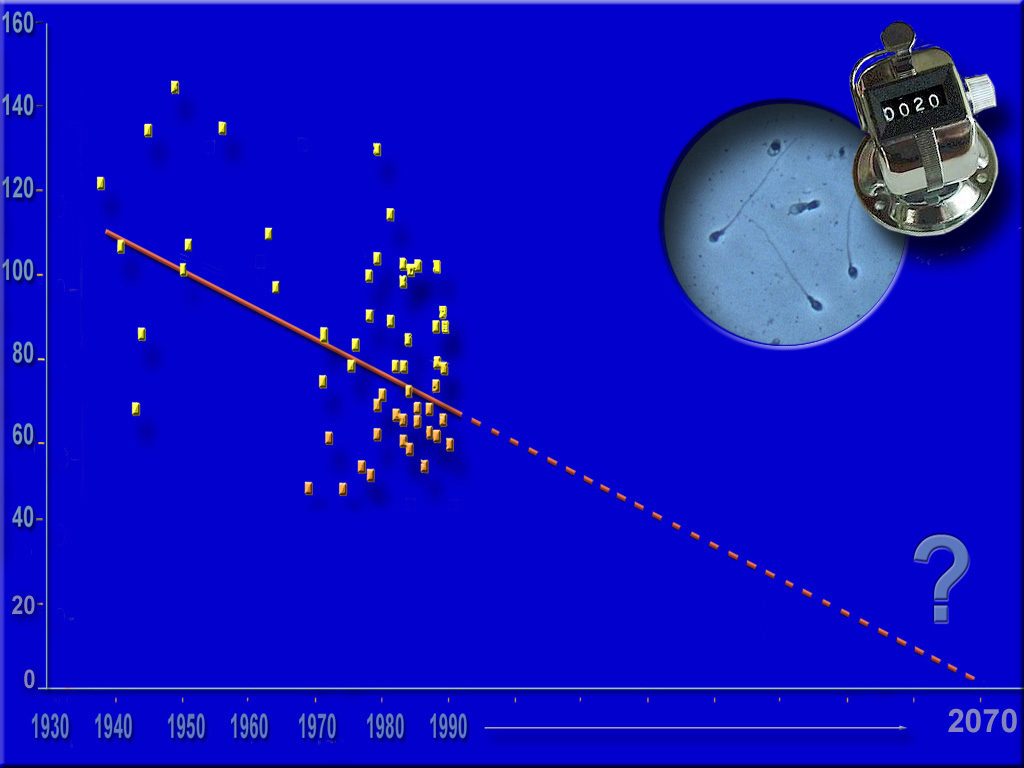
The finding, published in the journal Andrology, does not overturn the 2022 global meta-analysis that reported declines of more than 50% between 1973 and 2018. It narrows the claim. In one well-sampled national cohort, counts stopped falling. The authors also note that 36% of the men had at least one semen measure below World Health Organization reference levels, and that current levels remain far below those recorded 50 to 80 years ago.

Why it matters

Whether sperm counts are falling shapes fertility medicine and chemical regulation. This study says the answer depends on where you look.

Questions about this story

Free account needed to ask — your question is kept and asked for you right after sign-up. Answers are public.

No questions yet — be the first to ask.

Key Indicators

8,320
Men in the Danish cohort
Examined annually from 1996 to 2022 during military service assessment.
49
Median sperm concentration, 2017–2022
Measured in millions per millilitre, up from 44 in the 1996–2000 period.
36%
Men below at least one WHO reference level
A threshold tied to higher risk of infertility, not to inability to conceive.
141 million
Median total sperm count
The cohort-wide median across all 26 years of sampling.
>50%
Global decline reported for 1973–2018
From the 2022 international meta-analysis that pooled data across seven regions.

Voices

Curated perspectives — historical figures and your fellow readers.

Sign up to generate historical perspectives on this story.

People Involved

Organizations Involved

Timeline

1992 November 2026

4 events Latest: 3 days ago
Tap a bar to jump to that date
  1. Danish cohort reports stable counts and a small rise

    Latest Research

    Andrology publishes 26 years of data showing median concentration up from 44 to 49 million per millilitre.

  2. Global meta-analysis reports steep decline

    Research

    Pooled data from 1973 to 2018 show sperm concentration down over 50% and total count over 60%.

  3. Copenhagen starts sampling military conscripts

    Research

    The Danish Young Men Study begins annual semen collection during compulsory service assessment.

  4. A meta-analysis puts sperm decline on the map

    Research

    A British Medical Journal paper pooling 61 studies reports a 42% fall in sperm concentration since 1940.

Scenarios

1

Danish sperm counts hold or rise again in the next sampling period

Uncertain Resolves by End of 2030

Discussed by: The Danish Young Men Study authors, who called the recent rise possibly random variation

The cohort continues annual examinations, and the next trend paper compares a fresh block of years against 2017–2022. If concentration stays at or above 49 million per millilitre, the stabilization reading gains support. If it falls back, the authors' own caution about fluctuation wins out and the Danish data stop being cited as evidence of a plateau.

2

A new global meta-analysis finds the decline has flattened

Possible Resolves by Q2 2029

Discussed by: Reproductive scientist Michael Carroll, who says trends vary by population and region

Researchers pool post-2018 data from multiple regions to extend the 2022 meta-analysis. Regional stabilization, as seen in Denmark, shows up in the aggregate. The result would turn the debate from whether counts are falling to where and how fast, which is a more tractable question for fertility clinics and regulators.

3

Methodological critique gains enough ground to undercut the historical trend

Unlikely Resolves by End of 2029

Discussed by: Allan Pacey of the University of Sheffield and Michael Dahan of McGill University

The measurement argument wins acceptance: differences in counting technique, abstinence intervals and sampling methods across decades are judged large enough to account for most of the reported decline. That would not end the debate over recent data, but it would weaken the long-run narrative that sperm counts have fallen continuously since the 1940s.

Historical Context

2 moments from history that rhyme with this story — and how they unfolded.

1992

Carlsen et al. meta-analysis (1992)

A Danish-led team pooled 61 studies published between 1938 and 1990 and reported that average sperm concentration had fallen 42% since 1940, from roughly 113 million to 66 million per millilitre. The paper ran in the British Medical Journal and turned a laboratory measurement into an international news story.

Then

Fertility researchers and environmental groups began asking whether industrial chemicals were damaging male reproduction.

Now

Later reviews found the pooled studies used inconsistent counting methods and biased samples, so the 42% figure was widely treated as an overstatement even as the underlying question stayed open.

Why this matters now

Every subsequent claim about falling sperm counts, including the Danish study's own framing, is measured against this paper and the anxiety it produced.

2022

Global meta-analysis by Levine and colleagues (2022)

An international team pooled data from 1973 to 2018 and reported that sperm concentration had fallen more than 50% and total sperm count more than 60%. Unlike earlier reviews, the declines appeared in every region examined: North America, Europe, Australia, South America, Central America, Asia and Africa.

Then

The result revived the global-decline thesis after years of regional disagreement and was widely reported as confirmation of a fertility crisis.

Now

Critics focused on the quality of the older data feeding the trend, keeping the methodological dispute alive rather than settling it.

Why this matters now

The Danish cohort paper is read as a test of this meta-analysis. Its authors include a scientist who worked on the 2022 study, which makes the regional caveat harder to dismiss as outsider criticism.

Sources

(5)