
Pull to refresh
Logo
Daily Brief
Following
Why Ranks Sign Up
Operating systems become AI agent platforms

Operating systems become AI agent platforms

New Capabilities

Microsoft turns Windows into a native agent host as Apple and Google push the same shift

In 7 days: Windows 11 24H2 KB5039239 ships

Overview

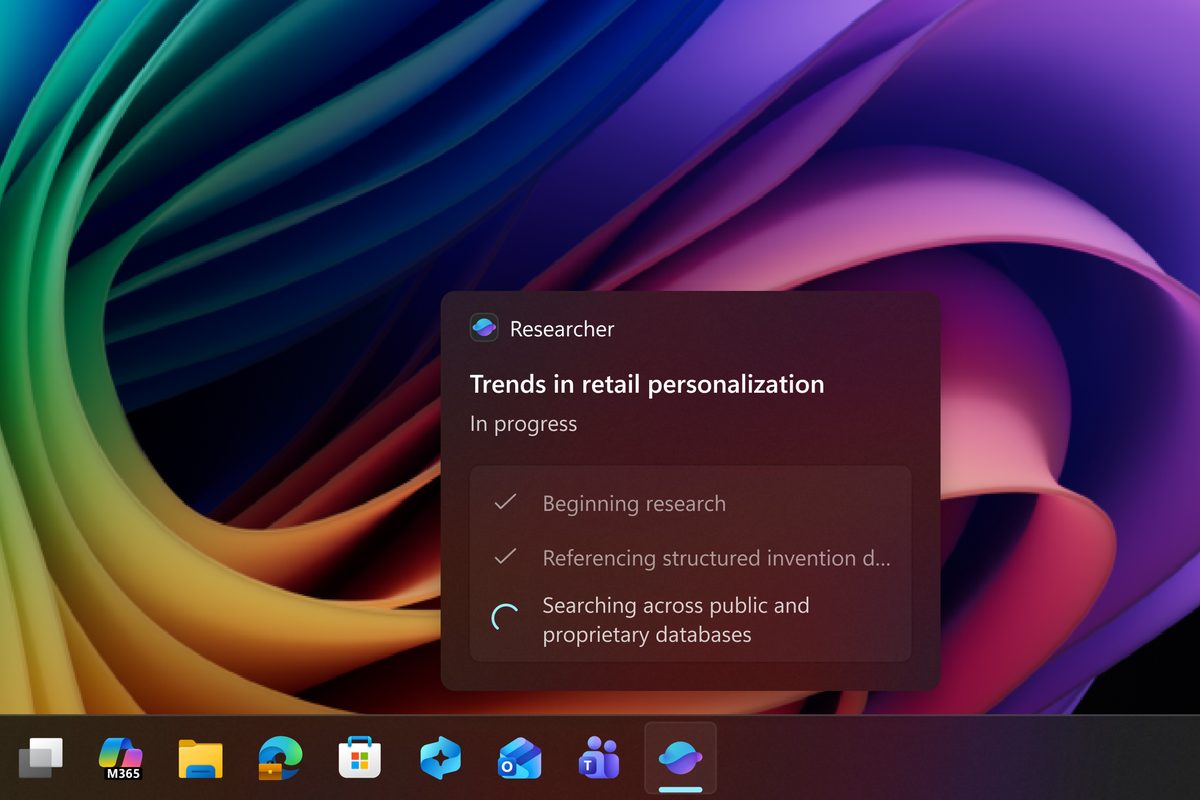
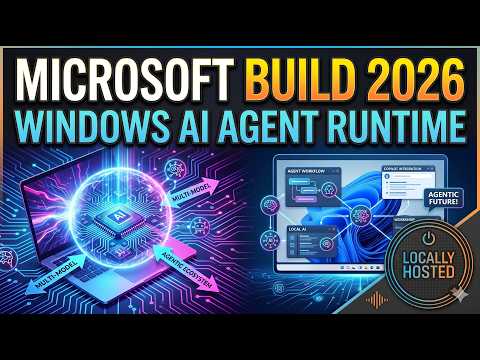
For 40 years, an operating system was a passive surface: apps ran on it, users clicked through it, and the OS arbitrated memory and files. On June 2, 2026, Microsoft moved Windows out of that role. At Build in San Francisco, CEO Satya Nadella and Windows chief Pavan Davuluri announced a system-level runtime that hosts AI agents the way Windows once hosted.exe files.

The pieces shipping June 9 in Windows 11 update KB5039239: the Windows Agent Framework for orchestration, the Copilot Agent SDK for developers, Windows Local AI for on-device inference on Snapdragon, Intel, and AMD chips, and a governance layer called AgentGuard. Apple and Google are racing the same direction with different bets. The contest now is whose OS becomes the default place agents live.

Why it matters

Whichever OS wins the agent layer collects a tax on every task software performs for you over the next decade.

Questions about this story

No questions yet — be the first to ask.

Key Indicators

40 TOPS
Minimum NPU performance
The on-device inference floor for Windows Local AI agents.
3 chip vendors
Supported NPU architectures
Qualcomm Snapdragon X Elite, Intel Lunar Lake, and AMD XDNA all run the same runtime.
$1B/year
Apple's Gemini licensing fee
What Apple reportedly pays Google to power Siri's agent layer.
June 9, 2026
Ship date
Windows 11 update KB5039239 puts the agent runtime in front of consumers.
<2 seconds
Local meeting recap demo
A Teams transcript summarized on-device with no network call.

Voices

Curated perspectives — historical figures and your fellow readers.

Ever wondered what historical figures would say about today's headlines?

Sign up to generate historical perspectives on this story.

Play

Exploring all sides of a story is often best achieved with Play.

Log in to play. Track your picks, climb the leaderboards. Log in Sign Up
Predict 4 ways this could play out. Contrarian picks score more — points lock when the scenario resolves. Log in to play
Higher or Lower Two numbers from this story. Guess which is bigger. 5 rounds to set a streak. Log in to play
Timeline Five events from this story — drag them oldest to newest. Log in to play
Connections Sixteen names from the news. Find the four hidden groups of four. Log in to play

People Involved

Organizations Involved

Timeline

May 2024 June 2026

7 events Latest: In 7 days
Tap a bar to jump to that date
  1. Windows 11 24H2 KB5039239 ships

    Latest Software update

    The update puts the agent runtime on existing Copilot+ PCs. WWDC opens the same day with Apple's response expected.

  2. Microsoft Build 2026 ships the Windows Agent Framework

    Today Product launch

    Nadella and Davuluri announce the Windows Agent Framework, Copilot Agent SDK, Windows Local AI, and AgentGuard. Office 365 Copilot Agent Mode embeds persistent agents in Word, Excel, and Teams.

  3. Google I/O declares "agentic Gemini era"

    Conference

    Pichai positions Gemini as a cross-device agent layer that runs in Google's cloud and reaches users through Android, Chrome, and now iPhone.

  4. Apple licenses Gemini for Siri

    Partnership

    Reports surface that Apple will pay Google about $1 billion a year for a custom Gemini 3 variant to power Siri.

  5. Microsoft Build 2025 previews agent primitives

    Conference

    Microsoft outlines an early version of Windows Copilot Runtime and previews AutoGen-Semantic Kernel convergence.

  6. Apple announces Apple Intelligence

    Product launch

    WWDC reveals on-device and Private Cloud Compute AI for iPhone, iPad, and Mac. Most features ship late or not at all over the next 18 months.

  7. Microsoft launches Copilot+ PCs

    Product launch

    Surface event introduces a hardware tier requiring an NPU rated at 40 TOPS or higher. The category seeds the install base later needed for local agents.

Historical Context

3 moments from history that rhyme with this story — and how they unfolded.

August 1995 – November 2001

The browser wars (1995-2001)

Microsoft bundled Internet Explorer into Windows 95, then 98, killing Netscape Navigator's paid model. The Justice Department sued in 1998. Judge Thomas Penfield Jackson ruled in 2000 that Microsoft had abused its OS monopoly to dominate the browser market.

Then

Microsoft avoided a forced breakup on appeal in 2001 but signed a consent decree restricting how it could bundle software with Windows.

Now

The decree shaped two decades of antitrust caution at Microsoft and gave Google room to launch Chrome in 2008. The browser became the platform Microsoft tried and failed to control.

Why this matters now

Build 2026 is Microsoft running the same play with agents. Bundle the runtime into Windows, ship it via Windows Update, set the default. The agent runtime is the new browser, and the question is whether regulators treat it the same way.

July 2008

iOS App Store launch (2008)

Apple opened the App Store with 500 apps and a 70/30 revenue split that became industry standard. Developers got distribution; Apple got a permanent tax on every transaction.

Then

iPhone sales doubled the following year. The store hit a billion downloads in nine months.

Now

App Store fees grew into a roughly $25 billion annual business for Apple and triggered the antitrust cases Epic Games and Spotify brought a decade later.

Why this matters now

Whoever runs the agent registry — the place agents are listed, distributed, and billed — captures the same kind of tax Apple captured on apps. Microsoft's Copilot Agent SDK is the first credible bid for that role on the desktop.

January 2007 – December 2012

Smartphone OS consolidation (2007-2012)

iPhone launched in 2007, Android in 2008. BlackBerry, Symbian, Palm webOS, and Windows Phone all tried to compete. By 2012, iOS and Android had over 90% of smartphone shipments between them. Every other OS folded or got absorbed.

Then

Microsoft wrote off $7.6 billion on the Nokia acquisition in 2015. BlackBerry exited phone hardware in 2016.

Now

A duopoly that lasted 15 years and still defines mobile.

Why this matters now

The agentic OS race may collapse to two winners the same way. Microsoft's bet is that the desktop is a third front where Apple is weak and Google has no install base. The smartphone history says platform races consolidate fast once developer SDKs ship.

Sources

(7)