


Pull to refresh
Logo
Daily Brief
Following
Why
AI-driven autonomous labs transform materials discovery

AI-driven autonomous labs transform materials discovery

New Capabilities
By Newzino Staff |

Multi-agent systems and robotics collapse decades of research into days

February 1st, 2026: MARS System Coordinates 19 AI Agents for Materials Discovery

Overview

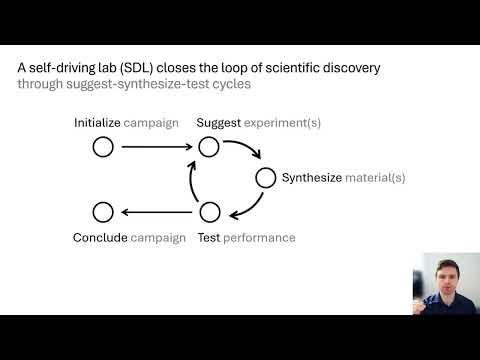
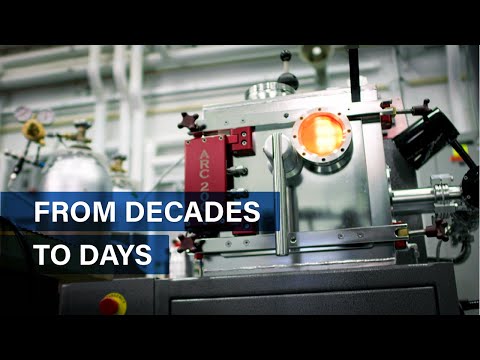
A new generation of AI systems can now design, execute, and analyze materials experiments with minimal human involvement. In January 2026, researchers at China's Shenzhen Institute of Advanced Technology published a system called MARS that coordinates 19 large language model agents with robotic platforms—optimizing perovskite nanocrystals in 10 iterations and designing novel water-stable composites in 3.5 hours. Traditional materials discovery takes 10 to 20 years from laboratory concept to commercial product.

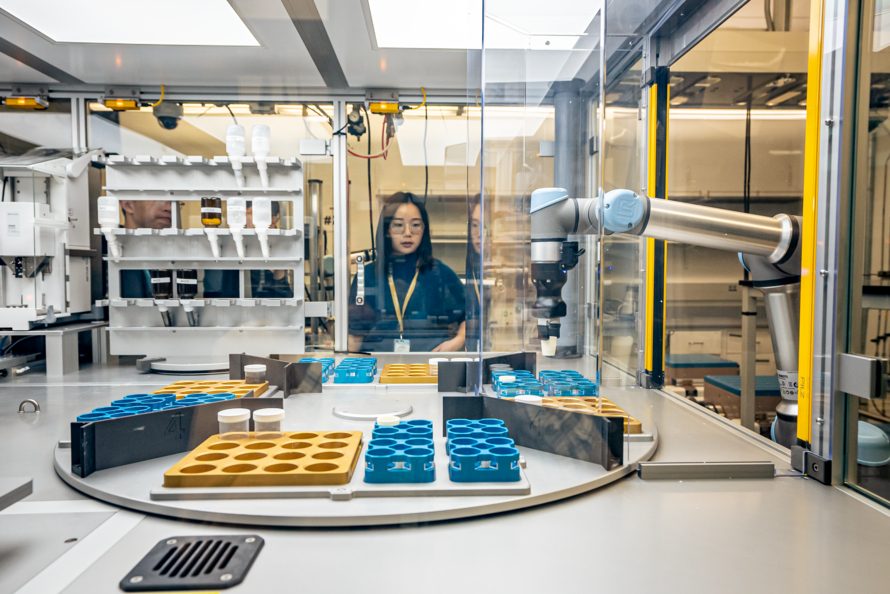
This isn't a single breakthrough but an inflection point in a rapid transformation. Since 2023, autonomous labs at Berkeley, NC State, MIT, and institutions across China have demonstrated that robots guided by AI can synthesize dozens of new materials per week rather than a handful per year. The bottleneck in materials science is shifting from imagination to fabrication—and these systems are eliminating that constraint.

Key Indicators

19
AI Agents
Number of specialized large language model agents coordinated by the MARS system
3.5 hours
Design Time
Time for MARS to design a novel biomimetic 'core-shell-corona' structure for water-stable perovskites
1,000/day
Experiments
Number of experiments Rainbow multi-robot lab can conduct daily without human intervention
421,000+
Stable Materials
Materials catalogued in DeepMind's GNoME database, up from 48,000 previously known

Interactive

Exploring all sides of a story is often best achieved with Play.

Ever wondered what historical figures would say about today's headlines?

Sign up to generate historical perspectives on this story.

Sign Up

Debate Arena

Two rounds, two personas, one winner. You set the crossfire.

People Involved

Gerbrand Ceder
Gerbrand Ceder
Professor, UC Berkeley; Principal Scientist, A-Lab (Leading A-Lab development at Berkeley Lab)
Yan Zeng
Yan Zeng
Staff Scientist, Lawrence Berkeley National Laboratory (Leading day-to-day operations of A-Lab)
Milad Abolhasani
Milad Abolhasani
Professor, NC State University (Leading Rainbow multi-robot laboratory development)
Ju Li
Ju Li
Professor, MIT (Leading CRESt autonomous discovery platform)

Organizations Involved

Shenzhen Institute of Advanced Technology (SIAT)
Research Institute
Status: Published MARS multi-agent system for materials discovery

Chinese Academy of Sciences research base in the Greater Bay Area, integrating fundamental research with industrial transformation.

Lawrence Berkeley National Laboratory
National Laboratory
Status: Operating A-Lab autonomous materials facility

Department of Energy laboratory operating the A-Lab, which uses AI-guided robots to synthesize novel materials around the clock.

Google DeepMind
Google DeepMind
AI Research Laboratory
Status: Expanded materials database, validating predictions through partner labs

AI research laboratory that used graph neural networks to predict 2.2 million new stable materials.

Timeline

  1. MARS System Coordinates 19 AI Agents for Materials Discovery

    Research

    Shenzhen Institute publishes hierarchical multi-agent system that designed novel perovskite composites in 3.5 hours.

  2. MIT Technology Review: AI Materials Discovery Needs Real-World Testing

    Analysis

    Major review notes that despite computational breakthroughs, fabrication remains the bottleneck—no 'eureka moment' material yet.

  3. MIT's CRESt Discovers Record-Breaking Fuel Cell Catalyst

    Research

    AI platform explores 900+ chemistries, finding catalyst with 9.3x improvement in power density per dollar over pure palladium.

  4. Rainbow Multi-Robot Lab Achieves 1,000 Daily Experiments

    Research

    NC State's five-robot system autonomously optimizes perovskite quantum dots for next-generation displays and solar cells.

  5. ChemAgents Multi-Agent Robotic Chemist Published

    Research

    University of Science and Technology of China demonstrates Llama-powered system executing complex multi-step experiments autonomously.

  6. A-Lab Synthesizes 41 Novel Compounds in 17 Days

    Research

    Berkeley's autonomous lab demonstrates 71% success rate synthesizing novel inorganic compounds without human intervention.

  7. DeepMind Publishes GNoME, Predicts 2.2 Million New Materials

    Research

    Google DeepMind's graph neural network expands known stable materials nearly tenfold, contributing 380,000 to Materials Project.

  8. A-Lab Opens as First Autonomous Powder Synthesis Facility

    Launch

    Berkeley Lab unveils A-Lab, using three robotic arms working around the clock to synthesize inorganic materials.

  9. A-Lab Development Begins

    Development

    Berkeley Lab begins work on autonomous laboratory for materials synthesis with DOE and internal funding.

  10. Materials Project Database Launches

    Infrastructure

    Berkeley Lab establishes open database for computationally characterized materials, enabling large-scale AI training.

Scenarios

1

Autonomous Labs Deliver Commercially Viable Materials by 2028

Discussed by: Berkeley Lab researchers, Cypris industry analysis, AI4Mat conference organizers

Autonomous systems move from proof-of-concept to producing materials that reach commercial products. This requires solving the current validation gap: AI-predicted materials must be synthesized at scale and integrated into devices. Berkeley's partnership between A-Lab and Materials Project, combined with the speed improvements from systems like MARS, suggests a plausible path. Success would collapse the traditional 10-20 year discovery timeline to under 5 years for new battery materials, catalysts, or semiconductors.

2

Validation Gap Persists: Computational Predictions Outpace Fabrication

Discussed by: MIT Technology Review, Chemistry World, University College London researchers

AI systems continue generating millions of predicted stable materials while autonomous labs struggle to synthesize and validate them at meaningful scale. Critics have already questioned the quality of A-Lab's initial results, and the 2025 MIT Technology Review assessment noted 'no eureka moment' despite rapid progress. This scenario sees computational materials science racing ahead while the physical world becomes the binding constraint, limiting real-world impact.

3

China Establishes Lead in Autonomous Materials Infrastructure

Discussed by: Nature Index, SIAT publications, industry observers

Chinese institutions including SIAT, University of Science and Technology of China, and affiliated labs build integrated autonomous materials discovery networks while Western efforts remain fragmented across universities and national labs. SIAT has already incubated 958 companies in emerging industries, suggesting a pathway from discovery to commercialization. This scenario sees materials innovation shifting toward China in the way semiconductor manufacturing did.

4

Human-AI Collaboration Model Prevails Over Full Automation

Discussed by: MIT researchers, Argonne National Laboratory, Berkeley Lab scientists

Rather than replacing scientists, autonomous systems become sophisticated assistants that handle routine experimentation while humans direct strategy and interpret results. MIT's CRESt and Argonne's 'AI advisor' model both explicitly embrace this approach. Gerbrand Ceder has emphasized that A-Lab is a demonstration, not a replacement. This scenario sees productivity gains without the full 'human-out-of-the-loop' vision materializing.

Historical Context

Human Genome Project (1990-2003)

1990-2003

What Happened

An international consortium spent $2.7 billion over 13 years to sequence the first human genome. Scientists manually decoded 3 billion base pairs using techniques that were state-of-the-art but labor-intensive. The project required coordination across 20 research centers in six countries.

Outcome

Short Term

Completed in 2003, two years ahead of schedule. Revealed humans have roughly 20,000-25,000 genes, far fewer than expected.

Long Term

Spawned the genomics industry. Modern sequencing now costs under $1,000 and takes hours. The same pattern—from heroic coordinated effort to automated commodity—is what autonomous labs aim to replicate for materials.

Why It's Relevant Today

The Human Genome Project established that massive scientific undertakings could be systematized and eventually automated. Autonomous materials labs represent a similar transition from artisanal expertise to industrial-scale discovery.

Pharmaceutical High-Throughput Screening (1990s)

1990-2000

What Happened

Drug companies deployed robotic systems to test millions of chemical compounds against biological targets. Pfizer, Merck, and other firms invested billions in automation, expecting to accelerate drug discovery dramatically. Robots ran 100,000+ tests per day.

Outcome

Short Term

Generated vast datasets and identified numerous 'hits' against disease targets.

Long Term

Did not produce the expected surge in new drugs. The bottleneck shifted from screening to clinical trials and understanding biological mechanisms. Taught the industry that automation solves the problems it solves, not adjacent ones.

Why It's Relevant Today

A cautionary parallel. Autonomous materials labs risk repeating this pattern if fabrication at scale and device integration become the new bottlenecks. Speed in the laboratory may not translate to speed to market.

Edison's Battery Development (1890s-1910)

1890-1910

What Happened

Thomas Edison and his team at West Orange, New Jersey conducted thousands of experiments over 10-15 years to develop a practical alkaline storage battery. After announcing success in 1903, failures in the field forced a complete redesign. The final product reached market around 1910.

Outcome

Short Term

Produced a durable, reliable battery eventually used in submarines, railroads, and electric vehicles.

Long Term

By the time Edison perfected his battery, Henry Ford's Model T (1908) had established gasoline engines as the automotive standard. The battery lost the race despite technical merit.

Why It's Relevant Today

The classic example of traditional materials development timelines. Edison's 10-20 year cycle from concept to commercial product is exactly what autonomous labs aim to compress. The question is whether speed improvements will be dramatic enough to matter.

13 Sources: