
Pull to refresh
Logo
AI system produces Lean-checked proof of Aaronson-Ambainis conjecture

AI system produces Lean-checked proof of Aaronson-Ambainis conjecture

New Capabilities

A quantum computing question open since 2008 now has a machine-verified proof, but no independent review yet

Overview

Updated 54 minutes ago

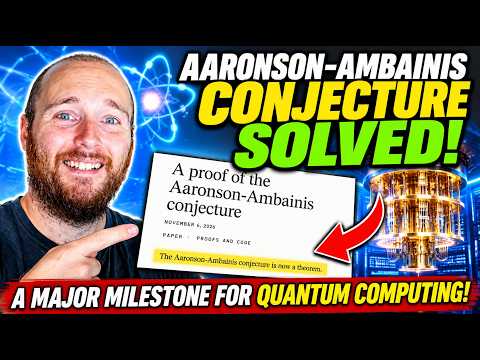
For 18 years, a conjecture by Scott Aaronson and Andris Ambainis has limited what quantum computers could do with random inputs. On November 6, Physical Superintelligence said an internal AI system had proved it, and the Lean proof assistant accepted every step.

The conjecture implies quantum computers cannot be exponentially faster than classical ones on yes-or-no questions about unstructured strings. The proof has not been peer reviewed, and no outside group has yet checked the Lean code.

Why it matters

If the proof holds, it closes a central question about where quantum speedups can and cannot exist.

Questions about this story

Free account needed to ask — your question is kept and asked for you right after sign-up. Answers are public.

No questions yet — be the first to ask.

Key Indicators

18
Years the conjecture stayed open
Aaronson and Ambainis stated it in 2008.
3
Days for the AI system to complete the proof
PSI says the system had a full proof by the third day of its run.
60
Pages in the manuscript
The paper is by David Turturean, according to PSI's public repository.
0
Independent Lean checks completed
PSI ran its own build and replay checks; no outside party has repeated them.

Voices

Curated perspectives — historical figures and your fellow readers.

Sign up to generate historical perspectives on this story.

People Involved

Organizations Involved

Timeline

2008 November 2026

6 events Latest: Today
Tap a bar to jump to that date
  1. PSI announces the result

    Today Announcement

    No arXiv posting, peer review or outside Lean check has been completed.

  2. PSI publishes the proof and Lean repository

    Announcement

    The system completed the proof on day three of its run.

  3. Stanford group proves a special case

    Mathematics

    Blanc, Docter, Strassle and Tan settle the fixed-round case.

  4. Keller and Klein retract the proof

    Retraction

    Paata Ivanishvili finds a fatal flaw in Lemma 5.3.

  5. Keller and Klein post a claimed proof

    Mathematics

    Scott Aaronson announces the preprint on his blog.

  6. Aaronson and Ambainis state the conjecture

    Mathematics

    The conjecture links bounded polynomials to quantum query complexity on random inputs.

Scenarios

1

Independent reviewers verify the proof

Possible Resolves by Q2 2027

Discussed by: PSI and the Stanford group reviewing the manuscript

PSI says its Lean build passed its own checks. If outside mathematicians reproduce the result and a journal accepts it, the conjecture becomes a settled theorem. The Stanford group is already writing an exposition for experts.

2

A flaw is found and the proof is retracted

Possible Resolves by Q1 2027

Discussed by: Critics citing the 2019 Keller-Klein retraction

The conjecture has produced a false proof before. In 2019 a preprint by Nathan Keller and Ohad Klein was retracted within weeks after a flaw surfaced. If reviewers find a gap in PSI's argument, or the Lean statement does not match the paper, the result could collapse the same way.

3

Lean proof covers only the influence bound, leaving quantum consequences open

Possible Resolves by Q2 2027

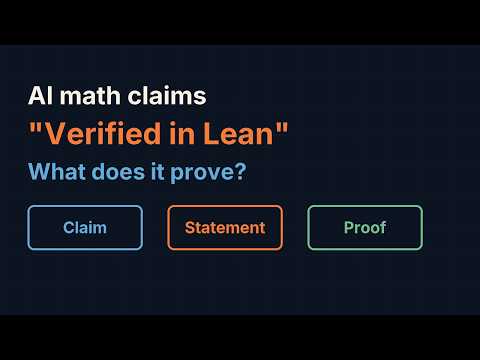
Discussed by: AI Proved What? analysis of the public repository

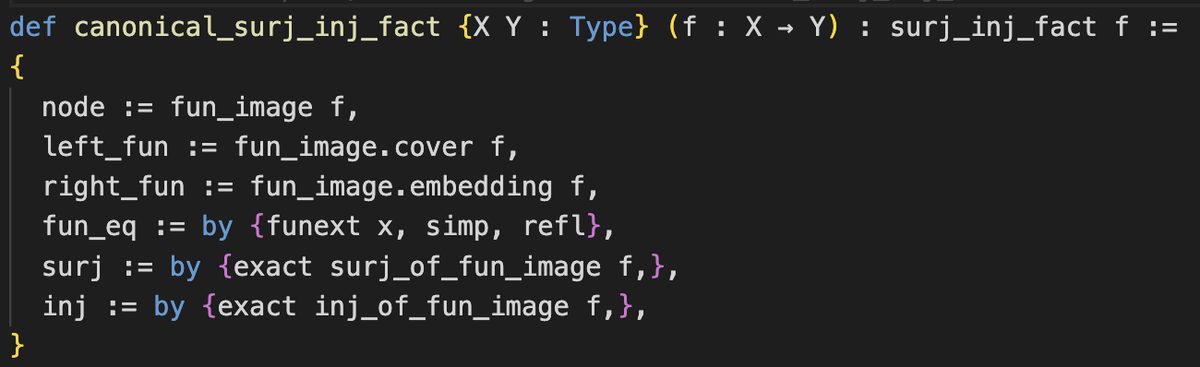
The public Lean repository verifies the polynomial influence bound, not the paper's quantum corollaries. Even if the bound holds, the step from that bound to claims about quantum speedups may need separate formalization or review.

Historical Context

3 moments from history that rhyme with this story — and how they unfolded.

November-December 2019

Keller-Klein retraction (2019)

Nathan Keller and Ohad Klein posted a preprint claiming to prove the Aaronson-Ambainis conjecture. Scott Aaronson announced it on his blog. Within weeks, Paata Ivanishvili found a flaw in Lemma 5.3, and the authors retracted the paper.

Then

The claimed proof collapsed, and the arXiv abstract carried a withdrawal notice.

Now

The episode became a cautionary tale about announcing unverified proofs of the conjecture.

Why this matters now

PSI's proof faces the same scrutiny, and the 2019 retraction is why independent checking matters here.

1994

Shor's algorithm (1994)

Peter Shor found a quantum algorithm that factors large numbers exponentially faster than known classical methods. It works by finding a repeating pattern in the input.

Then

The algorithm became the leading example of a quantum speedup.

Now

Most known dramatic speedups rely on promised structure in the input.

Why this matters now

The conjecture asks whether quantum speedups survive when inputs are random and have no such structure.

1998-2014

Flyspeck and the Kepler conjecture (1998-2014)

Thomas Hales announced a proof of the Kepler conjecture in 1998. The argument was so long that a formal verification project, Flyspeck, ran for years. In 2014 the project completed a machine-checked proof.

Then

The conjecture was accepted as proved.

Now

Formal verification became a credible standard for long, complex proofs.

Why this matters now

PSI's Lean-checked proof follows the same model, but Lean checks only the statement it is given.

Sources

(6)