

Pull to refresh
Logo
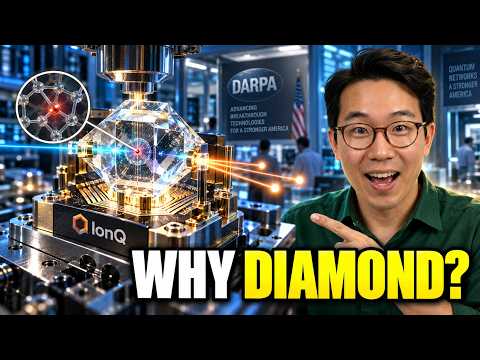
IonQ advances to DARPA's final quantum benchmarking stage

IonQ advances to DARPA's final quantum benchmarking stage

New Capabilities

Agreement worth up to $300 million puts Superion machines through government verification through 2029

Yesterday: DARPA picks four companies for Stage C

Overview

Updated 1 hour ago

DARPA has narrowed its search for a practical quantum computer to four technical approaches. On October 7, the agency picked Atom Computing, Diraq, IBM, and IonQ for the final stage of its Quantum Benchmarking Initiative — hands-on verification of whether their designs can actually be built and run.

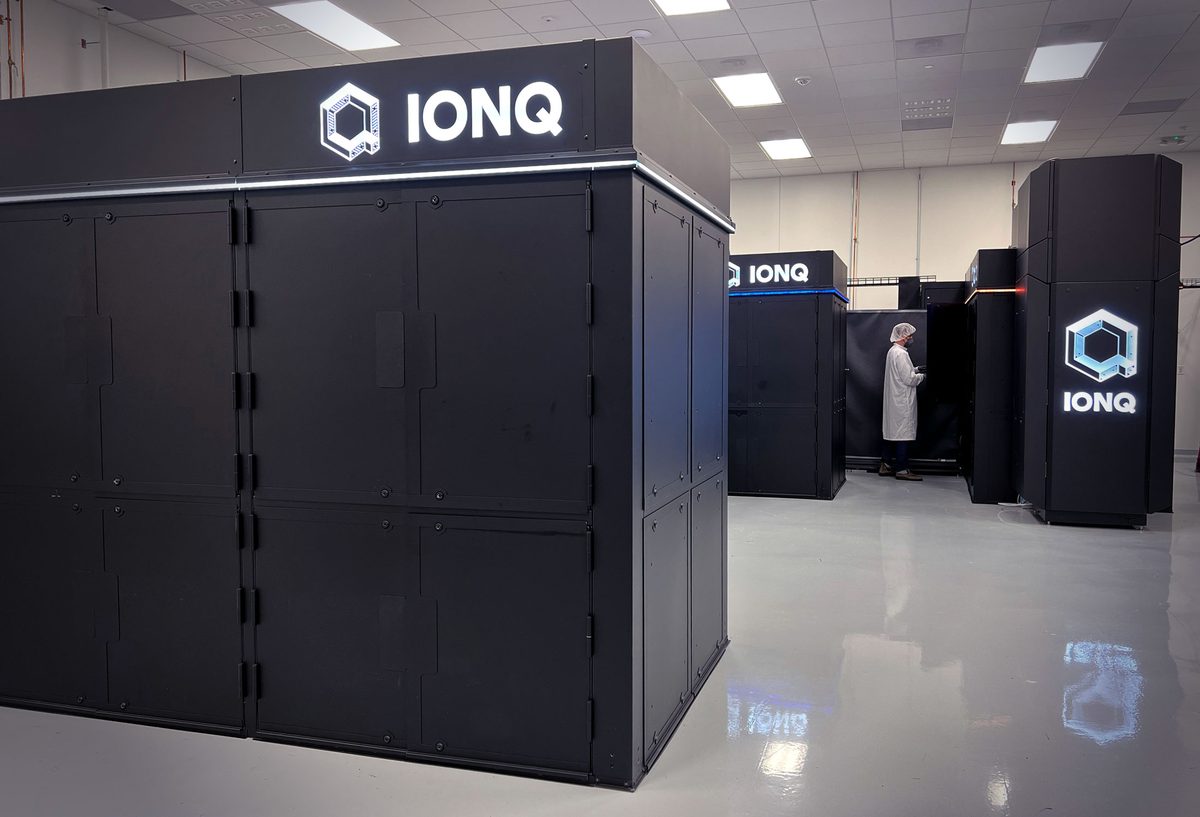
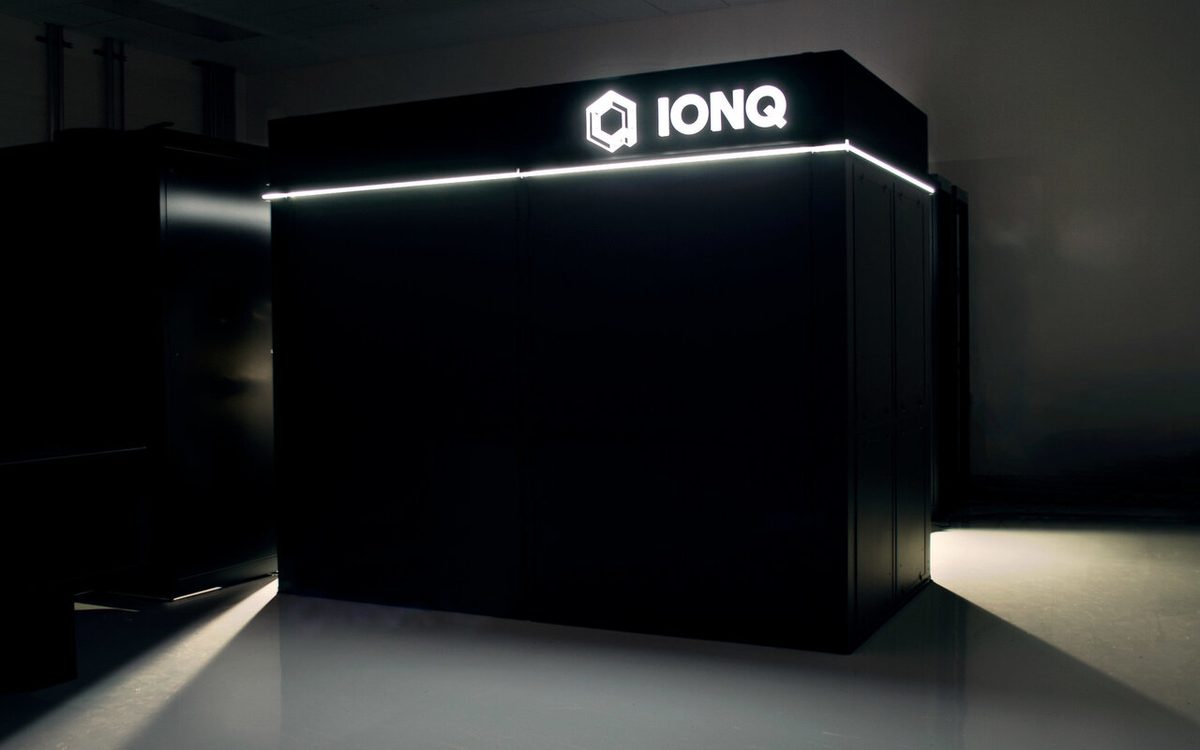
IonQ signed an agreement for that stage worth up to $300 million, though the amount committed so far is undisclosed. DARPA's independent team will test multiple generations of IonQ's Superion machines through 2029. The verdict decides which company gets the go-ahead for final design and construction of a utility-scale system — one whose output is worth more than it costs to operate.

Why it matters

DARPA's verdict decides which quantum approach gets backing to reach utility scale by 2033 — output worth more than operating cost.

Questions about this story

Free account needed to ask — your question is kept and asked for you right after sign-up. Answers are public.

No questions yet — be the first to ask.

Key Indicators

$300M
Potential value of IonQ's Stage C agreement
The published cap for DARPA's QBI Stage C; actual initial obligation not disclosed.
4
Companies selected for QBI Stage C
Atom Computing, Diraq, IBM, and IonQ, each representing a different qubit technology.
2029
Stage C end year
DARPA tests multiple Superion generations against IonQ's roadmap through 2029.
2033
Utility-scale target year
QBI asks whether any quantum approach can reach utility scale by 2033.

Voices

Curated perspectives — historical figures and your fellow readers.

Ever wondered what historical figures would say about today's headlines?

Sign up to generate historical perspectives on this story.

People Involved

Organizations Involved

Timeline

July 2024 October 2026

5 events Latest: Yesterday
Tap a bar to jump to that date
  1. DARPA picks four companies for Stage C

    Latest Program milestone

    Atom Computing, Diraq, IBM, and IonQ are selected; IonQ signs an agreement worth up to $300 million.

  2. IonQ unveils Superion line

    Product news

    IonQ fabricates its first 256-qubit chips and traps ions in prototype Superion 256 systems.

  3. 11 organizations reach Stage B

    Program milestone

    DARPA picks 11 participants for the research-planning stage of QBI.

  4. DARPA publishes stage funding caps

    Program detail

    Proposers Day material sets ceilings: $1 million for Stage A, $15 million for Stage B, $300 million for Stage C.

  5. DARPA launches QBI

    Program launch

    DARPA starts a multi-stage program seeking a quantum computer that reaches utility scale by 2033.

Scenarios

1

IonQ completes Stage C, DARPA clears it for utility-scale build

Possible Resolves by End of 2029

Discussed by: DARPA's program materials and IonQ's own roadmap; both frame Stage C completion as readiness for final design and construction

DARPA's independent team confirms Superion hardware performs against IonQ's roadmap across multiple generations. Completion means DARPA judged the company ready to begin final design of a utility-scale machine. IonQ's own targets — 256-qubit deliveries in 2027, a manufacturable 10K generation in 2028 — give checkpoints along the way.

2

DARPA halts IonQ's Stage C after failed verification

Possible Resolves by Q2 2028

Discussed by: DARPA's stated approach: the independent team decides whether systems perform as models and roadmaps claim

Hardware or software gaps surface during testing, and DARPA terminates or pauses IonQ's participation. Missed delivery targets could trigger it — first Superion 256 customer deliveries are promised for 2027. DARPA has said it evaluates each approach on its own merits, and not all Stage B participants advanced.

3

Appropriations shortfall trims Stage C

Possible Resolves by Oct 1, 2027

Discussed by: IonQ's own release notes funding beyond the initial obligation depends on future appropriations

Congress funds less than the full Stage C ceiling, so DARPA defers or cuts later IonQ milestones. The $300 million is a published program cap, not a committed sum, and the initial obligation size is undisclosed. A shortfall could stretch IonQ's 2029 completion target or push verification work into a smaller scope.

Historical Context

2 moments from history that rhyme with this story — and how they unfolded.

March 2004 – October 2005

DARPA Grand Challenge (2004-2005)

DARPA offered a $1 million prize for an autonomous vehicle that could complete a roughly 150-mile desert course. In 2004 no vehicle finished; the best, Carnegie Mellon's Sandstorm, covered about 7 miles. A year later, five vehicles completed the course and Stanford's Stanley took the prize.

Then

Proved self-driving feasibility and launched the autonomous vehicle industry; many competing teams went on to found commercial ventures.

Now

Set DARPA's template for accelerating technology: staged challenges with hard deadlines and independent verification of performance.

Why this matters now

QBI uses the same playbook. DARPA's own team, not the vendor, verifies whether a technology performs as claimed before it gets the go-ahead.

October 2019

Quantum supremacy dispute (2019)

Google's Sycamore processor claimed to complete a task in 200 seconds that would take a supercomputer millennia — 'quantum supremacy.' IBM engineers countered that the same task could run on a classical supercomputer in days, not years.

Then

Sparked a public debate about how to verify quantum claims and what actually counts as supremacy.

Now

Established that quantum performance claims face independent scrutiny before acceptance, making verification central to the field.

Why this matters now

QBI institutionalizes that scrutiny. DARPA's independent team decides whether IonQ's Superion systems perform as the roadmaps promise.

Sources

(5)