Anchor

Long-dormant Alien Terrorist Removal Court used for first time to deport legal US resident
Rule ChangesCreated in 1996, the court heard no case until Nazira Haji Zada's removal to Afghanistan
Today: News of first ATRC deportation spreadsNew here? Follow stories to track developments over time. Create a free account to get updates when stories you care about change.
Overview
Updated 2 hours agoThe Alien Terrorist Removal Court existed for 30 years before anyone used it. On Friday the Justice Department announced its first case: Nazira Haji Zada, a lawful permanent resident in Fort Worth, Texas, was deported to Afghanistan after conceding she was an "alien terrorist."
The court, created by Congress in 1996, lets the government remove non-citizens using classified evidence and a lower standard of proof than criminal courts. Her public defenders contested the process as unconstitutional. The agency calls the court a new tool for national security.
Why it matters
The Justice Department now has a tested path to deport legal US residents on terrorism grounds, using classified evidence outside standard immigration courts.
Questions about this story
Free account needed to ask — your question is kept and asked for you right after sign-up. Answers are public.
No questions yet — be the first to ask.
Key Indicators
30
Years between court creation and first case
Congress created the ATRC in 1996; no administration used it until 2026.
1
ATRC cases brought to date
Zada's removal is the only case the court has handled.
15 years
Prison sentence for Zada's son Abdullah
Pled guilty as an adult for the Election Day attack plot.
~0.5 TB
Documents shared with Zada's defense
The underlying removal evidence remains classified.
Related Media
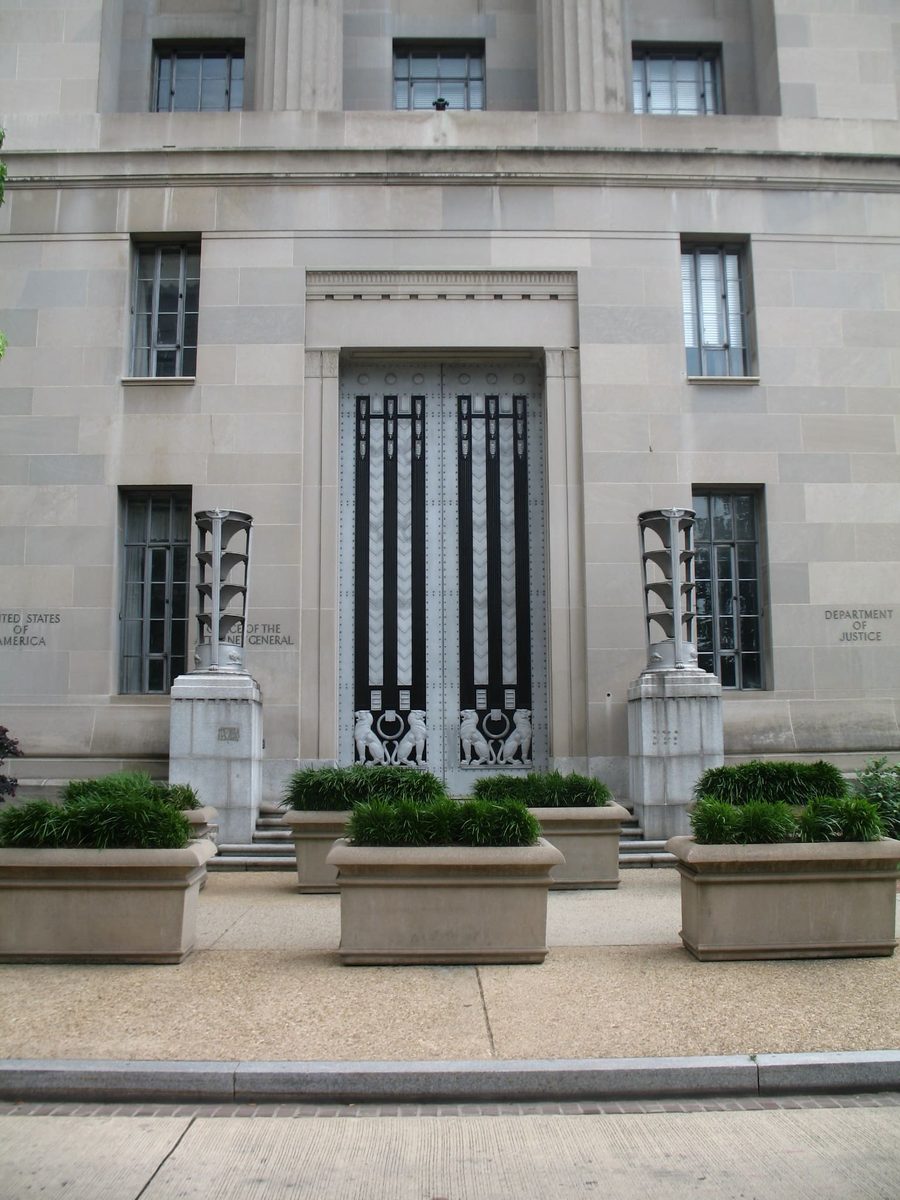
U.S. Department of Justice - EverGreene

Elijah Barrett Prettyman U.S. Courthouse, Washington, DC | GSA

2.0K views
2:21
Details on first case in Alien Terrorist Removal Court
CBS News

1.3K views
1:16
This law has existed since 1996: Alien Terrorist Removal Court
Kyle Lasco | The Kyle Lasco Show

19 views
3:24
Trump admin invokes 30-year dormant terror court as it seeks ...
The Red, the White, and the Who
Images from Openverse under Creative Commons licenses. Videos from YouTube.
Voices
Curated perspectives — historical figures and your fellow readers.
Play
Exploring all sides of a story is often best achieved with Play.
Most of these play right now — no account needed. Sign up to save scores, keep a streak, and unlock Debate and Predict.
Log in
Sign Up
Higher or Lower
A number from this story, against one from elsewhere in the news — guess which is bigger, then keep the chain going. 5 rounds, 3 strikes; a miss costs a strike and resets your streak.
Example
Anchor
EU tariff revenue
$52B
Big for this kind of number
Mystery
Pentagon AI contract
?
Round 1
Streak: 0
Mystery
?
Keyboard: ↓/L lower · ↑/H higher
0 pts
Best streak: 0 · Rounds: 0
0 points — sign up to put that on the leaderboard.
Now try on this story
Connections
Sixteen names from the news. Find the four hidden groups of four. Four mistakes max.
Loading today's puzzle…
0/4 groups
Mistakes
Sign up to keep a daily streak — a new puzzle lands every day.
Now try on this story
Exit debate?
Your progress in this debate will be lost.
How it works
- 1 Two AI personas square off on this story.
- 2 You predict who'll win each round — correct picks earn XP.
- 3 One crossfire question is yours to fire. Pick it carefully.
Couldn't generate a topic
Select Your Champions
Choose one persona for each side of the debate
DEBATE TOPIC
Choose personas with different perspectives for a more dynamic debate.
SIDE A (PRO)
Select debater for this side:
No debate personas available right now.
SIDE B (CON)
Select debater for this side:
No debate personas available right now.
VS
Get ready to make your prediction...
Round of
Claim
Evidence
Stakes
Crossfire Answer
Closing Statement
Claim
Evidence
Stakes
Crossfire Answer
Closing Statement
Your Crossfire Question
Generating arguments...
Who's Got This Round?
Make your prediction before the referee scores
The referee scores both sides on
Correct predictions earn +20 XP
· Press 1 or 2 to pick
Evidence
40%
Logic
30%
Detail
20%
Style
10%
Round Results
Your Pick
Not this time
(%)
Overall Score
/10
Your Pick
Not this time
(%)
Overall Score
/10
Set the Crossfire
Pick the question both personas must answer in the final round
Crafting crossfire questions...
Choosing a question earns +10 XP crossfire bonus
🏆
Total XP Earned
Cred Change
Predictions
Debate Oracle! You called every round!
Sharp Instincts! You know your debaters!
The Coin Flip Strategist! Perfectly balanced!
The Contrarian! Bold predictions!
Inverse Genius! Try betting the opposite next time!
XP Breakdown
Base completion
+20 XP
Rounds played ( rounds x 5 XP)
+ XP
Correct predictions ( correct x 20 XP)
+ XP
Crossfire bonus
+10 XP
Accuracy
%
Prediction History
Round
You picked:
✓
✗
Now try on this story
Keep debating to level up your credibility and unlock achievements
People Involved
NZ
Nazira Haji Zada
Deportee, former lawful permanent resident
Deported to Afghanistan; permanently inadmissible to the US
AZ
Abdullah Haji Zada
Nazira's son, convicted in Election Day plot
Serving 15-year prison sentence
NT
Nasir Ahmad Tawhedi
Nazira's son-in-law, convicted in Election Day plot
Pled guilty June 2025; awaiting sentencing
Todd Blanche
US Attorney General
In office; certified the ATRC application
Joan N. Ericksen
ATRC Chief Judge
Presided over the court's first case
Organizations Involved
Alien Terrorist Removal Court
Federal specialty court
Heard first case in 30-year history
A federal court that removes non-citizens designated as alien terrorists using classified evidence.
U.S. Department of Justice
Federal agency
Brought first-ever ATRC case
The federal agency that prosecutes federal crimes and handles national-security removals.
Timeline
April 1996 September 2026
8 events
Latest: Today
Tap a bar to jump to that date
-
News of first ATRC deportation spreads
Today MediaNational outlets report the first use of the long-dormant court and the constitutional questions it raises.
-
Removal order unsealed; DOJ announces deportation
StatementThe Justice Department reveals Zada has been removed to Afghanistan in the ATRC's first-ever case.
-
Judge signs removal order
LegalZada concedes she is an alien terrorist and waives appeal; Judge Ericksen orders her removal.
-
Zada appears in open court
LegalHer first hearing before the ATRC; her attorneys contest the proceedings' constitutionality.
-
Justice Department files first ATRC application
LegalAttorney General Todd Blanche certifies the removal application against Nazira Haji Zada, the court's first case.
-
Tawhedi pleads guilty to terrorism charges
LegalSon-in-law admits to conspiring to support ISIS and to firearms charges; sentencing is pending.
-
Son and son-in-law arrested in Election Day plot
InvestigationTawhedi and Abdullah buy firearms from an undercover FBI employee for a planned ISIS-inspired Election Day attack.
-
Congress creates Alien Terrorist Removal Court
LegislationThe Antiterrorism and Effective Death Penalty Act establishes the court to remove alien terrorists using classified evidence.
Scenarios
1
ATRC becomes the standard tool for terrorism-linked deportations
Likely
Resolves by Q2 2027
Discussed by: Justice Department leadership, citing Attorney General Blanche's pledge to use "every tool at its disposal"
The Zada case proves the ATRC works, so the department files more removal applications against non-citizens it links to terrorism. Future defendants may not waive their rights as Zada did, forcing public hearings and contested litigation. Each new case entrenches the court's use and normalizes classified-evidence removals.
2
Appeals court weighs in on ATRC constitutionality
Possible
Resolves by Q2 2028
Discussed by: Zada's court-appointed attorneys, who contested the proceedings and lack of access to evidence
A future defendant refuses to waive appeal and challenges a removal order before the US Court of Appeals for the DC Circuit. The court must rule on whether classified-evidence proceedings without full disclosure to the defendant satisfy due process. A ruling could narrow or invalidate the ATRC framework Congress wrote in 1996.
3
ATRC remains a one-off
Uncertain
Resolves by Sep 12, 2027
Discussed by: The court's own history: created in 1996, it went unused for three decades
The Zada case is treated as an exceptional response to an election-related plot rather than a template. The department returns to standard immigration proceedings for future cases, and the court reverts to dormancy. The precedent stands on paper but shapes no further enforcement.
Historical Context
3 moments from history that rhyme with this story — and how they unfolded.
October 1978 – present
Foreign Intelligence Surveillance Court (1978)
Congress created the FISA Court to review warrant applications for foreign intelligence surveillance. Proceedings are ex parte and secret, with only the government present.
Then
The court's role expanded sharply after 9/11 under the PATRIOT Act, approving the vast majority of government requests.
Now
It drew criticism for lacking adversarial process and for secret legal interpretations that shaped surveillance policy for decades.
Why this matters now
Shows how a secretive, specialized federal court created for national security can grow from a narrow instrument into a significant, contested institution.
September 2001 – 2002
Post-9/11 immigrant detentions (2001–2002)
Following the 9/11 attacks, the Justice Department held about 1,200 immigrants on immigration violations while investigating terrorism, sometimes for months without charging them with any crime.
Then
Most detainees were never charged with terrorism. The detentions drew court challenges and were later faulted by the 9/11 Commission as inefficient.
Now
The episode established a pattern of using immigration law, rather than criminal charges, against suspected terrorists.
Why this matters now
Direct precedent for the ATRC approach: applying immigration tools and lower legal standards to people the government links to terrorism.
May 2002 – January 2008
Jose Padilla (2002–2008)
Jose Padilla, a US citizen, was arrested at Chicago's O'Hare airport in May 2002 and declared an "enemy combatant" by the Bush administration. He was held in military custody for 3.5 years without criminal charges on suspicion of plotting a radiological bomb attack.
Then
A 2004 Supreme Court ruling in the related Hamdi case affirmed that detainees could challenge their status. Padilla was eventually charged in civilian court and convicted in 2007.
Now
The case defined the legal fight over executive power to hold terror suspects outside the criminal justice system and without full due process.
Why this matters now
Like the ATRC case, it tested how far the government can go with national-security tools that bypass ordinary criminal procedure.
Sources
(8)Related Stories
Alien enemies act deportations face legal reckoning
Rule Changes
Updated May 27
Judge keeps DACA recipient's lawsuit over ICE detention alive
Rule Changes
Updated 3 days ago
The fight over who gets a bond hearing
Rule Changes
Updated Aug 29
Immigration judges deny children's deportation case pauses after Texas ruling
Rule Changes
Updated 5 days ago
Cold war law revived to deport campus activists
Rule Changes
Updated May 21
UK deploys visa penalties to force deportation cooperation
Rule Changes
Updated May 27