
Pull to refresh
Logo
Amgen settles Opdivo patent suit, setting a 2028 U.S. biosimilar launch

Amgen settles Opdivo patent suit, setting a 2028 U.S. biosimilar launch

Money Moves

A deal with Bristol Myers Squibb and Ono ends litigation over ABP 206 and allows a U.S. launch on October 1, 2028, if the FDA approves the drug.

Overview

Updated 3 hours ago

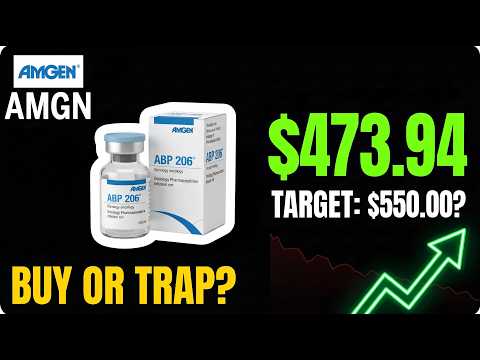
Amgen can sell a copy of Opdivo, Bristol Myers Squibb's cancer immunotherapy, in the United States starting October 1, 2028. The date comes from a settlement announced November 24, 2026, that ends patent litigation BMS and Ono Pharmaceutical filed against Amgen in September.

The agreement does not approve the drug. Amgen's version, called ABP 206, still needs a license from the Food and Drug Administration (FDA), which Amgen says is expected to act on its application by the end of 2026. Opdivo brought BMS about $7 billion worldwide in the first nine months of 2026, roughly $4 billion of it in the United States.

Why it matters

Biosimilar copies of a $7 billion-a-year cancer drug now have a U.S. launch date, set by settlement rather than a court verdict.

Questions about this story

Free account needed to ask — your question is kept and asked for you right after sign-up. Answers are public.

No questions yet — be the first to ask.

Key Indicators

$7B
Opdivo worldwide sales, first nine months of 2026
About $4 billion of that total came from the United States, according to pharmaphorum's account of BMS results.
$1.35B
Opdivo U.S. sales, third quarter of 2026
Worldwide Opdivo revenue that quarter was $2.374 billion, down 6% from a year earlier.
7
Patents asserted against Amgen in the September suit
BMS and Ono sued in Delaware federal court on September 8, 2026, over Amgen's biosimilar application.
Oct 1, 2028
Earliest U.S. launch date for ABP 206
Amgen can sell the biosimilar from this date if the FDA approves it.
2–4%
Ono's royalty on U.S. Opdivo sales, through at least 2036
The rate varies with how much of the market biosimilars take, Ono said.

Voices

Curated perspectives — historical figures and your fellow readers.

Sign up to generate historical perspectives on this story.

People Involved

Organizations Involved

Timeline

September 2026 November 2026

3 events Latest: 2 days ago
  1. Ono discloses the royalty terms

    Latest Disclosure

    Ono says it keeps 2% to 4% royalties on U.S. Opdivo sales through at least 2036, with the rate tied to biosimilar penetration.

  2. Amgen settles and books an October 2028 launch

    Settlement

    Amgen says it will launch ABP 206 in the U.S. on October 1, 2028, subject to FDA approval. Settlement terms stay confidential.

Scenarios

1

FDA approves ABP 206 before the 2028 launch date

Likely Resolves by Q3 2028

Discussed by: Amgen, which said the FDA is expected to act on its application by the end of 2026

Amgen submitted its Biologics License Application and the FDA accepted it for review. Approval would make the October 1, 2028 date a real launch; a rejection or a delay would leave the settlement intact but the product unsold.

2

Amgen starts selling ABP 206 in the U.S. on October 1, 2028

Likely Resolves by End of 2028

Discussed by: Amgen, in its November 24 press release and securities filing

The settlement sets a date but not a guarantee. Launch could slip if approval comes late, if Amgen chooses to wait, or if a new dispute arises. BMS's shift of patients to subcutaneous Opdivo Qvantig could also shrink the market Amgen enters.

3

A second nivolumab biosimilar wins U.S. approval by 2030

Possible Resolves by End of 2030

Discussed by: pharmaphorum, which lists Sandoz, Celltrion, mAbxience and Intas/Xbrane Bio with candidates in late-stage testing

Amgen's settlement covers only its own product. Rivals are running their own trials and will negotiate or litigate their own entry dates, which could compress the price premium Amgen's early start would otherwise earn.

Historical Context

3 moments from history that rhyme with this story — and how they unfolded.

January 2023

Humira biosimilars reach the U.S. (2023)

AbbVie resolved patent fights with several manufacturers by licensing the dates their U.S. copies could launch. Amgen went first with Amjevita on January 31, 2023; other versions arrived that July.

Then

The copies launched, but insurers and pharmacy benefit managers kept the brand on formularies and biosimilar uptake started slowly.

Now

Brand revenue fell sharply only after a slow start, years behind the first launch date.

Why this matters now

Same company, same mechanism: a settlement sets a launch date years in advance. It also shows the gap between a date on paper and actual market share.

June 2017

Sandoz v. Amgen (2017)

The Supreme Court ruled that a biosimilar maker does not have to give 180 days' notice before marketing, and that the federal patent-exchange steps could not be enforced by injunction. Amgen was the innovator defending its biologics in that case.

Then

Biosimilar launches could proceed sooner, and patent fights moved into private settlements and state courts.

Now

Settlements negotiated entry dates became the standard way biosimilars reach the U.S. market.

Why this matters now

Amgen spent years on the innovator side of biosimilar litigation. The pathway it helped define is the one it used for ABP 206.

March 2015

The first U.S. biosimilar (2015)

The FDA approved Zarxio, a copy of Amgen's Neupogen, and Sandoz launched it in September after a court declined to block the sale.

Then

The approval proved the abbreviated pathway worked, but few copies followed quickly.

Now

It took years for biosimilars to reach the biggest-selling biologics, where patent thickets were denser.

Why this matters now

Amgen has been on the receiving end of a biosimilar launch before, which helps explain why it now builds the same business.

Sources

(5)