



Pull to refresh
Logo
Astellas secures option to license Audax's experimental cancer therapy

Astellas secures option to license Audax's experimental cancer therapy

Money Moves

Melbourne startup's DAX-044 delivers IL-12 to tumors, aiming to avoid the toxicity that halted earlier versions

Overview

Updated 1 hour ago

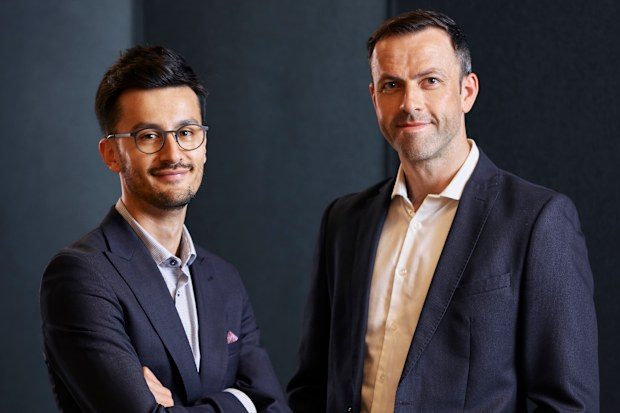
A Melbourne drug developer founded by two researchers and funded largely from their own pockets has signed one of the biggest preclinical drug deals to come out of Australia. Japanese drugmaker Astellas now holds the exclusive option to license Audax Biosciences' lead cancer therapy worldwide, a package worth up to $1.34 billion before royalties.

The drug, DAX-044, is an engineered form of the immune protein interleukin-12 (IL-12), fused to an antibody that concentrates it inside tumors. That targeting is the whole point: earlier IL-12 drugs caused severe, sometimes fatal toxicity when the cytokine spread through the body.

Audax will fund and run the Phase 1 trial itself, expected to start in 2027. Astellas then decides whether to pay up and take the drug global, with Audax keeping an option to co-promote it in Australia and New Zealand.

Why it matters

A version of IL-12 that avoids its class's toxicity could expand immunotherapy to cancer patients who don't respond to existing checkpoint drugs.

Questions about this story

Free account needed to ask — your question is kept and asked for you right after sign-up. Answers are public.

No questions yet — be the first to ask.

Key Indicators

$1.34B
Total potential deal value, excluding royalties
Includes the option exercise fee, milestone payments, and upfront payment.
$285M
Upfront and potential option exercise payment
Paid to Audax at signing and upon Astellas exercising its option.
$1.05B
Potential development and commercial milestones
Payable to Audax if DAX-044 hits clinical and sales targets.
2027
Expected start of Phase 1 trial
Audax funds and conducts the first-in-human study of DAX-044.

Voices

Curated perspectives — historical figures and your fellow readers.

Sign up to generate historical perspectives on this story.

People Involved

Organizations Involved

Timeline

2018 October 2026

3 events Latest: Yesterday
  1. Astellas signs option and license deal for DAX-044

    Latest Deal

    Astellas secures an exclusive option to license DAX-044 worldwide, with deal value up to $1.34 billion plus royalties.

  2. oNKo-innate rebrands as Audax Biosciences

    Corporate

    The startup unveils a new name and identity as it moves from a niche research shop toward a clinically focused biotech.

  3. Audax founded as oNKo-innate

    Founding

    Researchers Jai Rautela and Nicholas Huntington start the company in Melbourne, built on natural killer cell biology.

Scenarios

1

Astellas exercises option, DAX-044 advances to Phase 2

Likely Resolves by End of 2028

Discussed by: Deal structure and the companies' statements; the Australian Financial Review reports the founders' confidence in the treatment

If Phase 1 safety data holds up, Astellas pays the option exercise fee and takes over global development, manufacturing, and commercialization. Audax then becomes eligible for milestone payments up to $1.05 billion plus tiered double-digit royalties.

2

Phase 1 data disappoints, option lapses

Possible Resolves by End of 2028

Discussed by: Industry analysts note most preclinical deals do not survive first-in-human trials; IL-12's toxicity history makes safety the central risk

If DAX-044 shows unacceptable toxicity or weak immune activation in humans, Astellas can walk away without paying. Audax would then own the asset with no committed partner, forcing it to find a new licensee or continue alone with its own funds.

3

Strong data accelerates DAX-044 into late-stage trials

Uncertain Resolves by End of 2029

Discussed by: Audax's best-in-class claims for its AVIKINE platform and approval-seeking ambition

If Phase 1 shows a clean safety profile with clear signs of tumor-localized immune activation, Astellas could move DAX-044 quickly into later-phase studies and pursue an accelerated approval route. This is the upside case the deal's size and structure gesture toward.

Historical Context

2 moments from history that rhyme with this story — and how they unfolded.

1996

IL-12's first clinical trials collapse (1996)

Genetics Institute's recombinant IL-12 looked like a breakthrough immune therapy until a Phase 2 trial in kidney cancer patients caused severe toxicity, hospitalizations, and two deaths after the dosing schedule was intensified from the safer Phase 1 regimen. The program was suspended, and the field moved on.

Then

IL-12 development stalled as a systemic drug, and the wider field treated the failure as a warning about cytokine toxicity.

Now

Researchers spent two decades trying to deliver cytokines safely, giving rise to targeted fusions and engineered molecules like DAX-044.

Why this matters now

DAX-044 exists to solve the exact problem that ended IL-12 the first time. The entire basis of the Astellas bet is that tumor-targeting can tame the same toxicity, so the 1996 collapse is the benchmark the deal is measured against.

March 2022

Nektar's bempegaldesleukin fails late-stage trials (2022)

Nektar Therapeutics' bempegaldesleukin, a polyethylene glycol-engineered form of IL-2 designed to boost immune cells with fewer side effects, failed a pivotal Phase 3 trial in melanoma when combined with Bristol Myers Squibb's Opdivo. The company's shares fell sharply and the program was abandoned.

Then

The candidate failed to beat standard care, sending Nektar into retreat and chilling enthusiasm for engineered cytokines.

Now

The failure underscored that clever delivery design does not guarantee efficacy, even after promising early data.

Why this matters now

Bempegaldesleukin is the cautionary tale for DAX-044: a well-engineered cytokine can still stumble in late-stage trials. It tempers the promise of the AVIKINE approach as Audax's drug heads toward humans.

Sources

(9)