

Pull to refresh
Logo
Bambusa Therapeutics files for IPO to fund eczema and inflammation drug trials

Bambusa Therapeutics files for IPO to fund eczema and inflammation drug trials

Money Moves

Two-year-old Boston biotech seeks BBTX Nasdaq listing to bankroll Phase 2b studies

Yesterday: IPO filing made public

Overview

Updated 1 hour ago

Bambusa Therapeutics, a Boston biotech founded in March 2024, filed Friday to sell stock to the public. The proceeds are earmarked for larger trials of its lead eczema drug and a respiratory candidate, part of the $150 billion immunology and inflammation market the company targets with bispecific antibodies.

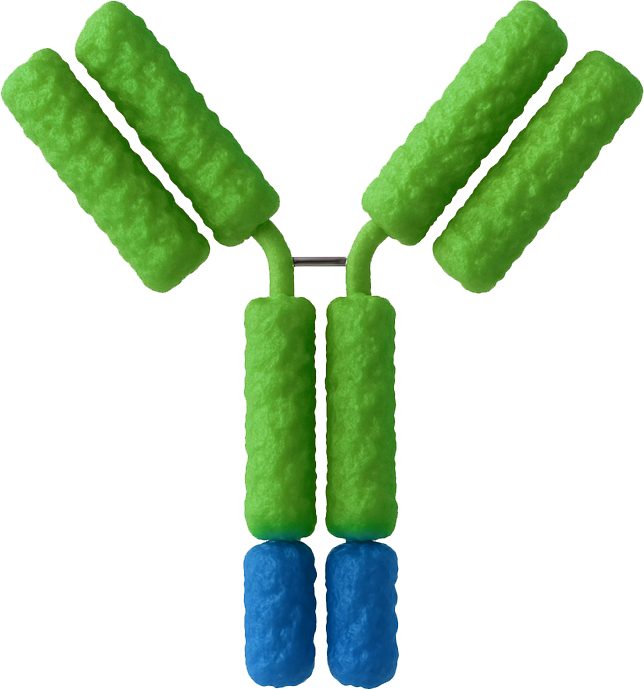
The pitch rests on early data from 17 atopic dermatitis patients treated with BBT001, which blocks two inflammatory pathways at once. The company reported a placebo-adjusted EASI-50 response of 82% at Week 6. Investors now decide whether those numbers justify funding more trials before any product revenue.

Why it matters

A successful IPO would fund Phase 2b trials of a drug that challenges eczema blockbusters with longer-lasting dosing.

Questions about this story

Free account needed to ask — your question is kept and asked for you right after sign-up. Answers are public.

No questions yet — be the first to ask.

Key Indicators

$71.5M
Cash on hand
Cash, equivalents and marketable securities as of June 30, 2026.
$22.4M
Net loss, first half of 2026
Net loss on zero revenue for the six months ended June 30, 2026.
$150B
Estimated global I&I market
Annual size of the immunology and inflammation market Bambusa targets.
21.5%
Co-founder Shanshan Xu's stake
Beneficial ownership in Bambusa held by co-founder Shanshan Xu.
82%
Week 6 placebo-adjusted EASI-50 rate
Share of BBT001-treated patients achieving a 50% eczema severity improvement, placebo-adjusted.

Voices

Curated perspectives — historical figures and your fellow readers.

Ever wondered what historical figures would say about today's headlines?

Sign up to generate historical perspectives on this story.

People Involved

Organizations Involved

Timeline

2024 October 2026

6 events Latest: Yesterday
Tap a bar to jump to that date
  1. IPO filing made public

    Latest Announcement

    Bambusa confirms plans to fund eczema and inflammation drug studies; BofA leads underwriting syndicate.

  2. Bambusa files S-1 with the SEC

    Regulatory filing

    Registration statement submitted for a Nasdaq listing under the symbol BBTX.

  3. Bambusa reports $71.5M cash, $22.4M H1 loss

    Financial filing

    Half-year figures show no revenue, with losses funding clinical development.

  4. Bambusa raises $33.1 million

    Funding

    Round joined by RA Capital, Janus Henderson Investors and KKR-controlled Dawn Biopharma.

  5. Bambusa Therapeutics founded

    Company formation

    Boston-based company incorporated to develop bispecific antibodies for immunology and inflammation.

  6. Bambusa acquires BBT001 and BBT002 from BioNTech Zhuhai

    Asset acquisition

    Lead drug programs transferred from BioNTech subsidiary formerly known as Biotheus.

Scenarios

1

Bambusa prices IPO and BBTX begins trading on Nasdaq

Likely Resolves by Q1 2027

Discussed by: MarketWatch, 24/7 Wall St., prospectus underwriters

The four-bank syndicate led by BofA sets a price range and sells shares, with trading opening on Nasdaq under the ticker BBTX. Proceeds fund the planned Phase 2b atopic dermatitis study of BBT001 and a Phase 2b respiratory trial for BBT002. Early Phase 1 efficacy data and a crowded investor roster support the case.

2

IPO stalls; Bambusa withdraws the offering

Possible Resolves by Oct 9, 2027

Discussed by: Headlines Briefing, trading analysts

Market conditions or investor skepticism about early-stage data push the offering past its shelf life. The company would fall back on its $71.5 million in cash and private rounds, delaying Phase 2b trials until new funding arrives. With $22.4 million burned in the first half of 2026, cash runway becomes the constraint.

3

BBT001 Phase 2b trial fails to start on schedule

Possible Resolves by End of 2027

Discussed by: Prospectus use-of-proceeds section

The company plans to initiate a Phase 2b AD study with IPO proceeds, but trial startup can slip on enrollment, manufacturing or regulatory clearance. A delayed start would push back proof-of-concept readouts for the lead candidate and stretch cash burn, pressuring the stock after listing.

Historical Context

2 moments from history that rhyme with this story — and how they unfolded.

March 2017

Regeneron and Sanofi launch Dupixent for eczema (2017)

The U.S. Food and Drug Administration approved dupilumab, marketed as Dupixent, for moderate-to-severe atopic dermatitis in adults. The drug blocks the IL-4 receptor alpha pathway, the single most validated target in eczema, and went on to become one of the world's best-selling prescription medicines.

Then

Dupixent quickly became the standard of care for severe eczema and expanded into asthma, nasal polyps and other allergic conditions.

Now

It proved the IL-4Rα pathway alone can drive a multibillion-dollar franchise, setting the commercial benchmark new eczema drugs must beat.

Why this matters now

Bambusa's BBT001 targets the same IL-4Rα pathway and adds a second target, IL-31, the itch pathway. Its pitch is that covering both burdens with one long-acting antibody beats Dupixent's single-target approach and longer dosing could improve adherence.

2020-2021

The 2020–2021 clinical-stage biotech IPO wave

Dozens of revenue-less clinical-stage biotechs went public during the COVID-era bull market, raising billions to fund trials that were years from approval. Investors accepted deep early-stage risk on the strength of small proof-of-concept datasets.

Then

Many companies raised more capital than planned as valuations climbed through 2021.

Now

A sharp 2022 market downturn wiped out large portions of those companies' values, and the IPO window for early-stage biotechs narrowed considerably afterward.

Why this matters now

Bambusa is testing whether that window has reopened. It is a two-year-old company with no revenue, no approved products and early data from just 17 patients, a profile that succeeded in 2021 but struggled in the quieter years that followed.

Sources

(8)