Anchor

New study finds apoB blood test beats standard LDL screening
New CapabilitiesA Northwestern model of 250,000 adults shows counting cholesterol particles, not measuring their contents, prevents more heart attacks at a cost payers can absorb
July 6th, 2026: Findings reach a wide audienceNew here? Follow stories to track developments over time. Create a free account to get updates when stories you care about change.
Overview
Updated Jul 7Most Americans who get their cholesterol checked receive an LDL test. A Northwestern Medicine study says a different, rarely ordered test would catch more of the people about to have a heart attack.
The test is apolipoprotein B, or apoB. It counts the actual number of harmful cholesterol particles in your blood, rather than measuring the cholesterol packed inside them. In a model of 250,000 U.S. adults, guiding treatment by apoB prevented more heart attacks and strokes than the standard LDL approach, and did so at a price researchers call good value for health payers.
Why it matters
Heart disease kills more Americans than anything else. A cheap test many patients have never heard of could flag more of the people most likely to die from it.
Questions about this story
Free account needed to ask — your question is kept and asked for you right after sign-up. Answers are public.
No questions yet — be the first to ask.
Key Indicators
250,000
Adults in the model
Simulated U.S. adults eligible for statins with no existing heart disease.
#1
Cause of U.S. deaths
Cardiovascular disease is the leading cause of death in the United States.
1 extra draw
Why apoB is skipped
ApoB is not on standard panels, so ordering it usually means a separate test.
1st
Study of its kind
First comprehensive analysis to show apoB-guided treatment is cost-effective.
Related Media

Blood vacutainer with sample and slide on a white background for medical testing.
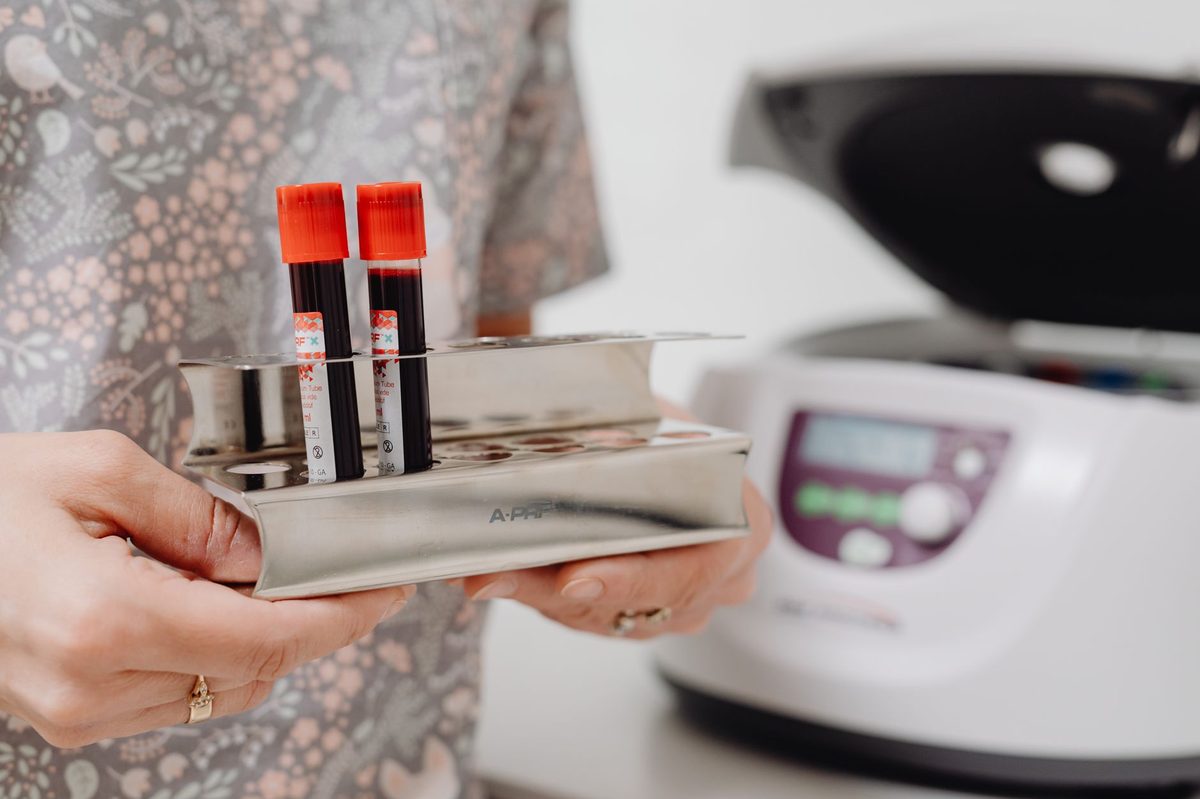
Close-up of blood vials in a laboratory setting, ready for testing.

Close-up of a gloved hand holding a test tube with blood sample in a clinical research lab.
36.9K views
6:20
ApoB Explained: What Your LDL Test Doesn't Tell You
Metabolic Mind

11:25
Ep 112: A blood test measuring apoB particles may prevent ...
Nerra Network

144.5K views
20:05
Game-Changing Study on Heart Health and Cholesterol: New ...
Nick Norwitz MD PhD
Images from Openverse under Creative Commons licenses. Videos from YouTube.
Voices
Curated perspectives — historical figures and your fellow readers.
Play
Exploring all sides of a story is often best achieved with Play.
Most of these play right now — no account needed. Sign up to save scores, keep a streak, and unlock Debate and Predict.
Log in
Sign Up
Higher or Lower
A number from this story, against one from elsewhere in the news — guess which is bigger, then keep the chain going. 5 rounds, 3 strikes; a miss costs a strike and resets your streak.
Example
Anchor
EU tariff revenue
$52B
Big for this kind of number
Mystery
Pentagon AI contract
?
Round 1
Streak: 0
Mystery
?
Keyboard: ↓/L lower · ↑/H higher
0 pts
Best streak: 0 · Rounds: 0
0 points — sign up to put that on the leaderboard.
Now try on this story
Connections
Sixteen names from the news. Find the four hidden groups of four. Four mistakes max.
Loading today's puzzle…
0/4 groups
Mistakes
Sign up to keep a daily streak — a new puzzle lands every day.
Now try on this story
Exit debate?
Your progress in this debate will be lost.
How it works
- 1 Two AI personas square off on this story.
- 2 You predict who'll win each round — correct picks earn XP.
- 3 One crossfire question is yours to fire. Pick it carefully.
Couldn't generate a topic
Select Your Champions
Choose one persona for each side of the debate
DEBATE TOPIC
Choose personas with different perspectives for a more dynamic debate.
SIDE A (PRO)
Select debater for this side:
No debate personas available right now.
SIDE B (CON)
Select debater for this side:
No debate personas available right now.
VS
Get ready to make your prediction...
Round of
Claim
Evidence
Stakes
Crossfire Answer
Closing Statement
Claim
Evidence
Stakes
Crossfire Answer
Closing Statement
Your Crossfire Question
Generating arguments...
Who's Got This Round?
Make your prediction before the referee scores
The referee scores both sides on
Correct predictions earn +20 XP
· Press 1 or 2 to pick
Evidence
40%
Logic
30%
Detail
20%
Style
10%
Round Results
Your Pick
Not this time
(%)
Overall Score
/10
Your Pick
Not this time
(%)
Overall Score
/10
Set the Crossfire
Pick the question both personas must answer in the final round
Crafting crossfire questions...
Choosing a question earns +10 XP crossfire bonus
🏆
Total XP Earned
Cred Change
Predictions
Debate Oracle! You called every round!
Sharp Instincts! You know your debaters!
The Coin Flip Strategist! Perfectly balanced!
The Contrarian! Bold predictions!
Inverse Genius! Try betting the opposite next time!
XP Breakdown
Base completion
+20 XP
Rounds played ( rounds x 5 XP)
+ XP
Correct predictions ( correct x 20 XP)
+ XP
Crossfire bonus
+10 XP
Accuracy
%
Prediction History
Round
You picked:
✓
✗
Now try on this story
Keep debating to level up your credibility and unlock achievements
People Involved
Organizations Involved
Northwestern University Feinberg School of Medicine
Academic medical center
Produced the study
The Chicago medical school whose researchers built the model comparing cholesterol-testing strategies.
American Heart Association
Nonprofit medical organization
Funded the research; co-author of 2026 guidelines
The heart-health nonprofit that funded the study and helped write the 2026 guidelines emphasizing apoB.
Timeline
August 2019 July 2026
5 events
Latest: July 6th, 2026 · 2 months ago
Tap a bar to jump to that date
-
Findings reach a wide audience
Latest PublicityNews coverage brings the study to general readers, framing apoB as a test millions of patients are not getting.
-
ACC publishes practitioner guide to the new dyslipidemia guidelines
GuidelineThe American College of Cardiology publishes a clinician-facing article — "Lower Sooner" — laying out when and how to add apoB testing under the updated 2026 standards.
-
JAMA publishes the Northwestern study
ResearchNorthwestern researchers report that apoB-guided treatment prevents more heart attacks and strokes than LDL targets, at a cost payers can absorb.
-
ACC and AHA release 2026 dyslipidemia guidelines
GuidelineAn 11-society joint guideline raises apoB's clinical standing — recommending it for patients where LDL may underestimate risk — but keeps it as a confirmatory measure, not a primary screen. It also makes universal once-in-a-lifetime Lp(a) screening a Class I recommendation for all adults.
-
European guidelines flag apoB
GuidelineEuropean cardiology and atherosclerosis societies name apoB a useful marker for cardiovascular risk, especially for certain patients.
Historical Context
2 moments from history that rhyme with this story — and how they unfolded.
November 2008
Statins move to primary prevention (2008)
The JUPITER trial showed rosuvastatin cut heart attacks and strokes in people with normal LDL but high C-reactive protein. It challenged the idea that LDL alone decides who needs treatment. The result reached about 18,000 participants.
Then
Guidelines and prescribing widened to include patients LDL testing had passed over.
Now
Risk-based treatment, not a single cholesterol number, became the model for prevention.
Why this matters now
Like JUPITER, the apoB study argues the standard number misses people who are actually at risk.
2009-2010
HbA1c replaces fasting glucose for diabetes (2009-2010)
An international expert panel recommended the HbA1c blood test to diagnose diabetes. It measured long-term blood sugar and did not require fasting. Major bodies adopted it soon after.
Then
Clinicians gained a more convenient, more stable test for identifying patients.
Now
HbA1c became a routine standard, showing how a better metric can displace an entrenched one.
Why this matters now
Shows the path apoB advocates hope to follow: a better measure becoming the default, if convenience and cost line up.
Sources
(12)Related Stories
The blood test revolution in Alzheimer's diagnosis
New Capabilities
Updated 3 days ago
GLP-1 drugs prove they protect the heart
New Capabilities
Updated Aug 9
Food quality emerges as key factor in heart health research
New Capabilities
Updated May 29
DNA hairpin therapy targets the gene behind high cholesterol
New Capabilities
Updated May 31
The race to detect cancer from a blood draw
New Capabilities
Updated Aug 13
FDA approves first oral PCSK9 inhibitor for high cholesterol
New Capabilities
Updated Jul 16