Pull to refresh
Logo
Daily Brief
Following
Why Ranks Sign Up
Copper drug repairs the brain's waste-clearance pumps in Alzheimer's mice

Copper drug repairs the brain's waste-clearance pumps in Alzheimer's mice

New Capabilities

A compound already tested in humans cut toxic protein buildup and improved memory in a preclinical study

Yesterday: Monash study links barrier repair to memory

Overview

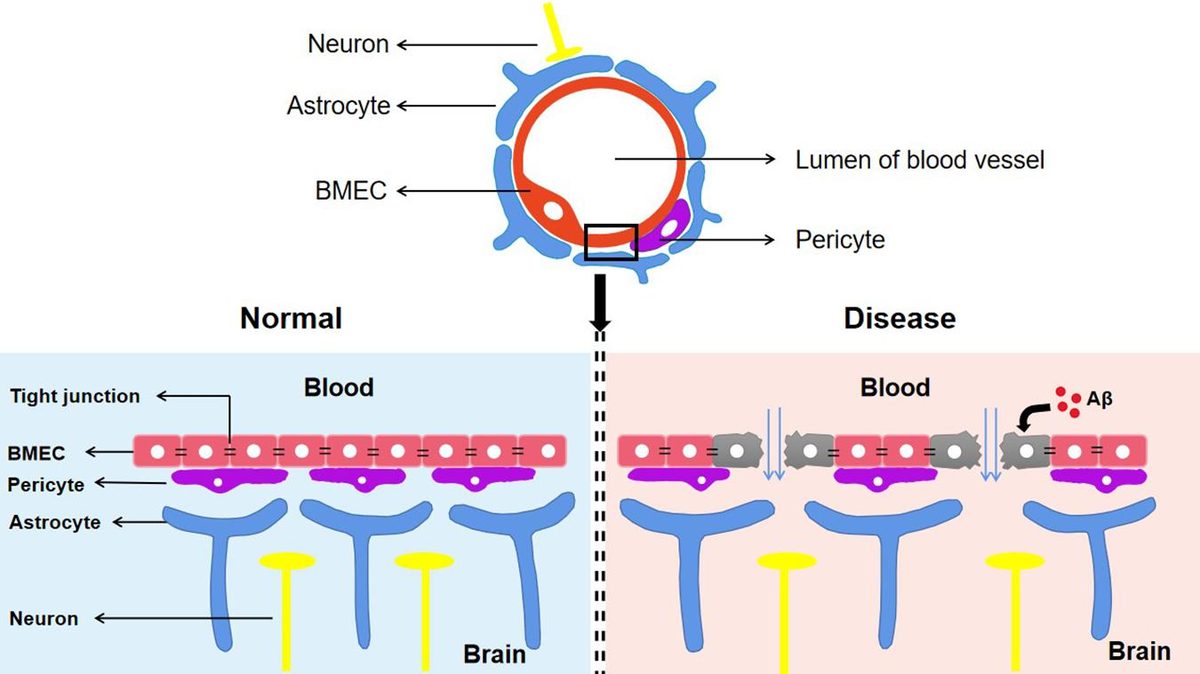
Alzheimer's disease clogs the brain's drainage system, letting toxic proteins pile up. A copper compound called Cu(ATSM) repaired that drainage in mice and cut the buildup by about 42%.

The drug works on a pump at the blood-brain barrier, not on the plaques themselves. That makes it a different bet than the antibody drugs now on the market. Because Cu(ATSM) has already passed human safety tests for other brain diseases, it could reach Alzheimer's trials faster than a brand-new molecule.

Why it matters

About 55 million people live with dementia. This drug already passed human safety tests, so a fresh way to clear Alzheimer's proteins could reach patients sooner.

Questions about this story

No questions yet — be the first to ask.

Key Indicators

42%
Drop in toxic amyloid-beta
Reduction in the toxic protein linked to Alzheimer's in treated mice.
24%
More clearance pumps
Rise in P-glycoprotein, the waste pump that weakens in Alzheimer's.
44%
Better spatial learning
Improvement in the mice's ability to learn and remember a route.
56
Length of treatment
Days over which the mice received the compound.

Voices

Curated perspectives — historical figures and your fellow readers.

Ever wondered what historical figures would say about today's headlines?

Sign up to generate historical perspectives on this story.

Play

Exploring all sides of a story is often best achieved with Play.

Log in to play. Track your picks, climb the leaderboards. Log in Sign Up
Predict 4 ways this could play out. Contrarian picks score more — points lock when the scenario resolves. Log in to play
Higher or Lower Two numbers from this story. Guess which is bigger. 5 rounds to set a streak. Log in to play
Connections Sixteen names from the news. Find the four hidden groups of four. Log in to play

People Involved

Organizations Involved

Timeline

August 2017 June 2026

3 events Latest: Yesterday
  1. Monash study links barrier repair to memory

    Latest Research Finding

    Monash University reports that Cu(ATSM) restored the blood-brain barrier's clearance pumps in Alzheimer's mice. The treatment cut amyloid-beta by about 42% and improved spatial learning by about 44% over 56 days.

  2. ALS trial recruits patients

    Clinical Trial

    A Phase 2/3 study begins testing Cu(ATSM) in motor neuron disease. It added to the drug's human safety record.

  3. First human trial of Cu(ATSM) begins

    Clinical Trial

    Collaborative Medicinal Development starts a Phase 1 dose-finding study of Cu(ATSM) in early Parkinson's disease. The trial established the compound's safety in people.

Historical Context

3 moments from history that rhyme with this story — and how they unfolded.

July 2023

Lecanemab wins full FDA approval (2023)

The US Food and Drug Administration (FDA) granted full approval to lecanemab, an antibody that clears amyloid-beta. In a roughly 1,800-patient trial, it slowed cognitive decline by about 27% over 18 months. Eisai and Biogen sell it as Leqembi.

Then

Medicare agreed to cover the drug, opening access for older Americans.

Now

It proved that removing amyloid can change the disease, though the benefit is modest and the drug carries brain-swelling risks.

Why this matters now

Cu(ATSM) targets the same toxic protein by a different route. Lecanemab shows amyloid removal can win approval; it also shows the payoff for patients may be small.

June 2021 to January 2024

Aducanumab approved, then pulled (2021–2024)

The FDA approved aducanumab despite its own advisers voting against it and conflicting trial data. Biogen priced it near $56,000 a year. Three advisory committee members resigned in protest.

Then

Hospitals and insurers largely refused to cover it, and sales stalled.

Now

Biogen withdrew the drug from the market in 2024. The episode became a warning about approving Alzheimer's drugs on thin evidence.

Why this matters now

Early promise does not guarantee a useful drug. Cu(ATSM)'s mouse results will need large, careful human trials before any claim holds up.

2010 to 2011

Semagacestat fails in late-stage trials (2010–2011)

Eli Lilly tested semagacestat, meant to cut amyloid production, in more than 2,600 patients. The drug had looked promising in mice.

Then

Lilly halted the trials in 2010 after patients on the drug declined faster and had more skin cancers.

Now

The failure pushed researchers to question how well mouse models predict human results.

Why this matters now

Many compounds clear amyloid and restore memory in mice, then fail in people. That gap is the main hurdle Cu(ATSM) now faces.

Sources

(6)