


Pull to refresh
Logo
Applied Digital signs another 18-year hyperscaler lease for AI data center capacity

Applied Digital signs another 18-year hyperscaler lease for AI data center capacity

Built World

A 150-megawatt deal worth $5.4 billion pushes contracted base-term revenue above $41 billion, with about three-quarters now tied to investment-grade tenants

Overview

Updated 1 hour ago

Applied Digital leased 150 megawatts of data center capacity to an unnamed investment-grade hyperscaler on Nov. 23, 2026. The 18-year contract is worth about $5.4 billion over its base term, or $12.7 billion if the tenant renews across 33 years.

The company now holds more than $41 billion in contracted base-term lease revenue, about 75% of it from investment-grade tenants. The campuses have to be built and the debt arranged first, with delivery of this capacity scheduled to begin in the first half of 2028.

Why it matters

AI data centers are financed on 18-year leases signed years before a server runs. Who carries that risk decides who owns the compute.

Questions about this story

Free account needed to ask — your question is kept and asked for you right after sign-up. Answers are public.

No questions yet — be the first to ask.

Key Indicators

$41B+
Contracted base-term lease revenue
Total across all Applied Digital leases, about $100 billion if every renewal option is exercised.
$5.4B
Value of the new 150 MW lease
Base-term revenue over 18 years; $12.7 billion if renewed to 33 years.
150 MW
Critical IT capacity in the new lease
Megawatts of computing load the tenant has contracted.
75%
Share of backlog from investment-grade tenants
Company figure for contracted base-term revenue tied to investment-grade credit.
≈$2.0M/MW/yr
Average rent per megawatt per year
Arithmetic from the disclosed totals: $5.4 billion over 18 years across 150 MW.
1.6 GW
Total contracted critical IT load
Across the portfolio, against 2.2 gigawatts of grid-connected peak load.
$6.3B
Long-term debt as of Aug. 31, 2026
Against $2.9 billion in unrestricted cash at the same date.

Voices

Curated perspectives — historical figures and your fellow readers.

Sign up to generate historical perspectives on this story.

People Involved

Organizations Involved

Timeline

June 2026 November 2026

5 events Latest: Yesterday
Tap a bar to jump to that date
  1. Applied Digital closes a $300 million bridge loan

    Latest Financing

    A 364-day senior secured facility at SOFR plus 300 basis points, led by a global financial institution, for Delta Forge 1.

  2. Applied Digital signs 150 MW, 18-year hyperscaler lease

    Contract

    $5.4 billion in base-term revenue, $12.7 billion with renewals, lifting total contracted base-term revenue above $41 billion.

  3. Quarterly filing describes Delta Forge 1 construction

    Filing

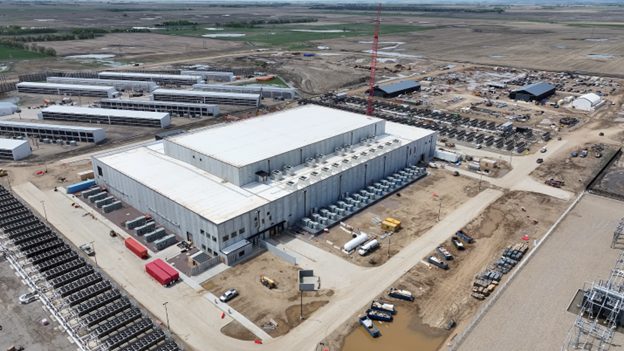
    Two buildings totaling 300 MW under construction, with initial capacity expected in the first half of 2027.

  4. Long-term debt reaches about $6.3 billion

    Financial

    Unrestricted cash stood at about $2.9 billion at the same date.

  5. Applied Digital signs a 210 MW lease at Delta Forge 2

    Contract

    A roughly 15-year lease worth about $5.2 billion with three five-year renewal options.

Scenarios

1

Project finance closes on schedule for Delta Forge 1 and Polaris Forge 3

Possible Resolves by Q2 2027

Discussed by: Applied Digital management, which guided to a first-quarter 2027 close

The company has said it will complete project-level debt for Delta Forge 1 and Polaris Forge 3 in the first calendar quarter of 2027, then Delta Forge 2 in the second quarter. Closing on that timeline would confirm lenders will accept long hyperscaler leases as collateral at a workable rate. A slip would push construction spending onto the balance sheet, where debt already runs well ahead of cash.

2

A new investment-grade lease pushes contracted revenue past $50 billion

Possible Resolves by Nov 23, 2027

Discussed by: Analysts tracking the company's backlog growth, including TIKR

Applied Digital has added a large lease roughly every few months, and each one raises the backlog that supports further borrowing. A fifth deal would also dilute the share of the portfolio tied to CoreWeave, which fell to about a quarter of the backlog after this lease. The pattern depends on hyperscaler demand staying ahead of campus construction.

3

Delivery of the 150 MW slips past the first half of 2028

Possible Resolves by End of 2028

Discussed by: Trade coverage, which notes utility arrangements and regulatory approvals are unresolved

The lease depends on development milestones, utility arrangements and regulatory approvals, including state commission approval of electrical rates. Rent does not start until capacity is ready for service. If those approvals or construction run late, the revenue lands later than the contract's headline value suggests.

Historical Context

2 moments from history that rhyme with this story — and how they unfolded.

2010-2016

Cheniere Energy's Sabine Pass LNG terminal (2010-2016)

Cheniere committed to building a liquefied natural gas export terminal on the Louisiana coast before construction finished. It signed 20-year contracts in which buyers paid for capacity whether or not they shipped gas. Those take-or-pay agreements gave banks a predictable revenue stream to lend against.

Then

Cheniere raised project debt against the contracts and built the terminal.

Now

The first cargo shipped in 2016, and the take-or-pay structure became the standard way US LNG projects get financed.

Why this matters now

Applied Digital is running the same play: sign a long contract with a creditworthy counterparty, then borrow against it before the asset exists.

1998-2002

The fiber-optic overbuild (1998-2002)

Global Crossing and competitors such as 360networks raised billions to lay fiber-optic cable, pointing to long-term capacity contracts with telecom carriers as evidence that demand existed. Much of the cable was never lit.

Then

Global Crossing filed for bankruptcy in January 2002.

Now

Buyers picked up the networks cheaply, and the capacity glut took years to absorb.

Why this matters now

Long-term contracts signed years before delivery can outrun the demand they assume. The risk sits with whoever holds the asset when the tenant's needs change.

Sources

(9)