Hyperscalers commit $720B+ in 2026 AI capex; Microsoft Azure re-accelerates to 40% in Q1, OpenAI signs $250B incremental Azure contract; Google Cloud backlog hits $240B; Anthropic overtakes OpenAI in annualized revenue
Hyperscalers commit $720B+ in 2026 AI capex; Microsoft Azure re-accelerates to 40% in Q1, OpenAI signs $250B incremental Azure contract; Google Cloud backlog hits $240B; Anthropic overtakes OpenAI in annualized revenue
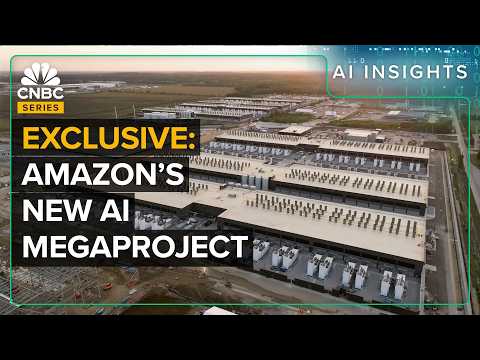
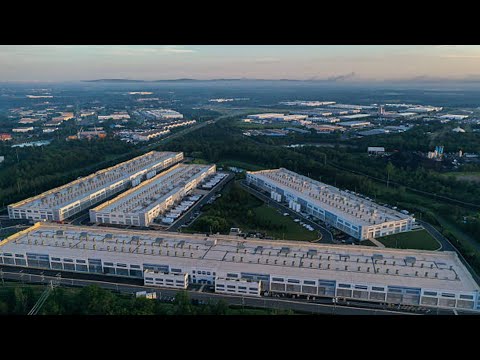
The four largest cloud providers—Microsoft, Meta, Alphabet, and Amazon—are tracking toward over $720 billion in combined AI infrastructure spending for 2026, up sharply from $410 billion in 2025. All four reported first-quarter results on April 29, 2026. Microsoft delivered the clearest signal: $77.7 billion in revenue (up 18% year-over-year), Azure cloud growth of 40% (above its 37% guidance), and earnings per share of $4.13 versus analyst estimates of $3.67.
Microsoft also disclosed that OpenAI has committed $250 billion in incremental Azure cloud service contracts. Quarterly capex came in at $34.9 billion, putting Microsoft on pace to exceed its $110–120 billion annual guidance if spending holds. Across the rest of big tech, the picture is mixed: Alphabet's Google Cloud backlog reached $240 billion (up 55% sequentially), while Meta reported that AI coding tools raised engineer output by 30% since early 2025.
Against these positives, OpenAI's competitive position is under new pressure: its revenue is roughly $24–25 billion, while Anthropic has crossed $30 billion. OpenAI released its GPT-5.5 model on April 23, trained on Nvidia's GB200 and GB300 systems, racing to close the monetization gap. The buildout is happening; the question is whether revenues will compound fast enough to justify it before the next hardware generation makes today's chips obsolete.
Why it matters
A $720 billion infrastructure buildout is running ahead of the revenue needed to justify it—and the gaps are starting to show.
Questions about this story
Free account needed to ask — your question is kept and asked for you right after sign-up. Answers are public.
No questions yet — be the first to ask.
Key Indicators
$720B+
2026 Hyperscaler Capex
Combined AI infrastructure spending by Microsoft, Meta, Alphabet, Amazon; up ~75% from $410B in 2025; Microsoft Q1 capex alone was $34.9B, tracking above annual guidance
40%
Azure Q1 2026 Growth
Microsoft Azure growth in Q1 FY2026, beating its own 37% guidance ceiling; full company revenue $77.7B (+18%), EPS $4.13 vs $3.67 expected
$250B
OpenAI Azure Contract
Incremental contracted Azure services OpenAI committed to Microsoft, disclosed at Q1 FY2026 earnings; deepens OpenAI's dependency on Microsoft cloud rather than owned infrastructure
$240B
Google Cloud Backlog
Google Cloud contracted backlog as of Q1 2026, up 55% sequentially, reflecting surging enterprise AI demand; Alphabet maintaining $175-185B 2026 capex guidance
$8.4B
Broadcom Q1 AI Revenue
106% year-over-year growth; Q2 guidance $10.7B signals accelerating demand for custom AI accelerators and networking
3 Sites
Stargate Sites Abandoned by OpenAI
OpenAI retreated from Abilene expansion, Norway (Narvik), and UK Stargate projects; Microsoft absorbed Abilene and Norway capacity, now underpinned by $250B Azure contract
Curated perspectives — historical figures and your fellow readers.
Andrew Mellon
(1855-1937) ·Progressive Era · finance
Fictional AI pastiche — not real quote.
"Capital deployment of this magnitude without commensurate returns would give even the most ardent believer in productive enterprise pause—though I confess, watching titans wager half a trillion dollars on computational alchemy does recall certain railroad speculation of my youth. If these expenditures prove as transformative as promised, we shall witness wealth creation on an unprecedented scale; if not, the market will administer a lesson in the ancient virtue of fiscal prudence that no Treasury Secretary could improve upon."
0% found this insightful
Andrew Carnegie
(1835-1919) ·Gilded Age · industry
Fictional AI pastiche — not real quote.
"A half-trillion spent before a single furnace proves profitable! These modern captains of industry forget the first principle of wealth-building: capital invested must yield returns greater than the cost of capital itself, or it becomes mere speculation dressed in the garments of progress. I built my steel empire penny by penny, proving profitability at each stage—these gentlemen are building their cathedral before knowing if the congregation will come."
0% found this insightful
Ever wondered what historical figures would say about today's headlines?
Sign up to generate historical perspectives on this story.
40 events
Latest: April 29th, 2026 · 5 months ago
Showing 8 of 40
JK to step
Tap a bar to jump to that date
Jump to
April 2026
Microsoft Q1 FY2026: Azure Re-Accelerates to 40%, OpenAI Signs $250B Azure Contract
LatestEarnings
Microsoft reported Q1 FY2026 revenue of $77.7 billion (up 18% year-over-year), beating estimates of $75.6 billion, with Azure cloud growth of 40%—above its 37% guidance ceiling. EPS of $4.13 beat consensus of $3.67. Microsoft disclosed OpenAI committed $250 billion in incremental Azure service contracts. Quarterly capex was $34.9 billion; Microsoft announced a new 2-gigawatt Fairwater data center facility in Wisconsin and plans to increase total AI capacity by over 80% in FY2026. OpenAI's investment generated $3.1 billion in net losses, reducing EPS by $0.41.
Alphabet Q1 2026: Google Cloud Backlog Surges to $240B, Up 55% Sequentially
Earnings
Alphabet reported Q1 2026 results with Google Cloud growth approximately 49% year-over-year to roughly $18.4 billion. The contracted cloud backlog reached $240 billion—up 55% sequentially—reflecting accelerating enterprise AI demand. Alphabet maintained its $175–185 billion 2026 capital expenditure guidance.
Meta Q1 2026: AI Tools Raise Engineer Output 30%, Ad Business Accelerates
Earnings
Meta reported Q1 2026 results with ad impressions up 11% year-over-year and average price per ad up 14%—both accelerating. CFO Susan Li disclosed that AI coding agents raised output per engineer by 30% since early 2025, with power users seeing 80% productivity gains. Meta maintained its $115–135 billion 2026 capital expenditure plan, with CEO Zuckerberg noting the company would 'grow into capacity' even in a slower-demand scenario.
Amazon Q1 2026: AWS AI Revenue Run Rate Exceeds $15B Annualized
Earnings
Amazon reported Q1 2026 results with AWS growth approximately 25% year-over-year to roughly $36.8 billion. CEO Andy Jassy disclosed AWS AI services have reached an annualized revenue run rate exceeding $15 billion. Amazon maintained its $200 billion 2026 capital expenditure plan, the largest among the four hyperscalers.
OpenAI Releases GPT-5.5, Trained on Nvidia GB200 and GB300 Systems
Product
OpenAI released GPT-5.5 on April 23, 2026, with API access beginning April 24. The model was co-designed, trained, and served on Nvidia GB200 and GB300 NVL72 systems—marking OpenAI's first major model release since its CFO raised concerns about revenue shortfalls and senior infrastructure leaders departed for Meta.
Google Unveils 8th-Generation TPU Chips for AI Training and Inference
Product
Google Cloud announced two new 8th-generation Tensor Processing Units: TPU 8t (optimized for large-scale AI training) and TPU 8i (optimized for low-latency agent inference). Both chips carry 384 MB of SRAM—triple the prior generation—and are designed to run millions of AI agents concurrently at lower cost. Availability is planned for later in 2026.
Microsoft Launches First Voluntary Employee Buyout in 51 Years
Corporate
Microsoft offered voluntary separation packages to roughly 8,500 U.S. employees—about 7% of its domestic workforce—whose combined age and years of service total 70 or more, the company's first such program since 1975. The restructuring is designed to reduce headcount costs to fund its $110–120 billion AI capex plan. Microsoft shares fell approximately 4% on the announcement.
Microsoft Takes Over Stargate Norway as OpenAI Retreats
Corporate
Microsoft agreed to rent 30,000 additional Nvidia Vera Rubin chips from Nscale at a campus in Narvik, Norway—capacity OpenAI had described itself as the 'initial offtaker' for but failed to finalize terms on. OpenAI will instead access Norwegian compute through Microsoft's Azure cloud service. This is the second Stargate site Microsoft absorbed within weeks, following the Abilene, Texas takeover in late March.
Former OpenAI Stargate Executives to Join Meta's TBD Lab Compute Team
Corporate
Bloomberg reported that Peter Hoeschele and fellow departing OpenAI Stargate executives plan to join Meta's newly formed compute unit, known as TBD Lab. The talent shift deepens Meta's push to build proprietary AI infrastructure and signals a broader realignment of top infrastructure talent away from OpenAI.
OpenAI Stargate Leadership Exodus: Top Executives Depart Amid Strategy Shift
Corporate
OpenAI Stargate lead Peter Hoeschele departed along with senior executives Shamez Hemani and Anuj Saharan, as reported by The Information. OpenAI paused Stargate projects in the UK and other countries and does not plan to replace Hoeschele's role, distributing responsibilities across existing leadership as the company pivots from building its own data centers to renting compute from cloud providers.
Foxconn Reports Record Q1 Revenue of $66.6B, Up 29.7% on AI Server Demand
Earnings
Foxconn (Hon Hai) reported Q1 2026 revenue of NT$2.13 trillion (~$66.6B), up 29.7% YoY, driven by cloud networking and AI servers. March revenue hit NT$803.7B record. Company expects Q2 growth but warns of geopolitical risks.
March 2026
Nebius Closes $4.34B Convertible Debt Offering
Investment
Nebius Group closed $4.34 billion convertible senior notes offering ($2.59B due 2031, $1.75B due 2033) to fund $16-20 billion 2026 capex. Company states it is now 'well-funded' for planned AI data center expansion supporting Meta partnership and broader hyperscaler demand.
Meta Signs $27B Multi-Year Deal with Nebius for AI Capacity
Investment
Meta agreed to pay up to $27 billion over five years to Nebius Group for dedicated AI computing infrastructure, including $12 billion of dedicated capacity starting early 2027 featuring Nvidia's new Vera Rubin chips, plus up to $15 billion in additional shared capacity.
Nscale Raises $2B Series C—Europe's Largest VC Round
Investment
UK-based AI hyperscaler Nscale closed $2 billion Series C at $14.6B valuation, led by Aker ASA and 8090 Industries. Nvidia, Citadel, Dell, and others participated to fund GPU-focused data centers across Europe, US, and beyond.
Broadcom Reports Q1 AI Revenue $8.4B, Up 106% YoY
Earnings
Broadcom's AI semiconductor solutions drove record Q1 revenue; confirmed OpenAI as custom chip customer with $10B+ inference engine project entering production late 2026.
Oracle and OpenAI Abandon Abilene Stargate Expansion
Corporate
Oracle and OpenAI scrapped plans to expand the flagship Abilene, Texas Stargate facility from 1.2 gigawatts to 2.0 gigawatts after financing disputes and OpenAI's shifting demand forecasts stalled negotiations. The existing 1.2GW facility continues; broader Stargate plan for 4.5+ additional gigawatts remains on track.
Broadcom Reports Q1 FY2026: $19.3B Revenue, $8.4B AI Revenue
Earnings
Broadcom posted record Q1 revenue of $19.3 billion (up 29% YoY) with AI semiconductor revenue of $8.4 billion (up 106% YoY). CEO Hock Tan guided Q2 AI semiconductor revenue to $10.7 billion, signaling continued acceleration in hyperscaler demand for custom AI accelerators and networking chips.
Nvidia Invests $4B in Lumentum and Coherent for AI Photonics
Investment
Nvidia announced $2 billion investments in each company plus multibillion-dollar purchase commitments to build US-based manufacturing for optical interconnects critical to scaling AI data centers.
February 2026
Amazon Q4 2025 Earnings Scheduled
Earnings
Amazon will report Q4 2025 and full-year results after market close, with analysts expecting $1.97 EPS (up 5.9% YoY) and intense focus on free cash flow deterioration amid AI infrastructure spending. The company raised 2025 capex guidance to $125 billion with explicit signals of further increases in 2026.
Amazon posted Q4 net sales of $213.4B (up 14% YoY) and full-year $716.9B (up 12%), but shares fell after $200B 2026 capex guidance—50% above 2025 and $50B over estimates—for AI, chips, robotics.
Alphabet beat Q4 estimates with $113.83B revenue (up 18% YoY), $2.82 EPS, Google Cloud $15.2B (up 33%). Shares dipped on doubled 2026 capex guidance to $175-185B for AI infrastructure.
January 2026
Microsoft Stock Stabilizes After Historic Selloff
Market
Microsoft shares traded flat on January 30 after the previous day's 12% plunge, as investors digested the $357 billion market cap loss—the company's worst single-day performance since March 2020. The broader market fell, with the Nasdaq tumbling 1.3% amid concerns about AI infrastructure returns.
Microsoft Shares Plunge 12% on AI Spending Concerns
Market
Microsoft stock dropped approximately 12% following Q2 FY2026 earnings, erasing roughly $400 billion in market capitalization. Despite beating revenue expectations with $81.3 billion (up 17% YoY) and 39% Azure growth, investors reacted negatively to record quarterly capex of $37.5 billion—66% higher than prior year.
Microsoft, Meta, Tesla Report Q4 Earnings
Earnings
Three major companies reported quarterly results amid intense investor scrutiny of AI capital expenditures and return on investment timelines.
Meta Stock Surges Despite Record AI Spending Guidance
Earnings
Meta reported Q4 2025 revenue of $59.9 billion (up 24% YoY) and announced 2026 capex guidance of $115-135 billion, significantly above analyst expectations of $110.7 billion. Despite the massive spending projection, shares rallied as investors focused on strong execution and revenue growth.
Stargate Expands to Five New Sites, $450B+ Investment
Investment
OpenAI, Oracle, and SoftBank announced five additional Stargate data center sites, bringing total planned capacity to nearly 7 gigawatts and over $400 billion in investment. New locations include sites in Texas, New Mexico, Ohio, and the Midwest. A subsequent Michigan expansion pushed capacity above 8 gigawatts and $450 billion.
Nadella Warns AI Must Prove Real-World Value
Statement
At Davos, Microsoft CEO Satya Nadella said AI risks losing 'social permission' to consume scarce energy resources unless it improves health, education, and productivity outcomes.
Meta Cuts 10% of Reality Labs Workforce
Corporate
Meta announced layoffs of 1,500 Reality Labs employees and a 30% budget reduction for its metaverse division, redirecting capital to AI infrastructure.
Meta Launches 'Meta Compute' AI Infrastructure Initiative
Corporate
Mark Zuckerberg announced Meta Compute, a dedicated initiative to build AI infrastructure at tens of gigawatts scale this decade, with hundreds of gigawatts planned over time. The initiative is led by Santosh Janardhan and will focus on technical architecture, silicon programs, and global data center operations.
OpenAI and SoftBank Invest $1B in SB Energy
Investment
OpenAI and SoftBank Group each invested $500 million into SB Energy as part of Stargate's energy infrastructure buildout. SB Energy was selected to build and operate OpenAI's 1.2 GW data center site in Milam County, Texas.
DeepSeek Publishes Breakthrough Training Method
Research
DeepSeek published research introducing 'Manifold-Constrained Hyper-Connections,' a framework designed to improve AI model scalability while reducing computational and energy demands. Counterpoint Research analysts called it a 'striking breakthrough' that challenges OpenAI's scaling laws.
November 2025
Microsoft Invests $5 Billion in Anthropic
Investment
Microsoft announced a strategic partnership with Anthropic including a $5 billion investment in the Claude maker, diversifying its AI bets beyond OpenAI.
October 2025
Microsoft Stock Drops on Capex Guidance
Earnings
Microsoft shares fell after the company increased capital expenditure guidance, with CFO Amy Hood confirming capex growth would continue into fiscal 2026.
September 2025
First Stargate Data Center Goes Live
Milestone
OpenAI's first Stargate facility came online in Abilene, Texas, running on Oracle Cloud Infrastructure with NVIDIA chips.
January 2025
DeepSeek Shock Erases $1 Trillion in Market Value
Market
Chinese startup DeepSeek released an AI model trained for under $6 million that performed comparably to ChatGPT, triggering a massive tech selloff including a 17% single-day drop in NVIDIA shares.
Meta Announces $60-65 Billion AI Investment
Investment
Mark Zuckerberg announced Meta would invest up to $65 billion in AI infrastructure in 2025, declaring it a 'defining year for AI.'
Stargate Project Announced
Investment
OpenAI, SoftBank, and Oracle announced Stargate, a $500 billion AI infrastructure venture to be built by 2029, with $100 billion deploying immediately.
October 2024
Tesla Unveils Cybercab Robotaxi
Product
Elon Musk revealed the steering-wheel-less Cybercab, promising mass production would begin in 2026.
January 2023
Microsoft Commits $10 Billion to OpenAI
Investment
Microsoft announced a multiyear, multibillion-dollar investment in OpenAI, cementing its position as the primary backer of the ChatGPT maker.
November 2022
ChatGPT Launch Triggers AI Arms Race
Milestone
OpenAI released ChatGPT, reaching 100 million users within two months and catalyzing massive corporate AI investment.
Scenarios
1
AI Infrastructure Justifies Investment by 2027
Possible
Discussed by: Goldman Sachs, Wedbush Securities, Microsoft and Meta executives
Enterprise AI adoption accelerates faster than expected, with productivity gains and new revenue streams closing the infrastructure-to-revenue gap. Azure, Google Cloud, and AWS AI services grow 40%+ annually through 2027. Hyperscalers maintain or expand margins as depreciation costs are offset by high-margin AI services. This scenario requires AI tools to deliver measurable productivity gains across enterprises and consumer applications to generate billions in new subscription revenue.
2
Selective Correction, Not Systemic Collapse
Likely
Discussed by: Morningstar, Bank of America strategists, Cresset Capital
AI spending growth slows but doesn't reverse. The largest hyperscalers—with strong cash flows and diversified businesses—weather disappointment cycles, while smaller AI-focused companies face severe corrections. Hardware suppliers like NVIDIA see revenue declines as customers pause orders. This differs from the dot-com bust because today's AI spenders are profitable and cash-funded rather than debt-dependent.
3
Chinese Efficiency Models Reshape Competition
Possible
Discussed by: Andreessen Horowitz, tech analysts covering DeepSeek, Chinese AI observers
DeepSeek and other Chinese AI companies continue demonstrating that competitive models can be built at a fraction of Western costs. This challenges the 'bigger is better' scaling assumption, potentially rendering some hyperscaler infrastructure investments obsolete. Open-source alternatives gain share, particularly in emerging markets where cost matters more than cutting-edge performance.
4
Dot-Com Scale Correction Materializes
Unlikely
Discussed by: Roger McNamee (Silver Lake Partners co-founder), IMF Managing Director Kristalina Georgieva, tech skeptics
AI fails to generate sufficient returns by 2027-2028, triggering a broad market correction. Infrastructure assets depreciate rapidly as newer, more efficient chips render existing data centers obsolete. The $2 trillion in planned assets becomes stranded capital, similar to the 'dark fiber' of the 1990s. This scenario would require AI adoption to stall significantly and enterprise customers to pull back on cloud spending.
Discussed by: Data center analysts, infrastructure investors, OpenAI infrastructure executives
The Abilene expansion cancellation reflects OpenAI's recalibration of compute demand forecasts downward, potentially signaling that hyperscalers overestimated near-term AI adoption rates. If similar demand recalibrations occur across Meta, Microsoft, and Alphabet, the $650B capex commitment could face material reductions in 2027-2028, leaving significant infrastructure stranded or underutilized. This would mirror the 'dark fiber' dynamics of the dot-com era.
Discussed by: Nvidia executives, photonics industry analysts, supply chain strategists
Nvidia's $4B investments in Lumentum and Coherent, combined with Broadcom's 106% AI revenue growth, suggest optical interconnects are becoming the limiting factor in AI data center scaling. If photonics manufacturing cannot keep pace with demand, hyperscalers may face capacity constraints despite record capex spending, potentially justifying the infrastructure buildout and supporting higher returns on deployed capital.
7
OpenAI Demand Shortfall Triggers Industry-Wide AI Infrastructure Repricing
OpenAI's revenue shortfall, leadership exodus from the Stargate team, and retreat from multiple data center commitments signal that the leading AI model company cannot generate sufficient revenue to absorb the compute capacity being built for it. If OpenAI—which underpins much of Microsoft Azure's AI growth story—cannot honor its computing contracts, hyperscalers that built capacity on the assumption of perpetual demand growth could face a significant repricing cycle. Microsoft's absorption of two abandoned Stargate sites, while operationally logical, increases its exposure to OpenAI's monetization risk.
Historical Context
3 moments from history that rhyme with this story — and how they unfolded.
1 of 3
1996-2001
Dot-Com Fiber Optic Buildout (1996-2001)
Telecommunications companies laid more than 80 million miles of fiber optic cable across the United States, anticipating explosive internet growth. Companies like Global Crossing, Level 3, and Qwest raced to build networks, funded largely by debt and speculative capital. Peak annual infrastructure spending exceeded $100 billion.
Then
When the bubble burst in 2000-2001, 85-95% of the fiber remained unused for years, earning the nickname 'dark fiber.' Global Crossing and WorldCom filed for bankruptcy.
Now
The infrastructure eventually became the backbone of today's internet economy. Companies that survived the bust—or acquired distressed assets cheaply—built profitable businesses on the excess capacity.
Why this matters now
AI infrastructure spending now exceeds dot-com era investment, but key differences exist: today's spenders are profitable, cash-funded companies rather than debt-dependent startups. However, the rapid depreciation of AI chips mirrors the eventual obsolescence of early fiber equipment.
2 of 3
1986-1991
Japanese Asset Bubble (1986-1991)
Japanese corporations invested heavily in real estate and infrastructure, believing land prices would rise indefinitely. At its peak, the Imperial Palace grounds in Tokyo were theoretically worth more than all the real estate in California. Corporate capital expenditure reached record levels as companies competed for market position.
Then
The bubble's collapse in 1991 led to a 'lost decade' of stagnant growth, deflation, and corporate restructuring across Japan.
Now
Companies that survived maintained useful infrastructure, but many assets remained underutilized for years. The episode demonstrated how competitive dynamics can drive rational actors into collective overinvestment.
Why this matters now
Big Tech's AI spending displays similar competitive dynamics—companies feel compelled to invest heavily because rivals are doing so, regardless of individual return calculations. The fear of being left behind may be driving investment beyond rational levels.
3 of 3
1840-1873
Railroad Mania and Consolidation (1840s-1870s)
Multiple waves of railroad construction in the United States and Britain led to massive overbuilding. By 1857, companies had laid thousands of miles of redundant track, with many routes never generating sufficient traffic. The Panic of 1873 triggered widespread railroad bankruptcies.
Then
Over one-quarter of American railroads went bankrupt in the 1870s, with investors losing billions in today's dollars.
Now
The infrastructure remained and consolidated into profitable networks under new ownership. The excess capacity eventually enabled rapid industrialization and westward expansion.
Why this matters now
Like railroads, AI infrastructure may experience cycles of overbuilding followed by consolidation. The physical assets—data centers, power infrastructure, network connections—are unlikely to go to waste even if current investors lose money.