

Pull to refresh
Logo
Trial finds no survival gain from empirical TB treatment in infants with HIV pneumonia

Trial finds no survival gain from empirical TB treatment in infants with HIV pneumonia

New Capabilities

A 558-infant study across six African countries found no survival gain from early TB treatment; a companion analysis reported an early valganciclovir signal.

Overview

Updated 1 hour ago

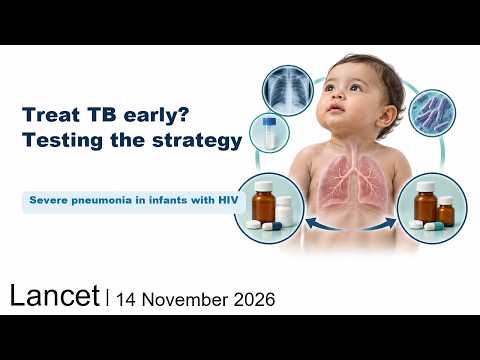
In 19 hospitals across six African countries, researchers randomly assigned 558 infants with HIV and severe pneumonia to standard care, standard care plus tuberculosis drugs, standard care plus valganciclovir, or both. Starting tuberculosis treatment on admission did not reduce deaths.

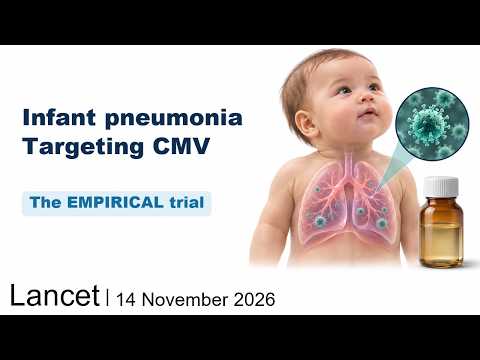
Nearly half the infants died within a year. The companion valganciclovir analysis found a lower hazard of death at day 15, leaving clinicians with a mixed signal: one empirical strategy may help, while the other did not.

Why it matters

For clinicians treating HIV-infected infants with severe pneumonia, the trial provides no support for routine early TB treatment and a tentative signal for early valganciclovir.

Questions about this story

Free account needed to ask — your question is kept and asked for you right after sign-up. Answers are public.

No questions yet — be the first to ask.

Key Indicators

558
Infants analysed
After excluding five ineligible participants from 563 enrolled.
48%
Died within 12 months, empirical TB groups
132 of 276 infants in the early-TB arms.
43%
Died within 12 months, non-empirical TB groups
121 of 282 infants in the comparison arms.
1.12
Adjusted hazard ratio for death, empirical TB
95% CI 0.87–1.43; not statistically significant.
46%
Comparison-group infants who later started TB treatment
130 of 282 started at a median of 4 days after recruitment.
0.60
Adjusted hazard ratio for death at day 15, valganciclovir
95% CI 0.41–0.87 in a time-varying model.
19
Hospitals in the trial
Sites in Côte d'Ivoire, Malawi, Mozambique, Uganda, Zambia and Zimbabwe.

Voices

Curated perspectives — historical figures and your fellow readers.

Sign up to generate historical perspectives on this story.

Organizations Involved

Timeline

March 2020 November 2026

5 events Latest: 2 days ago
Tap a bar to jump to that date
  1. TB comparison published

    Latest Publication

    Lancet reports no survival benefit from empirical TB treatment; 12-month mortality was 48% versus 43%.

  2. Valganciclovir signal reported

    Publication

    Companion analysis finds adjusted hazard ratio 0.60 at day 15; primary endpoint not significant.

  3. EDCTP highlights mixed results

    Statement

    Funders say valganciclovir reduced early mortality, while empirical TB treatment did not.

  4. Enrollment closes

    Research

    563 infants enrolled; 558 included in final analyses after five exclusions.

  5. Trial enrollment begins

    Research

    EMPIRICAL starts recruiting infants with HIV and severe pneumonia across six African countries.

Scenarios

1

WHO issues conditional recommendation for empirical valganciclovir

Possible Resolves by End of 2028

Discussed by: EMPIRICAL investigators and EDCTP

The day-15 survival signal and lack of excess serious adverse events give guideline committees a rationale. A conditional recommendation would likely limit use to HIV-infected infants with severe pneumonia where cytomegalovirus testing is unavailable.

2

WHO keeps guidance unchanged pending confirmatory data

Likely Resolves by End of 2028

Discussed by: The Lancet and EMPIRICAL authors

The primary 12-month endpoint did not reach statistical significance, and the trial was not powered for the day-15 time-varying analysis. Guideline committees may wait for a second trial before changing practice.

3

Confirmatory trial of valganciclovir in infant pneumonia is registered

Possible Resolves by Q2 2028

Discussed by: Penta Foundation and EDCTP

A second randomized trial would need to test mortality as the primary endpoint, likely with a larger sample and broader sites. The EMPIRICAL team has not announced one.

Historical Context

2 moments from history that rhyme with this story — and how they unfolded.

Before 2026

WHO severe pneumonia guidance before EMPIRICAL

WHO guidelines for infants with HIV and severe pneumonia recommended empirical antibiotics and treatment for Pneumocystis jirovecii, but not cytomegalovirus or tuberculosis.

Then

Clinicians had no trial evidence for adding valganciclovir or TB drugs empirically.

Now

EMPIRICAL was designed to test both gaps in a single factorial trial.

Why this matters now

The trial's negative TB result and positive valganciclovir signal speak directly to that guidance.

March 2020–January 2024

EMPIRICAL 2×2 factorial trial (2020–2024)

Researchers enrolled 563 infants across 19 hospitals in six African countries and randomly assigned them to four groups.

Then

The design allowed separate comparisons of valganciclovir and TB treatment, plus an interaction test.

Now

The trial reported no evidence of interaction between the two strategies.

Why this matters now

The factorial structure explains why one paper reports the TB comparison and another reports valganciclovir.

Sources

(5)