
Pull to refresh
Logo
Auckland's City Rail Link opens after a century of proposals

Auckland's City Rail Link opens after a century of proposals

Built World

Trains now run beneath the city centre for the first time, linking Auckland's suburban rail lines into a through-network

Today: CRL opens to fare-paying passengers

Overview

Updated 1 hour ago

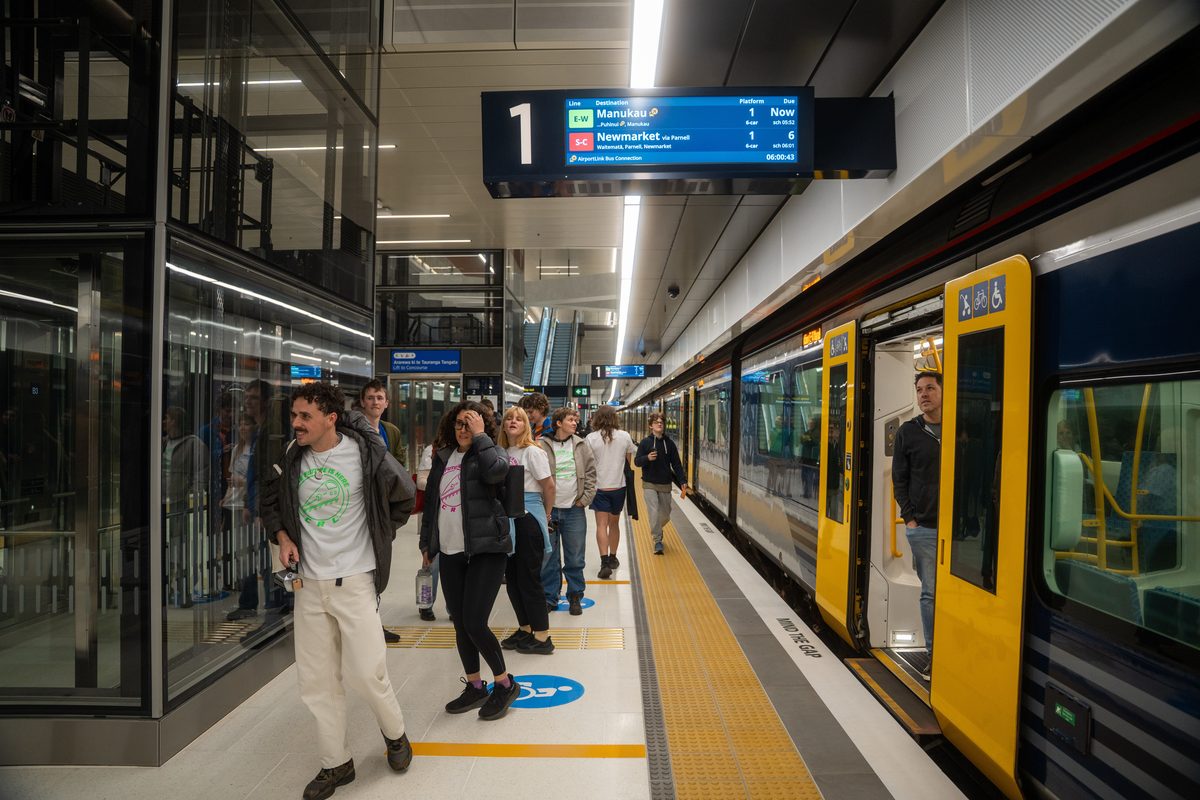
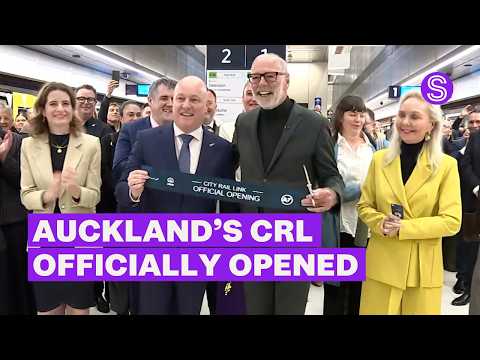
For the first time in Auckland's history, trains run beneath the city centre. The NZ$5.5 billion City Rail Link carried its first fare-paying passengers on September 13, 2026, capping a project that survived a century of false starts and a decade of construction.

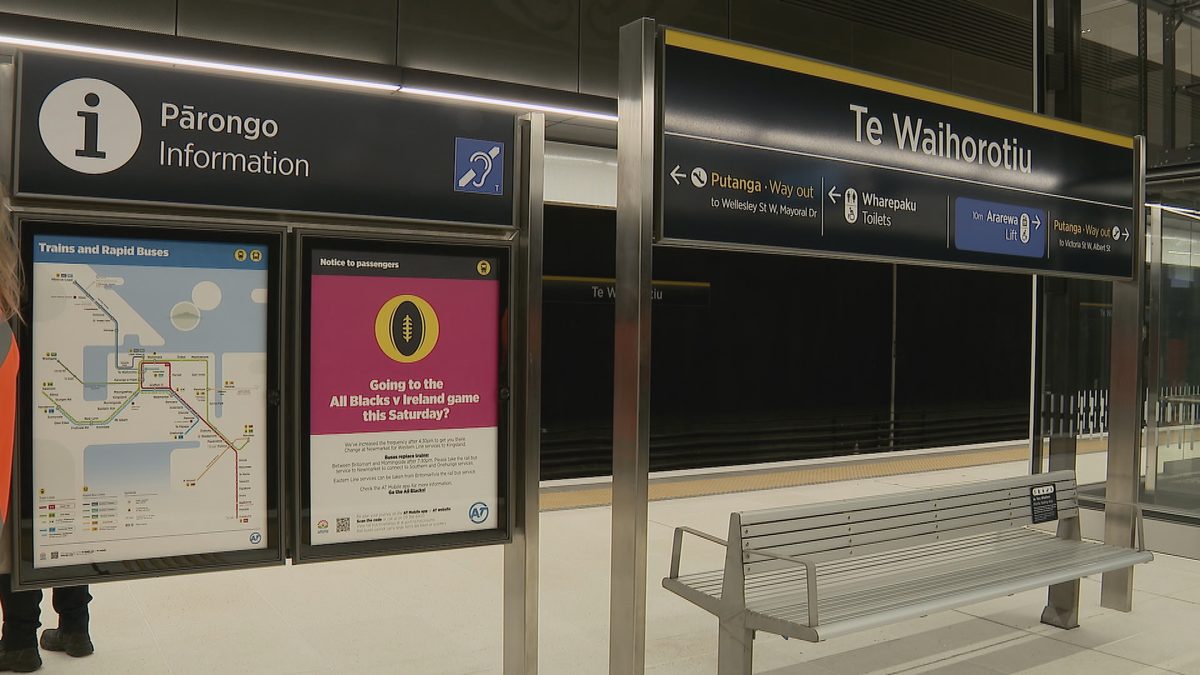
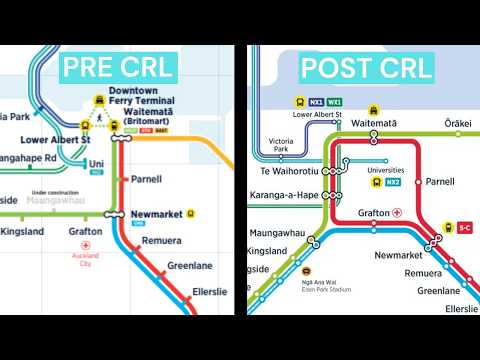
Trains no longer dead-end at Waitematā Station (formerly Britomart) on the waterfront. They now pass through two new underground stations, Te Waihorotiu and Karanga-a-Hape, plus a rebuilt Maungawhau, and continue out the other side of the city. The Ellerslie-to-Karangahape Rd journey drops by 19 minutes.

The build's budget grew from about $2.9 billion in the early stages to $5.5 billion, with Covid-19 pushing the original 2024 completion date back two years. A small electrical fire at Waitematā briefly halted services on opening morning before Fire and Emergency NZ cleared it within the hour.

Why it matters

Auckland's rail lines now run through the city centre, cutting cross-city journeys by up to 19 minutes and enabling far more frequent trains.

Questions about this story

Free account needed to ask — your question is kept and asked for you right after sign-up. Answers are public.

No questions yet — be the first to ask.

Key Indicators

$5.5B
Final project cost
Grew from an early estimate of about $2.9 billion (NZD).
3.5 km
Twin-tunnel length beneath the CBD
Connects Waitematā to the existing western and southern lines via Maungawhau.
2
New underground stations
Te Waihorotiu near the Sky Tower and Karanga-a-Hape off Karangahape Rd; Maungawhau was rebuilt.
19 min
Largest journey time cut
Ellerslie to Karangahape Rd travel falls by 19 minutes versus the old route.

Voices

Curated perspectives — historical figures and your fellow readers.

Ever wondered what historical figures would say about today's headlines?

Sign up to generate historical perspectives on this story.

People Involved

Organizations Involved

Timeline

1920s Mid-197

10 events Latest: Today
Tap a bar to jump to that date
  1. Robbies Rapid Rail proposed

    Upcoming History

    Mayor Dove-Myer Robinson unveils an underground loop with airport and North Shore extensions.

  2. Muldoon government kills rapid rail plan

    Upcoming Setback

    National government prefers motorway investment; the underground scheme is shelved.

  3. Brown and Key strike CRL funding deal

    Upcoming Agreement

    Mayor Len Brown and PM John Key agree shared Crown-council funding that launches the project.

  4. CRL opens to fare-paying passengers

    Today Milestone

    First train reaches Karanga-a-Hape at 5:22am; services run through the new underground stations.

  5. Small fire briefly disrupts opening day

    Today Incident

    Electrical fire in a lighting cable at Waitematā halts services for under an hour; FENZ clears it by 6:23am.

  6. Opening day confirmed

    Announcement

    Auckland Transport confirms passenger services begin September 13.

  7. Opening slips two years due to Covid

    Delay

    Original 2024 completion date pushed back; budget grows from $2.9B to $5.5B.

  8. Major tunnel construction starts

    Construction

    Tunnel boring and new station builds get underway beneath the CBD.

  9. Preparatory works begin

    Construction

    Early site works start in the city centre ahead of tunnel boring.

  10. First underground rail proposals for Auckland

    History

    Initial plans for a city-centre rail link surface, then stall for decades.

Scenarios

1

Auckland rail ridership tops 100,000 weekday boardings

Possible Resolves by End of 2027

Discussed by: Auckland Transport, which touted the CRL's added capacity and new network frequencies

The CRL roughly doubles the network's carrying capacity and turns dead-end lines into a through-network. If commuting patterns shift as officials expect, weekday boardings could pass 100,000 for the first time, validating the case for expanding the transitional timetable.

2

Transitional timetable replaced by full service

Likely Resolves by Q2 2027

Discussed by: Auckland Transport, which opened on a reduced schedule after junction congestion during January testing

The network opened with 15-minute peak frequencies on main lines and 30-minute intervals on the Onehunga-West line. If the lessons from testing congestion hold, AT could roll out the fuller planned service with additional peak trains and better connections.

3

Station-adjacent development takes off around Karangahape Rd and midtown

Possible Resolves by Q2 2028

Discussed by: Beehive opening release (new homes and businesses around stations); Auckland property developers

New stations unlock development potential in areas previously served only by buses. Council consents for mixed-use projects near Karanga-a-Hape or Te Waihorotiu would signal the CRL's urban-development payoff beginning to land.

Historical Context

2 moments from history that rhyme with this story — and how they unfolded.

1929-1981

Melbourne City Loop (opened 1981)

Melbourne's suburban lines terminated at Flinders Street, a waterfront dead-end. An underground loop was first proposed in 1929, construction began in 1971, and the loop opened in stages from 1981 after decades of political wrangling.

Then

Turned Melbourne's separate suburban lines into a connected system through the city centre.

Now

The loop remains the core of Melbourne's suburban rail network today.

Why this matters now

Auckland faced the identical dead-end terminus problem at Waitematā; the CRL is the through-link that makes the whole network function.

2009-2022

London's Elizabeth Line / Crossrail (opened 2022)

Crossrail was approved with an optimistic budget and a 2018 opening date, then ran years late as costs ballooned. It finally opened in May 2022 after extensive engineering fixes.

Then

Opened to huge public demand and quickly became one of the UK's busiest rail lines.

Now

Showed that delayed, over-budget underground megaprojects can still transform a city's commutes once running.

Why this matters now

Like the CRL, Crossrail turned a central dead-end terminus into a through-running network and faced years of cost overruns before opening day.

Sources

(9)