Anchor

Automattic board places founder Matt Mullenweg on leave, names CFO interim CEO
Money MovesThe man who created WordPress no longer runs the company commercializing it, while keeping control of the open-source project
Yesterday: Board places Mullenweg on paid leaveNew here? Follow stories to track developments over time. Create a free account to get updates when stories you care about change.
Overview
Updated 1 hour agoAutomattic's board voted September 9 to place founder and chief executive Matt Mullenweg on paid leave against his will. Chief financial officer Mark Davies steps in as interim CEO — a role Mullenweg voted against.
The ouster splits the company from the man who controls WordPress, the open-source system behind more than 40% of the web. It caps two unsettled years: a legal war with hosting rival WP Engine, a 159-employee exodus, and a 16% layoff.
Why it matters
WordPress runs 40%+ of websites, and the founder who controls the open-source project no longer runs the company commercializing it.
Questions about this story
Free account needed to ask — your question is kept and asked for you right after sign-up. Answers are public.
No questions yet — be the first to ask.
Key Indicators
159
Employees who took severance in October 2024
Mullenweg offered buyouts to staff who disagreed with his WP Engine direction; 159 accepted.
16%
Workforce reduction announced April 2025
Automattic said the cut was needed to improve productivity and profitability.
41.9%
Share of all websites powered by WordPress
The CMS still dominates the web, though its market share has declined in recent years.
4-1
Board vote to place Mullenweg on paid leave
Davies, Dunwoody, Schneider, and Decker voted yes; Mullenweg voted against.
Related Media
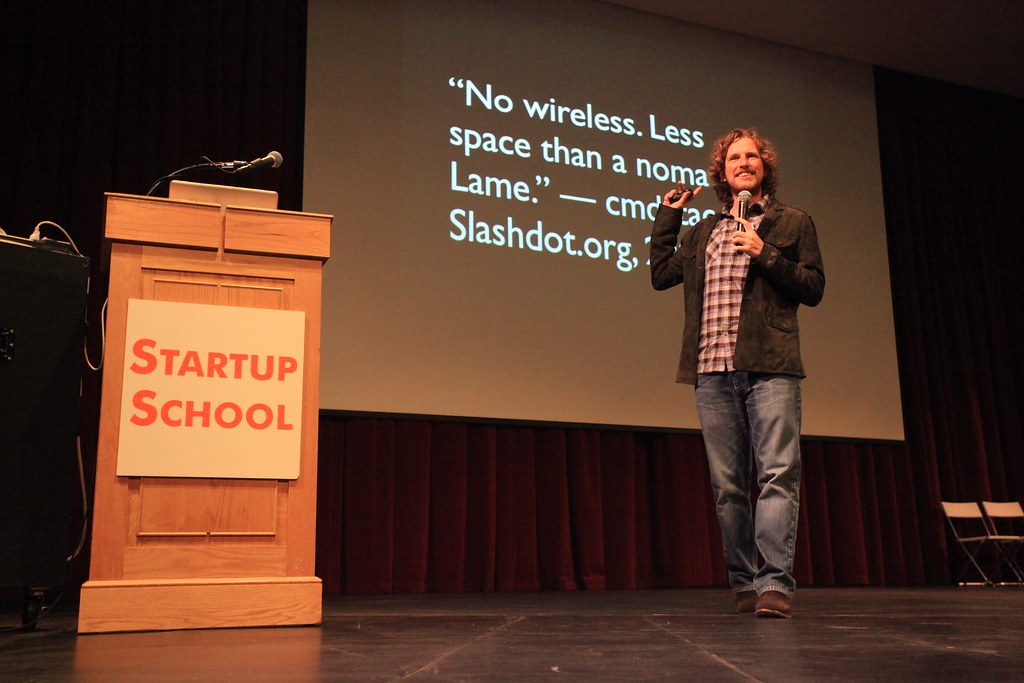
Matt Mullenweg, founder of Automattic (folks who sell Wordpress)

Automattic / WordPress.com Headquarters

Matt Mullenweg

30.2K views
28:04
Automattic CEO Matt Mullenweg: WordPress vs WP Engine
Summation with Auren Hoffman

45.0K views
23:34
The Wordpress Situation Is Crazy
Brodie Robertson
38.7K views
15:46
Wordpress Open Source drama
Hitesh Choudhary
Images from Openverse under Creative Commons licenses. Videos from YouTube.
Voices
Curated perspectives — historical figures and your fellow readers.
Play
Exploring all sides of a story is often best achieved with Play.
Most of these play right now — no account needed. Sign up to save scores, keep a streak, and unlock Debate and Predict.
Log in
Sign Up
WHO SAID WHAT?
Can you match the quotes to the right people?
Rounds
People
Per question
Scoring
- points for each correct match.
- time bonus when you answer in under seconds.
- streak bonus once you hit correct in a row.
Score:
Round /
streak
— Who said this?
Tip: press 1– to answer.
Score:
Round /
streak
+
Base +
⚡ Speed +
🔥 Streak +
Streak reset · the answer was
No answer in time · it was
Next Up
Round
of
Score
points
Correct
Best Streak
Time Bonus
Avg. Time
points — sign up to put that on the leaderboard.
Now try on this story
Higher or Lower
A number from this story, against one from elsewhere in the news — guess which is bigger, then keep the chain going. 5 rounds, 3 strikes; a miss costs a strike and resets your streak.
Example
Anchor
EU tariff revenue
$52B
Big for this kind of number
Mystery
Pentagon AI contract
?
Round 1
Streak: 0
Mystery
?
Keyboard: ↓/L lower · ↑/H higher
0 pts
Best streak: 0 · Rounds: 0
0 points — sign up to put that on the leaderboard.
Now try on this story
Connections
Sixteen names from the news. Find the four hidden groups of four. Four mistakes max.
Loading today's puzzle…
0/4 groups
Mistakes
Sign up to keep a daily streak — a new puzzle lands every day.
Now try on this story
Exit debate?
Your progress in this debate will be lost.
How it works
- 1 Two AI personas square off on this story.
- 2 You predict who'll win each round — correct picks earn XP.
- 3 One crossfire question is yours to fire. Pick it carefully.
Couldn't generate a topic
Select Your Champions
Choose one persona for each side of the debate
DEBATE TOPIC
Choose personas with different perspectives for a more dynamic debate.
SIDE A (PRO)
Select debater for this side:
No debate personas available right now.
SIDE B (CON)
Select debater for this side:
No debate personas available right now.
VS
Get ready to make your prediction...
Round of
Claim
Evidence
Stakes
Crossfire Answer
Closing Statement
Claim
Evidence
Stakes
Crossfire Answer
Closing Statement
Your Crossfire Question
Generating arguments...
Who's Got This Round?
Make your prediction before the referee scores
The referee scores both sides on
Correct predictions earn +20 XP
· Press 1 or 2 to pick
Evidence
40%
Logic
30%
Detail
20%
Style
10%
Round Results
Your Pick
Not this time
(%)
Overall Score
/10
Your Pick
Not this time
(%)
Overall Score
/10
Set the Crossfire
Pick the question both personas must answer in the final round
Crafting crossfire questions...
Choosing a question earns +10 XP crossfire bonus
🏆
Total XP Earned
Cred Change
Predictions
Debate Oracle! You called every round!
Sharp Instincts! You know your debaters!
The Coin Flip Strategist! Perfectly balanced!
The Contrarian! Bold predictions!
Inverse Genius! Try betting the opposite next time!
XP Breakdown
Base completion
+20 XP
Rounds played ( rounds x 5 XP)
+ XP
Correct predictions ( correct x 20 XP)
+ XP
Crossfire bonus
+10 XP
Accuracy
%
Prediction History
Round
You picked:
✓
✗
Now try on this story
Keep debating to level up your credibility and unlock achievements
People Involved
Matt Mullenweg
Founder and former CEO of Automattic; leader of the WordPress open-source project
On paid leave from Automattic; remains on the board and heads WordPress
MD
Mark Davies
Chief financial officer; interim CEO
Leading Automattic's day-to-day operations
Toni Schneider
Automattic board member; former CEO (2006–2014)
Backed the board's decision to place Mullenweg on leave
Mary Hubbard
Executive director of the WordPress open-source project
Confirmed the WordPress project is unaffected by Mullenweg's leave
Organizations Involved
Automattic
Private technology company
Under interim CEO Mark Davies after board ousted founder
A commercial parent of WordPress.com, Tumblr, WooCommerce, and Pocket Casts.
WordPress
Open-source software project
Mullenweg remains its leader; project operations unaffected
The open-source content management system that powers more than 40% of websites.
EN
WP Engine
WordPress hosting company
In active litigation with Automattic since 2024
A web hosting provider and Automattic's chief legal adversary over WordPress trademark use.
Timeline
September 2024 September 2026
8 events
Latest: Yesterday
Tap a bar to jump to that date
-
Board places Mullenweg on paid leave
Latest GovernanceAutomattic's board votes 4-1 to place Mullenweg on paid leave against his will; Mark Davies becomes interim CEO.
-
Burning Man festival ends
ContextA person close to the situation speculated timing may relate to Mullenweg's annual Burning Man trip ending.
-
WP Engine seeks sanctions over missing messages
LegalWP Engine alleges Mullenweg's communications from the case period are missing due to failed backups and lost devices; hearing set for September 30.
-
Automattic cuts 16% of staff
CompanyThe company announces layoffs of about a sixth of its workforce to improve productivity and profitability.
-
Judge orders WP Engine access restored
LegalFederal judge orders Automattic and Mullenweg to restore WP Engine's access to WordPress.org resources and a key plugin.
-
WP Engine sues Automattic
LegalWP Engine accuses Automattic and Mullenweg of defamation and abuse of power.
-
159 employees take Mullenweg's severance offer
CompanyMullenweg invites staff who disagree with his direction to quit with severance; 159 accept.
-
Mullenweg demands royalty from WP Engine
DisputeMullenweg publicly demands WP Engine pay 8% of monthly gross revenue for using the WordPress brand.
Historical Context
3 moments from history that rhyme with this story — and how they unfolded.
September 1985
Steve Jobs ousted from Apple (1985)
After a power struggle with CEO John Sculley and the board, Apple stripped Jobs of his operational role. He resigned and founded NeXT, taking several Apple engineers with him.
Then
Apple lost its visionary founder and floundered for a decade; Jobs built NeXT and later bought Pixar.
Now
Apple acquired NeXT in 1997 and Jobs returned, eventually saving the company with the iMac and iPhone.
Why this matters now
A founder removed by his own board retains enormous institutional power; the question is whether that power pulls him back in or drives a permanent split.
October 2008
Jack Dorsey fired as Twitter CEO (2008)
Twitter's board pushed co-founder and CEO Jack Dorsey out, replacing him with Evan Williams. Dorsey stayed on the board as chairman.
Then
Twitter grew under new leadership but Dorsey remained a visible figure and board chairman.
Now
Dorsey returned as CEO in 2015 and led Twitter through its IPO before stepping down in 2021.
Why this matters now
A forced founder exit is not always permanent; board dynamics can reverse, especially when the founder retains board and project authority.
June 2017
Travis Kalanick forced out of Uber (2017)
Under pressure from investors over scandals involving harassment, a faulty self-driving program, and a hostile culture, Uber's board forced founder-CEO Travis Kalanick to resign.
Then
Uber hired Dara Khosrowshahi as CEO; Kalanick left the board in 2019.
Now
Kalanick never returned to an operating role at Uber, though he fought for influence through his board seat for two years.
Why this matters now
The closest parallel: a founder removed during a legal and reputational crisis, whose board seat gave him lingering influence but no operational control.
Sources
(6)Related Stories
The battle for WordPress: WP Engine vs. Automattic
Rule Changes
Updated May 19
Tesla's ongoing executive exodus
Money Moves
Updated May 27
BP removes chair Albert Manifold amid leadership churn
Money Moves
Updated May 26
Mollie completes GoCardless acquisition
Money Moves
Updated Sep 2
Chamath Palihapitiya takes CEO role at AI coding startup 8090 after $135M raise
Money Moves
Updated Jul 16
Tailwind Labs joins Shopify
Money Moves
Updated Yesterday