

Pull to refresh
Logo
Microsoft releases Azure HorizonDB, a PostgreSQL database built for AI workloads

Microsoft releases Azure HorizonDB, a PostgreSQL database built for AI workloads

New Capabilities

General availability in 13 Azure regions, plus a serverless edition inside Fabric in preview

Overview

Updated 42 minutes ago

Microsoft has sold a managed PostgreSQL service on Azure for years. On November 18, 2026, it added a second: Azure HorizonDB, a rebuilt version aimed at AI workloads, is now generally available in 13 Azure regions. A serverless edition inside Microsoft Fabric is in public preview.

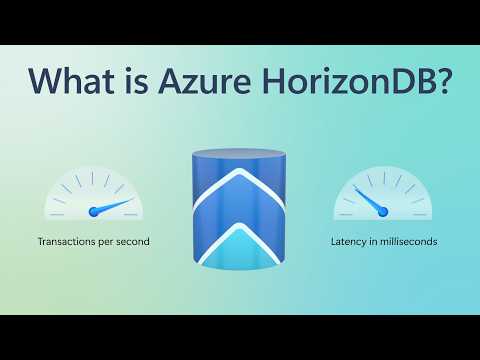
HorizonDB separates compute from storage, scales one database to 128 terabytes, and fails over in under five seconds, according to Microsoft. Its internal benchmark shows eight times the transaction throughput of self-managed PostgreSQL; no third-party test has been published. The Fabric edition can query data sitting in OneLake without copying it first.

Why it matters

AI agents keep their state in Postgres. Whichever cloud makes that database fastest to provision and cheapest to run gets the next wave of applications.

Questions about this story

Free account needed to ask — your question is kept and asked for you right after sign-up. Answers are public.

No questions yet — be the first to ask.

Key Indicators

8x
Transaction throughput vs. self-managed PostgreSQL
Microsoft's internal HammerDB benchmark; no independent test has been published.
128 TB
Largest database per cluster
Storage scales independently of compute, so capacity grows without resizing the server.
13
Azure regions at general availability
Regions span the Americas, Europe and Asia Pacific at launch.
5 sec
Failover time
Availability-zone redundancy is on by default for every database.
5 min
Idle time before Fabric HorizonDB pauses compute
The serverless edition resumes automatically when the next query arrives.

Voices

Curated perspectives — historical figures and your fellow readers.

Sign up to generate historical perspectives on this story.

People Involved

Organizations Involved

Timeline

November 2025 November 2026

5 events Latest: Yesterday
Tap a bar to jump to that date
  1. Azure HorizonDB reaches general availability

    Latest Product launch

    The service ships in 13 Azure regions with zone redundancy by default, 128-terabyte databases and sub-five-second failover.

  2. Fabric HorizonDB enters public preview

    Product launch

    A serverless edition provisions in seconds, pauses after five minutes idle, and queries OneLake data without copying it.

  3. Database Hub ships; AI database features preview

    Product launch

    Database Hub is generally available, while AI Model Management, Knowledge Graphs and a Database Agent enter preview.

  4. General-availability notice posted to admin message center

    Administrative

    Microsoft publishes the launch notice for Azure HorizonDB to its Microsoft 365 message center, dated November 2026.

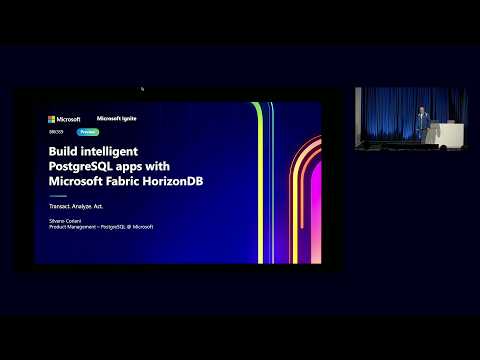
  5. HorizonDB previews at Ignite

    Product announcement

    Microsoft unveils a rebuilt, cloud-native PostgreSQL architecture in preview, promising performance and scale beyond its existing managed service.

Scenarios

1

Fabric HorizonDB leaves preview and goes generally available

Likely Resolves by Q2 2027

Discussed by: Microsoft's launch materials, which label the Fabric edition a public preview while shipping the Azure edition as generally available

Microsoft shipped the Fabric version as a preview on the same day as the Azure launch, and previews typically run for months. The serverless design, with provisioning in seconds and a five-minute auto-pause, targets agents and prototypes, which is where Microsoft says database demand is growing fastest.

2

Database Agent for PostgreSQL opens to all Azure customers

Possible Resolves by Q1 2027

Discussed by: Microsoft's Ignite posts, which list the agent as a limited public preview available by request

The agent is the piece that would let a model inspect and act on a live database. Microsoft has gated it behind an access request, which usually signals either limited capacity or an unresolved safety review. Lifting the gate is the step that turns it into a product.

3

Microsoft adds a scale-to-zero option to standalone Azure HorizonDB

Possible Resolves by End of 2027

Discussed by: Microsoft's own product documentation, which bills the Azure edition on provisioned compute while the Fabric edition pauses when idle

The Fabric version stops charging for compute after five minutes of inactivity. The standalone service does not, which makes it a poor fit for test environments and multi-tenant platforms where many small databases sit idle. If customers push back, the fix is a serverless tier on Azure itself.

Historical Context

3 moments from history that rhyme with this story — and how they unfolded.

2014–2015

Amazon Aurora (2014–2015)

AWS rebuilt MySQL's storage layer to run on its own hardware, keeping copies of data across availability zones and billing compute and storage separately. It previewed at re:Invent in 2014 and became generally available in 2015, with a PostgreSQL-compatible edition following.

Then

AWS got a database it controlled end to end, priced by the second rather than by the server.

Now

It set the template the rest of the cloud followed: take open-source Postgres or MySQL, replace the storage engine, sell the managed result.

Why this matters now

HorizonDB is Microsoft running that same play, a decade later, on Azure hardware.

2022

Google AlloyDB (2022)

Google launched a Postgres-compatible database with compute and storage separated, marketed on speed against standard PostgreSQL. Google later added AlloyDB AI, which puts vector search and model calls inside the database.

Then

AlloyDB became Google's premium Postgres tier, sitting above its conventional Cloud SQL offering.

Now

It made AI features inside the database a standard checklist item for every cloud Postgres service.

Why this matters now

HorizonDB enters a race Google started earlier, and Microsoft's answer is tighter coupling to Fabric and Copilot rather than a better standalone database.

2016–2017

SQL Server on Linux (2016–2017)

Microsoft announced that SQL Server, Windows-only for its first two decades, would run on Linux, and shipped the release in 2017.

Then

Customers could run Microsoft's flagship database on the operating system most of them already used for web infrastructure.

Now

It marked Microsoft's shift from protecting Windows to selling data products wherever workloads already ran.

Why this matters now

HorizonDB extends that shift: Microsoft's database growth now depends on open-source PostgreSQL, not only on SQL Server.

Sources

(5)