
Pull to refresh
Logo
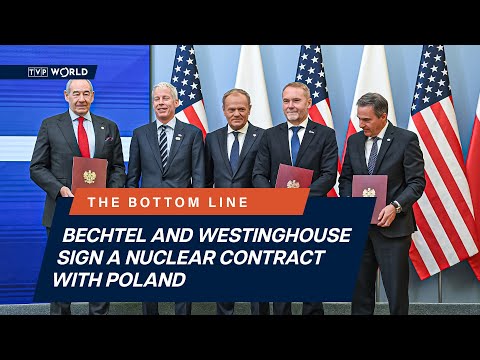
Poland, Westinghouse-Bechtel agree commercial terms for first nuclear plant

Poland, Westinghouse-Bechtel agree commercial terms for first nuclear plant

Built World

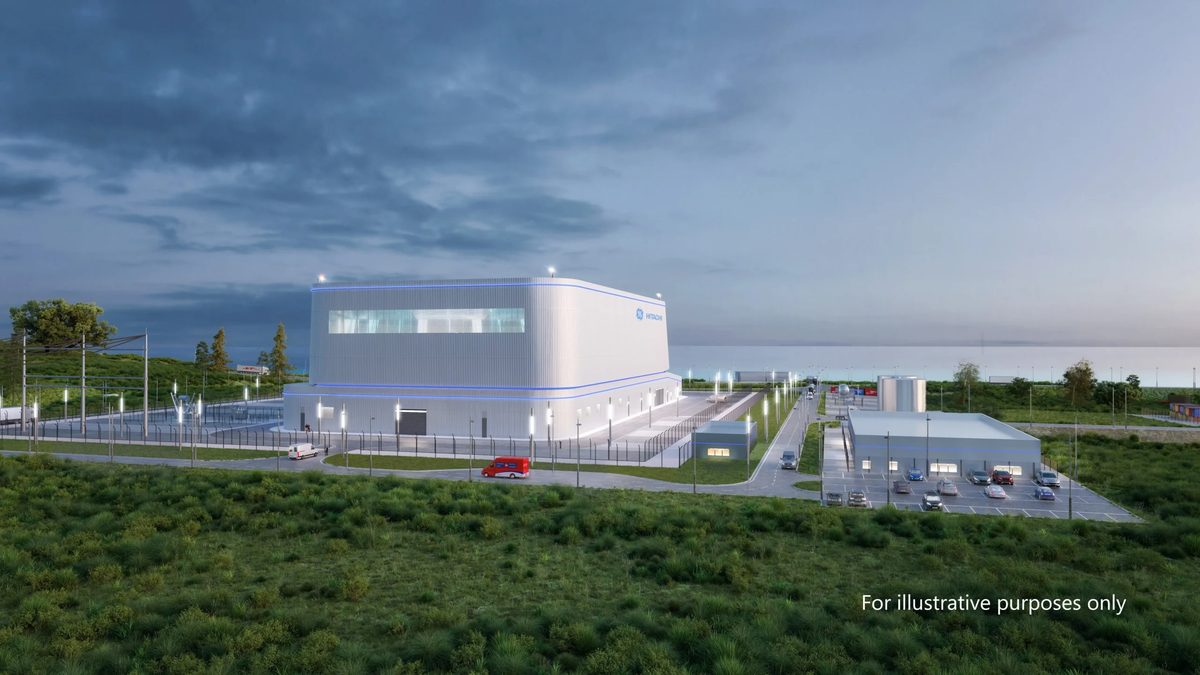
Three AP1000 reactors at 3,750 MW; full EPC contract targeted by end of 2026, first power in 2036

Yesterday: Commercial terms of EPC contract agreed

Overview

Updated 2 hours ago

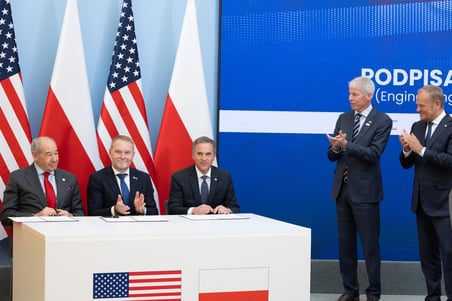
Poland has tried to build a nuclear plant for more than four decades. On September 23, 2026, the state-owned buyer PEJ and the Westinghouse-Bechtel consortium agreed on the commercial core of the construction contract: the cost model, the payment schedule tied to milestones, and how risk is split between the parties.

The agreement clears the way for the full engineering, procurement, and construction (EPC) contract, which both sides target for signing by year-end. First nuclear concrete is due in 2028 and first power in 2036. That schedule depends on the AP1000 reactor design performing better in Poland than it did in the United States, where the same Westinghouse-built units ran years late at Georgia's Vogtle plant.

Why it matters

If built as planned, Poland gets its first reactor ever — a clean anchor for a grid still powered mostly by coal.

Questions about this story

Free account needed to ask — your question is kept and asked for you right after sign-up. Answers are public.

No questions yet — be the first to ask.

Key Indicators

3
AP1000 reactors planned
Each unit is rated at roughly 1,250 MW of generation capacity.
3,750 MW
Planned plant capacity
Total nameplate capacity across the three units.
192 bln zł
Estimated total project cost
Government estimates run to about 192–200 bn zł, financed 30% equity and 70% debt.
$250M
Contracts awarded to Polish firms so far
Awarded to Budimex, Doraco, Unihouse, MSA Security, Barg M.B Gdańsk and others.
2036
Target year for first power
First unit commercial operation; units 2 and 3 follow in 2037 and 2038.

Voices

Curated perspectives — historical figures and your fellow readers.

Ever wondered what historical figures would say about today's headlines?

Sign up to generate historical perspectives on this story.

People Involved

Organizations Involved

Timeline

November 2022 September 2026

9 events Latest: Yesterday
Tap a bar to jump to that date
  1. Commercial terms of EPC contract agreed

    Latest Agreement

    PEJ and Westinghouse-Bechtel agree the cost model, milestone-linked payment schedule, and risk split — with Polish law governing the contract.

  2. Site handed to Bechtel

    Milestone

    PEJ releases the Lubiatowo-Kopalino site to Bechtel for grading, drainage, and temporary road construction.

  3. PEJ applies for construction permit

    Regulatory

    PEJ submits its application to Poland's State Atomic Energy Agency for a construction license.

  4. European Commission approves state aid

    Regulatory

    The Commission backs the financing model; the Treasury issues PLN 4.6 billion in bonds to PEJ.

  5. Amended EDA signed

    Agreement

    Parties sign an amended Engineering Development Agreement extending design work and geotechnical surveys.

  6. Decision-in-principle issued

    Regulatory

    The Ministry of Climate and Environment issues a decision-in-principle allowing PEJ to construct the plant.

  7. First Engineering Development Agreement signed

    Agreement

    PEJ signs the EDA with Westinghouse and Bechtel to finalize a site-specific design for the three-unit plant.

  8. Delivery plan agreement signed

    Agreement

    Westinghouse, Bechtel, and PEJ sign an agreement setting the plan for delivering the plant.

  9. Poland selects Westinghouse AP1000 technology

    Decision

    The then-government picks the AP1000 design for its first nuclear plant, to be built at Lubiatowo-Kopalino in Pomerania.

Scenarios

1

Poland signs full EPC contract with Westinghouse-Bechtel by year-end

Likely Resolves by End of 2026

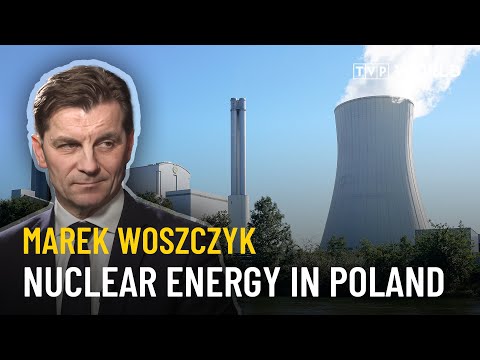
Discussed by: PEJ president Marek Woszczyk, who told NucNet the target is end of 2026; the companies' joint September 23 statement

The commercial package is settled and both sides say the remaining terms are narrower. If the framework holds, the full EPC contract lands before the end of 2026, triggering orders for long-lead items like the reactor pressure vessel, which needs 48–60 months of lead time. This keeps the 2028 first-concrete and 2036 first-power dates intact.

2

EPC signing slips into first half of 2027

Possible Resolves by Q2 2027

Discussed by: Business Insider Polska, citing project sources who called end-H1 2027 the realistic signing window

Sources close to the project told Business Insider Polska the practical date is mid-2027, not year-end 2026. The bridge agreement (EDA++) runs through December 2026, so a slip is survivable but shrinks the buffer before the 2028 concrete pour and delays final long-lead item orders.

3

Poland's first nuclear concrete pour misses its 2028 target

Uncertain Resolves by End of 2028

Discussed by: No one is publicly predicting this; it reflects the track record of AP1000 construction in the US and of Finnish EPR builds

First nuclear concrete is set for 2028. Westinghouse's last AP1000 builds, at Georgia's Vogtle plant, ran seven years late and pushed the company into bankruptcy in 2017. Any slip in the contracting phase or the 2027 geotechnical campaign directly eats into the schedule buffer.

Historical Context

3 moments from history that rhyme with this story — and how they unfolded.

1982–1990

Żarnowiec Nuclear Power Plant (1982–1990)

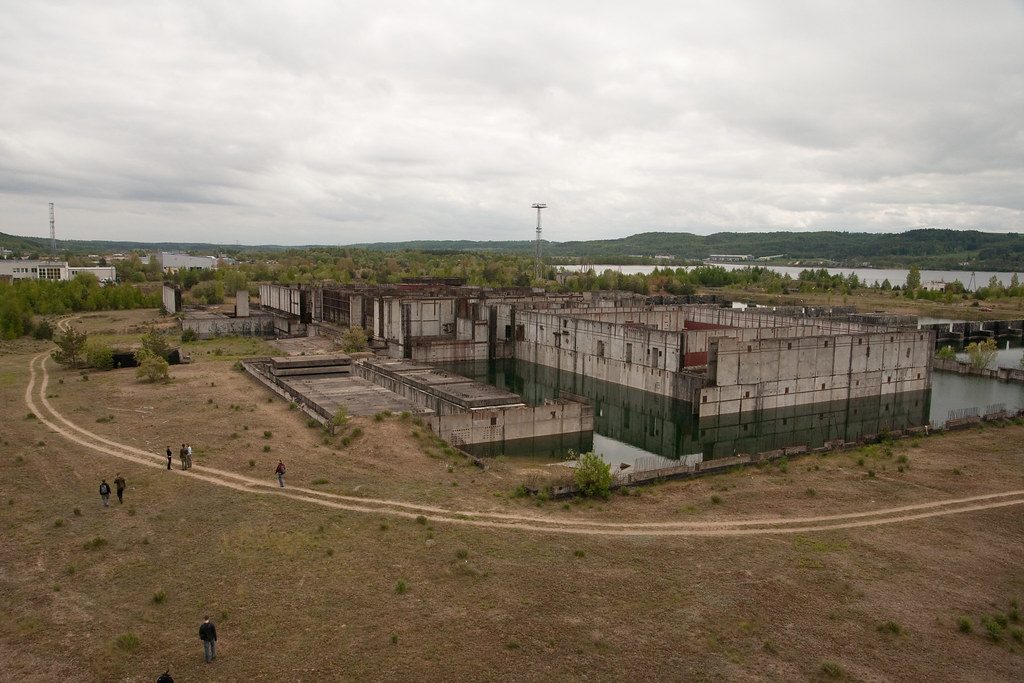
Poland broke ground on its first nuclear plant at Żarnowiec in 1982, planning four Soviet VVER-440 reactors. After the Chernobyl disaster and mass protests, the government cancelled the project in 1990 with the site partly excavated and one reactor hall under construction.

Then

The country inherited a costly, never-used construction site and a three-decade freeze on civilian nuclear power.

Now

Poland's energy strategy defaulted to coal; the abandoned site later became a museum and tourist attraction.

Why this matters now

It explains why the Choczewo plant is Poland's true first reactor — and why reaching contract terms took more than four decades after Żarnowiec was scrapped.

2005–2023

Olkiluoto 3, Finland (2005–2023)

Finland's first new reactor in four decades, an Areva EPR, started construction in 2005 and reached commercial operation in 2023 — 12 years late and more than double its original €3 billion budget.

Then

The delay bled Areva financially and forced Finland to lean on Russian gas longer than planned.

Now

Olkiluoto became the reference case for European nuclear cost and schedule overruns; every new European plant is measured against it.

Why this matters now

Poland's target of first power in 2036, eleven years after first concrete, sits at the optimistic end of recent European nuclear delivery times.

2009–2024

Vogtle Units 3–4, Georgia (2009–2024)

The only new reactors built in the US in three decades were two AP1000s at Plant Vogtle in Georgia, with Westinghouse designing them and Bechtel as a construction partner. The units came online seven years late with costs ballooning toward $35 billion, pushing Westinghouse into Chapter 11 bankruptcy in 2017.

Then

Vogtle's overruns triggered Westinghouse's near-collapse and soured US utilities on new nuclear for a generation.

Now

The same AP1000 design now anchors Poland's plan, with Bechtel again on the construction side.

Why this matters now

It sets the skeptical baseline for Poland's 2028–2036 schedule — the identical reactor design and a shared contractor missed badly in Georgia.

Sources

(10)