


Pull to refresh
Logo
Warsaw signs contract for Poland's largest concert hall

Warsaw signs contract for Poland's largest concert hall

Built World

Warbud, a Vinci subsidiary, will build the 1,877-seat Sinfonia Varsovia hall for €149 million, with completion set for 2030

Overview

Updated 1 hour ago

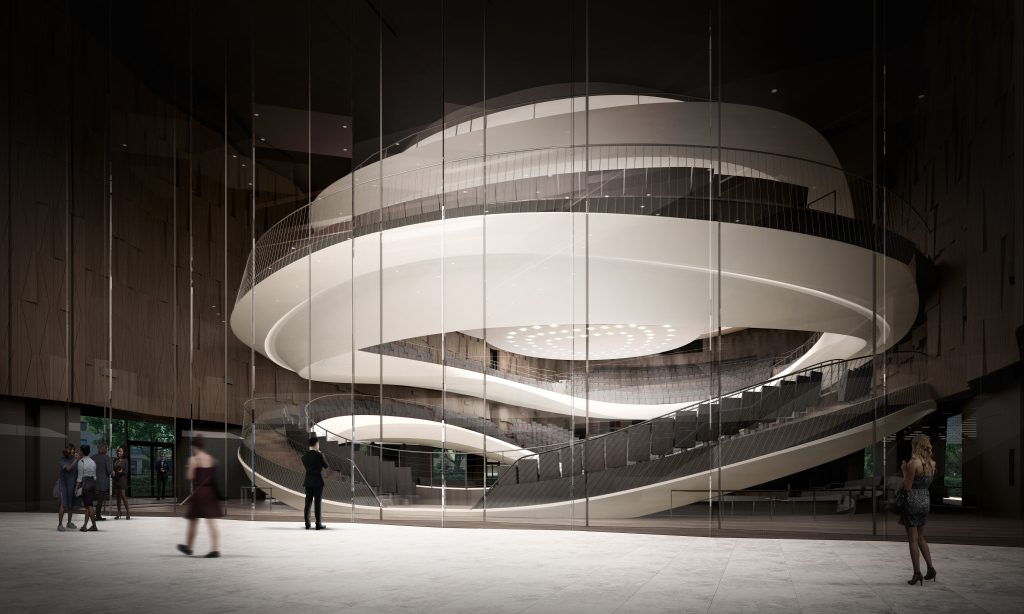
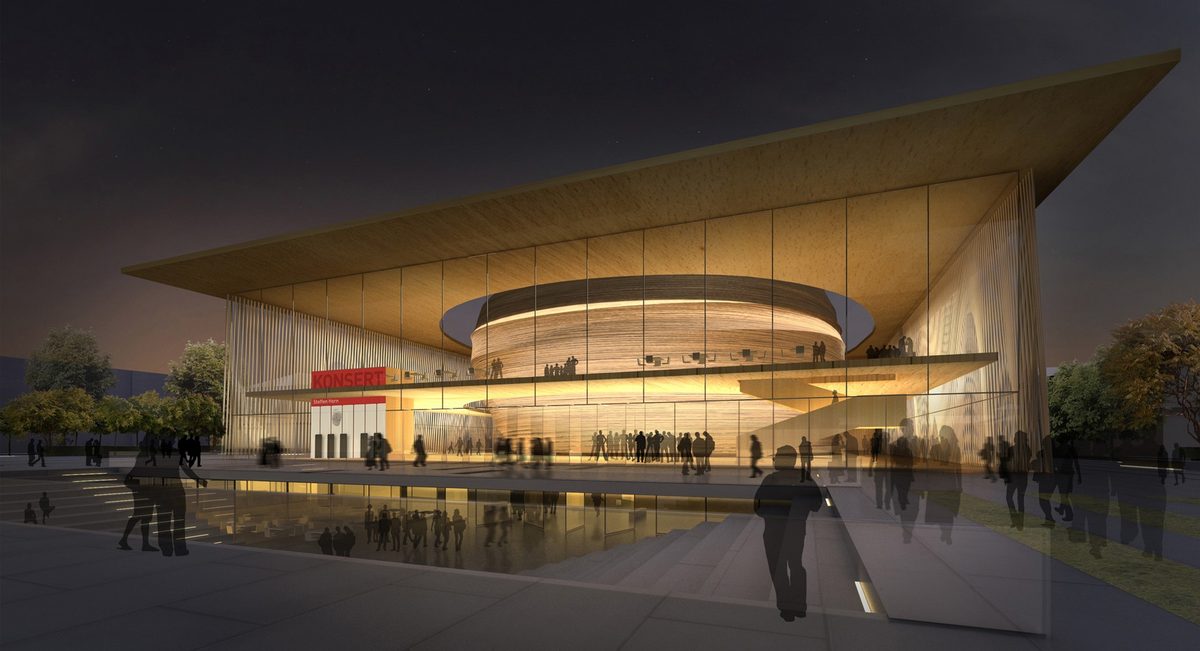
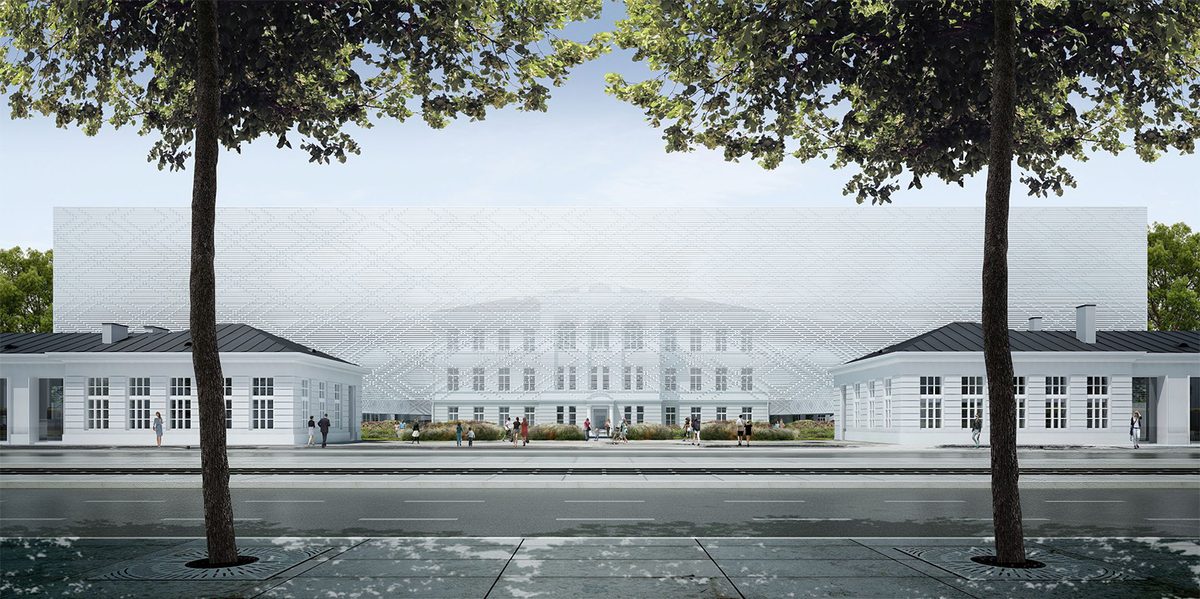
Warsaw has signed a €149 million contract to build Poland's largest concert hall. Warbud, the Polish subsidiary of France's Vinci, will construct the 1,877-seat main hall and renovate two 19th-century outbuildings on Grochowska Street in the Praga-Południe district.

The design won an international competition in 2010. Sixteen years later, the contract sets a 2030 completion date and a 42-month construction window, turning a repeatedly delayed plan into a schedule.

Why it matters

After 16 years of design and delay, Warsaw's orchestra gets a firm 2030 opening date for the hall that will anchor its permanent home.

Questions about this story

Free account needed to ask — your question is kept and asked for you right after sign-up. Answers are public.

No questions yet — be the first to ask.

Key Indicators

1,877
Seats in the main concert hall
Slightly larger than the roughly 1,800-seat halls in Katowice and Wrocław.
€149M
Phase-two construction contract
About 650 million złoty, funded by the city and the culture ministry.
~400
Seats in the chamber hall
Part of the same building, alongside rehearsal rooms and recording studios.
400 m
Suspended promenade
An aluminium mesh frame at 21 metres encircles the site, replacing an earlier concrete wall design.
2030
Targeted completion
The contractor has 42 months from site handover.

Voices

Curated perspectives — historical figures and your fellow readers.

Sign up to generate historical perspectives on this story.

People Involved

Organizations Involved

Timeline

2010 October 2026

7 events Latest: 3 days ago
Tap a bar to jump to that date
  1. Trade press reports the deal

    Latest Report

    Global Construction Review reports Warbud's award for Poland's largest concert hall.

  2. Vinci confirms the award

    Corporate

    Vinci values the contract at €149 million and states completion is expected in 2030.

  3. Contract signed in Warsaw

    Contract

    Warbud and Sinfonia Varsovia sign the phase-two deal, worth over 650 million złoty, with a 42-month build.

  4. Warbud named winning bidder

    Procurement

    The culture ministry announces Warbud as the choice from three qualified bidders.

  5. First phase goes to contract

    Construction

    Work begins on renovating the historic pavilions and main building into chamber halls and offices.

  6. Building permit granted

    Permitting

    The project receives its construction permit, a decade after the site transfer.

  7. Warsaw picks a design

    Design

    An international competition selects Atelier Thomas Pucher's concept; the city hands the former Veterinary Institute site to the orchestra.

Scenarios

1

Hall opens in 2030 as contracted

Likely Resolves by Q1 2031

Discussed by: City of Warsaw, Vinci and the culture ministry all state 2030 as the target

Site handover occurs within 30 days of the October 2026 signing, construction runs the full 42 months, and the orchestra plays its first concert in the main hall before the end of 2030. Warbud's record on Polish concert halls is the basis for this expectation.

2

Opening slips past 2030

Possible Resolves by Q2 2029

Discussed by: Polish press has tracked repeated delays to this project since 2010

Construction problems, permitting changes or budget disputes push the opening beyond the contracted date. TVN Warszawa noted the project's schedule had already slipped for years over cost, and that an earlier concrete wall design was dropped.

3

Contract value rises above €149 million

Uncertain Resolves by End of 2029

Discussed by: No party has forecast this; it is a standard risk on Polish public building contracts

An amended contract, additional works order or publicly reported cost increase lifts the phase-two price. Vinci's figure of €149 million is the baseline against which any change would be measured.

Historical Context

3 moments from history that rhyme with this story — and how they unfolded.

October 1963

Berlin Philharmonie (1963)

Hans Scharoun's Philharmonie opened with seating wrapped around the stage, an arrangement that became known as the vineyard layout. It broke with the shoebox halls that had dominated concert design.

Then

The hall became a model for orchestras wanting closer contact between players and audience.

Now

Vineyard halls spread worldwide; most new concert halls now choose between the two layouts, or blend them.

Why this matters now

The Sinfonia Varsovia hall deliberately mixes the shoebox and vineyard plans, so it inherits a design argument that Berlin settled 63 years ago.

2007-2017

Elbphilharmonie, Hamburg (2007-2017)

Hamburg planned a concert hall on top of a 1960s cocoa warehouse, with an opening set for 2010. The project ran years late as costs rose far beyond the original budget and the contract had to be renegotiated.

Then

The delays became a national political issue and the city had to approve repeated additional funding.

Now

The hall opened in January 2017 and became a tourist landmark, but the episode is now the standard warning for concert-hall megaprojects.

Why this matters now

Warsaw's hall also took 16 years to get from design competition to construction contract, and the new 42-month term is the test of whether it avoids Hamburg's path.

2014

NOSPR Katowice (2014)

The Polish National Radio Symphony Orchestra moved into a new hall in Katowice, built by Warbud, with roughly 1,800 seats and a vineyard-style auditorium.

Then

The hall gave the orchestra a dedicated home and became a symbol of Katowice's post-industrial reinvention.

Now

It set the benchmark for Polish concert halls, later matched by the National Forum of Music in Wrocław.

Why this matters now

The Warsaw hall is only slightly larger than Katowice's, and the same contractor is building it, which makes the earlier project a direct reference for cost and schedule.

Sources

(8)