





Pull to refresh
Logo
Bank of England cuts capital requirements for UK-focused banks, flags AI debt risk

Bank of England cuts capital requirements for UK-focused banks, flags AI debt risk

Rule Changes

The Bank of England finished its bank capital review, lowering requirements for domestically focused lenders while warning that AI borrowing and rising bond yields are linking markets more tightly.

Overview

Updated 51 minutes ago

UK banks will be allowed to hold less capital against domestic lending. On 26 November 2026 the Bank of England completed its review of the bank capital framework: the largest UK-focused lenders get a 60 basis point cut to requirements, major UK banks 30 basis points in aggregate, and system-wide requirements will sit around the FPC's updated benchmark of about 13%.

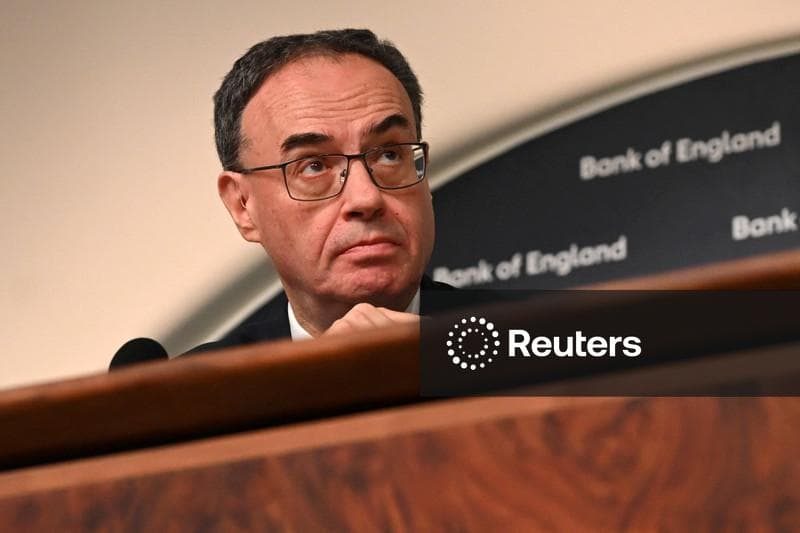
Governor Andrew Bailey said the change could support around £175 billion of extra lending capacity, roughly two years of net lending growth, if banks choose to use it. The same report warned that AI-related debt and rising government bond yields are tightening the links between markets, making it easier for stress in one area to reach another.

Why it matters

UK banks get looser capital rules as the Bank of England warns AI debt and rising yields raise the risk of a synchronized shock.

Questions about this story

Free account needed to ask — your question is kept and asked for you right after sign-up. Answers are public.

No questions yet — be the first to ask.

Key Indicators

60 bp
Capital requirement cut for the largest UK-focused lenders
One basis point is one hundredth of a percentage point, so this is 0.6 percentage points of risk-weighted assets.
30 bp
Aggregate reduction for major UK banks
The figure for the biggest UK banks taken together, smaller than the domestic-only lenders' cut.
13%
FPC benchmark for system-wide capital requirements
The level major UK banks' requirements will be consistent with after the domestic-lending reduction.
2%
Neutral countercyclical capital buffer rate
Held unchanged; the FPC said keeping it supports the case for lower domestic-lending add-ons.
$305B
Hyperscaler bond issuance expected in 2026
Borrowing by the small group of companies that run large data-centre networks, per the FPC.
8%
Hyperscaler share of global investment grade issuance
The share rises considerably when the wider group of AI-related issuers is counted.
£175B
Illustrative extra lending capacity
Bailey's illustration of what the freed capital could support, equivalent to about two years of net lending.

Voices

Curated perspectives — historical figures and your fellow readers.

Sign up to generate historical perspectives on this story.

People Involved

Organizations Involved

Timeline

July 2026 November 2026

5 events Latest: Today
Tap a bar to jump to that date
  1. Bank of England completes capital review

    Today Regulation

    The FPC published its November record and Financial Stability in Focus, confirming lower capital requirements and setting a benchmark of about 13%.

  2. PRA to consult on lower Pillar 2A

    Today Regulation

    The Prudential Regulation Authority will consult on cutting Pillar 2A requirements, including charges tied to geographic concentration.

  3. Bailey cites £175bn lending capacity

    Today Statement

    The Governor said the freed capital could support around £175bn of lending, about two years of net growth, if banks use it.

  4. FPC warns on $305bn hyperscaler borrowing

    Today Report

    The committee said hyperscaler bond issuance is set to exceed $305bn in 2026, around 8% of global investment grade supply.

  5. FPC flags AI financing and sovereign debt

    Report

    The July Financial Stability Report warned about rapid growth in AI-related financing and rising sovereign debt burdens.

Scenarios

1

PRA finalises the capital cut largely as proposed

Likely Resolves by Q3 2027

Discussed by: Bank of England Financial Policy Committee and Prudential Regulation Authority

The PRA consults on lower Pillar 2A requirements and reduced domestic-lending add-ons, then publishes a policy statement. The FPC has already set the direction and trimmed the system benchmark to about 13%, so the remaining questions are timing and how the reduction is calibrated for individual firms.

2

An AI-linked borrower defaults and credit stress spreads

Possible Resolves by End of 2027

Discussed by: Bank of England Financial Policy Committee

The FPC reported sharply wider spreads on CCC-rated US debt and on some lower-quality AI-related borrowers, plus early signs of stress in parts of private credit. If one large AI-linked issuer misses payments, refinancing could seize up for others in the sector, testing the interconnections the report describes.

3

International pushback delays the capital reduction

Unlikely Resolves by Q3 2027

Discussed by: Bank of England Financial Policy Committee

The FPC said cutting much further would risk financial instability and weaken international standards. If the Basel Committee or other regulators object, or if gilt yields spike again, the PRA could slow implementation or the Treasury could ask it to pause.

Historical Context

3 moments from history that rhyme with this story — and how they unfolded.

2010-2019

Post-crisis capital build (2010-2019)

After the 2008 financial crisis, the G20 rewrote bank capital rules under Basel III, requiring more and better-quality capital. The UK added its own buffers and separated retail deposits from investment banking through ring-fencing.

Then

Banks raised capital, cut riskier lending and exited businesses to meet the new ratios.

Now

UK-focused lenders argued that rules designed for global banks charged them extra for concentrated domestic loan books, which is the complaint this review addresses.

Why this matters now

The November 2026 package partly unwinds the geographic-concentration penalty built during that era, while the FPC insists it will not go further for fear of undoing the resilience.

1998-2002

Telecom and fibre debt bust (1998-2002)

Telecom and fibre-optic companies borrowed heavily in bond and loan markets against projections of explosive internet traffic. When revenue growth fell short, debt-heavy carriers including WorldCom and Global Crossing collapsed into bankruptcy.

Then

Credit markets repriced telecom risk sharply and lenders absorbed large losses.

Now

The episode became the standard example of how debt raised against expected technology demand can amplify a downturn when the demand arrives late.

Why this matters now

AI data-centre borrowing today has the same shape: large bond issuance against expected future revenue, with circular financing between firms in the same sector.

September 2022

Gilt market turmoil and the LDI crisis (2022)

A UK fiscal announcement sent gilt yields soaring in days. Pension funds using liability-driven investment faced collateral calls, forcing the Bank of England to buy gilts to stop a spiral.

Then

The Bank intervened on financial stability grounds and the fiscal plan was reversed.

Now

Regulators tightened scrutiny of leverage in non-bank finance, the same area the FPC now flags for private credit stress.

Why this matters now

It shows how quickly a yield move plus hidden leverage can force a central bank to act, which is why the November report spends as much space on yields and private credit as on bank capital.

Sources

(8)