
Pull to refresh
Logo
RBA raises cash rate to 15-year high, signals more hikes ahead

RBA raises cash rate to 15-year high, signals more hikes ahead

Rule Changes

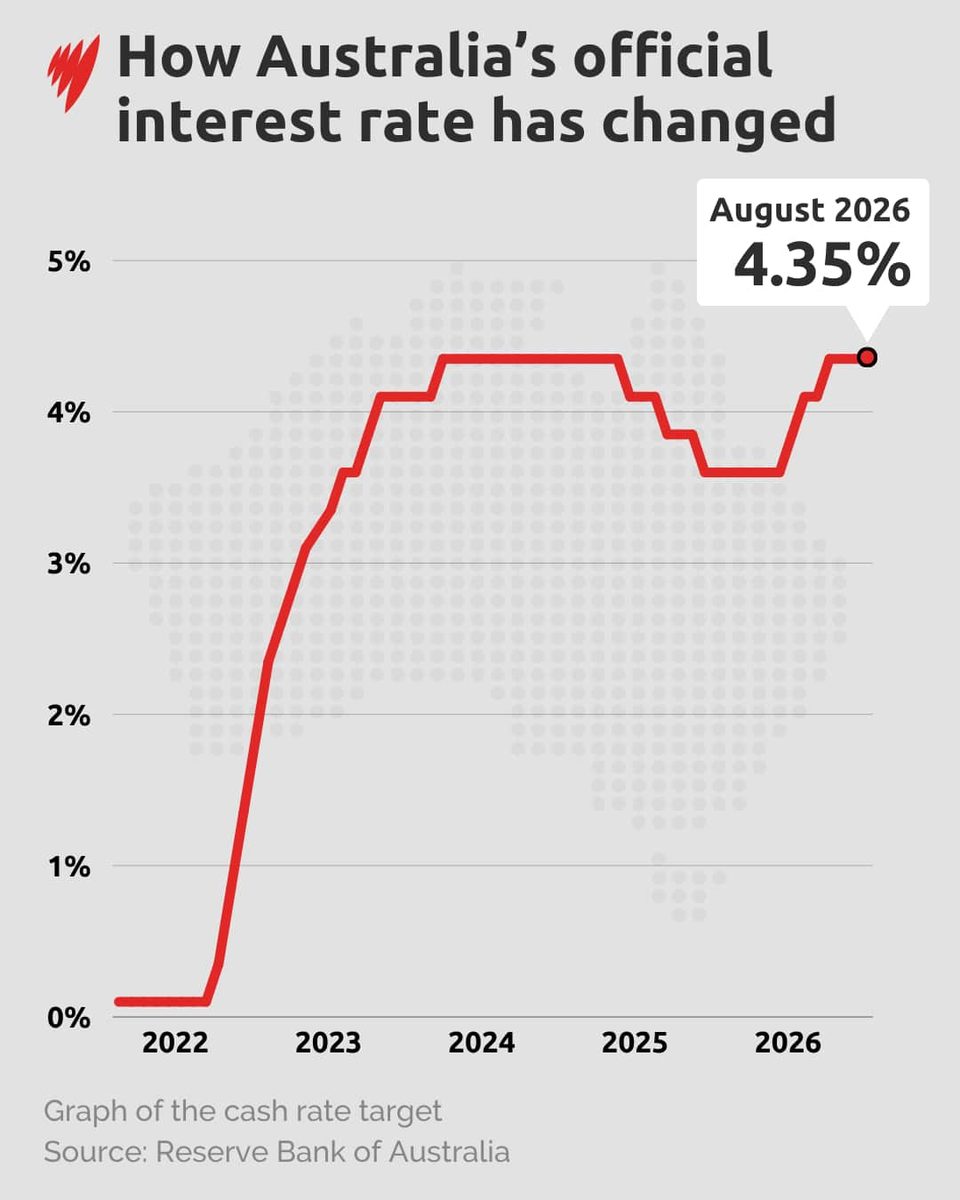
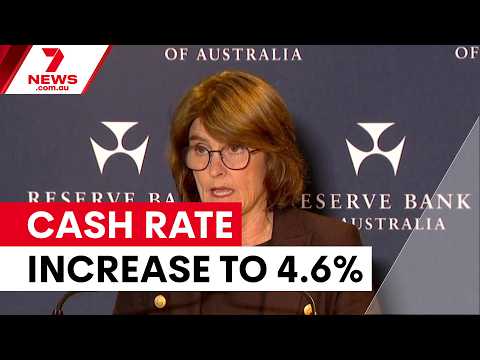
Fourth hike of 2026 takes the cash rate to 4.60%, its highest since 2011

Yesterday: RBA hikes cash rate to 4.60%, a 15-year high

Overview

Updated 1 hour ago

The Reserve Bank of Australia raised its benchmark cash rate to 4.60 percent on September 29, the highest level in 15 years. The quarter-point increase adds about $91 a month to repayments on a typical $600,000 mortgage.

It was the fourth hike of 2026 in a campaign to push inflation back to the bank's 2-to-3 percent target, where it has hovered near 3.5 percent for much of the past five years. The bank points to Middle East energy prices and AI-fueled demand for technology goods as new sources of pressure, on top of tight domestic capacity. At 4.60 percent, Australia now has the highest official rate among major Western economies, above the U.S. Federal Reserve's 4 percent and the Bank of England's 3.75 percent.

Why it matters

Australian borrowers face higher repayments: two more hikes and a typical new mortgage costs over $650 a month more than it did in January.

Questions about this story

Free account needed to ask — your question is kept and asked for you right after sign-up. Answers are public.

No questions yet — be the first to ask.

Key Indicators

4.60%
Official cash rate
The highest level since October 2011, when the rate sat at 4.75 percent.
4
Rate hikes in 2026
Four quarter-point increases totaling 100 basis points, more than reversing the 75 basis points of easing in 2025.
3.5%
Annual inflation
Above the RBA's 2-to-3 percent target, where it has lingered for much of the past five years.
$91
Monthly mortgage increase
Extra repayment on a typical $600,000 mortgage with 25 years remaining, per this single hike.

Voices

Curated perspectives — historical figures and your fellow readers.

Ever wondered what historical figures would say about today's headlines?

Sign up to generate historical perspectives on this story.

People Involved

Organizations Involved

Timeline

1 event Latest: Yesterday
  1. RBA hikes cash rate to 4.60%, a 15-year high

    Latest Monetary Policy

    The board voted unanimously to raise the cash rate by a quarter point, its fourth hike of 2026. The bank warned it may hike again as inflation stays above its 2-to-3 percent target.

Scenarios

1

RBA hikes again in November, cash rate hits 4.85%

Possible Resolves by End of 2026

Discussed by: Market pricing (about 43% probability) and the RBA's own hawkish statement

If August inflation data, due September 30, comes in hot (forecasters expect headline inflation to climb toward 4.1 percent on fuel costs) and oil prices stay elevated, the board may not wait. A November hike would add another $91 a month to a typical $600,000 mortgage and push the cash rate above the 2011 peak of 4.75 percent.

2

RBA holds at 4.60% as cooling data builds the case for a pause

Likely Resolves by Nov 30, 2026

Discussed by: AMP chief economist Shane Oliver and market pricing (about 57% implied probability)

Oliver expects the November meeting to arrive with evidence of a cooling economy: falling house prices, a softer jobs market and rising recession risks. The full effect of this year's four hikes is still working through the economy, and a pause would give the board time to assess the damage.

3

RBA cuts rates in 2027 as recession risks deepen

Possible Resolves by Q2 2027

Discussed by: AMP chief economist Shane Oliver (warning of recession risk); Business Times coverage

If the Middle East conflict drags the global economy down, or the accumulated rate increases push domestic demand too far, the RBA would pivot to easing. The 2008-2009 episode shows how quickly a tightening cycle can reverse. Oliver says rising recession risks make it plausible that no further hikes, let alone a third and fourth, will be needed.

Historical Context

3 moments from history that rhyme with this story — and how they unfolded.

1989 to 1991

Australia's 1990-91 recession

In the late 1980s the Reserve Bank pushed the cash rate into the high teens, peaking around 18 percent in early 1990, to cool a credit-driven boom. The economy tipped into recession and unemployment climbed above 10 percent.

Then

Consumer spending and business investment fell sharply, and the housing market cooled.

Now

It launched nearly three decades of recession-free growth and became the standard cautionary tale about tightening too hard.

Why this matters now

It is the overshoot risk in the current cycle: the bank is raising rates because it cannot tolerate years of above-target inflation, but pushing too far risks tipping the economy into a downturn.

2008 to 2009

GFC rate reversal, 2008-2009

In March 2008 the Reserve Bank pushed the cash rate to a 12-year high of 7.25 percent to fight inflation. As the global financial crisis spread, it slashed the rate back to 3.00 percent by April 2009, a cut of more than four percentage points in about a year.

Then

Mortgage rates fell sharply and the steep cuts cushioned the domestic economy through the crisis.

Now

The episode showed how quickly a central bank's tightening campaign can reverse when financial stress hits.

Why this matters now

It is the other precedent for today: the RBA is signaling more hikes, but history shows a rapid about-face is possible if growth or markets crack first.

October 2011

Cash rate peak, October 2011

The cash rate stood at 4.75 percent in October 2011, the last time it sat above 4.5 percent before this week. Global uncertainty and a fading mining investment boom pushed the Reserve Bank to begin cutting the following month.

Then

The November 2011 cut opened an easing cycle that ran through 2012 as inflation stayed low.

Now

Australian interest rates stayed well below their 2011 levels for more than a decade.

Why this matters now

It is the exact level this week's 4.60 percent rate is measured against, and it shows how a tightening cycle tops out when growth cools.

Sources

(10)