Anchor

Camp Thoreau redevelopment secures financing for 237-unit Concord complex
Built World Boston, MA localSantander lends $60.7 million to build apartments under Massachusetts' Chapter 40B affordable housing law
3 days ago: Santander issues $60.7 million construction loanNew here? Follow stories to track developments over time. Create a free account to get updates when stories you care about change.
Overview
Updated 42 minutes agoA 237-unit apartment complex is set to break ground in Concord, the wealthy Boston suburb that has kept its zoning almost entirely single-family. Santander Bank issued a $60.7 million construction loan this month for the project at the Thoreau Club property, clearing the final financing hurdle after four years of approvals.
The project exists only because of Chapter 40B, the state's affordable housing law, which lets developers sidestep local zoning in towns where less than 10% of housing is affordable. Concord is under that threshold, so its Zoning Board of Appeal approved the plan despite the town's long resistance to multifamily buildings. This is the second 40B project in Concord to secure construction financing this summer — together they add more than 400 apartments the town spent decades refusing.
Why it matters
A 1969 state law is forcing affluent Massachusetts suburbs to accept apartments they long resisted. Concord's 237-unit complex is the latest proof.
Questions about this story
Free account needed to ask — your question is kept and asked for you right after sign-up. Answers are public.
No questions yet — be the first to ask.
Key Indicators
$60.7M
Santander construction loan
Funds the 237-unit complex on a 13.9-acre wooded section of the Thoreau Club property.
237
Planned apartment units
Two 5-story buildings spanning 310,982 square feet, with an on-site wastewater plant.
$103M
Total project cost
Figure cited in Pinebrook Group's 2023 application to MassHousing.
2
Concord 40B projects financed in summer 2026
The Welch's HQ site, a 201-unit complex, also secured financing in August.
Related Media

THE THOREAU CLUB - Updated September 2026 - 38 Photos & 39 Reviews - 275 Forest Ridge Rd, Concord, Massachusetts - Trainers - Phone Number - Yelp
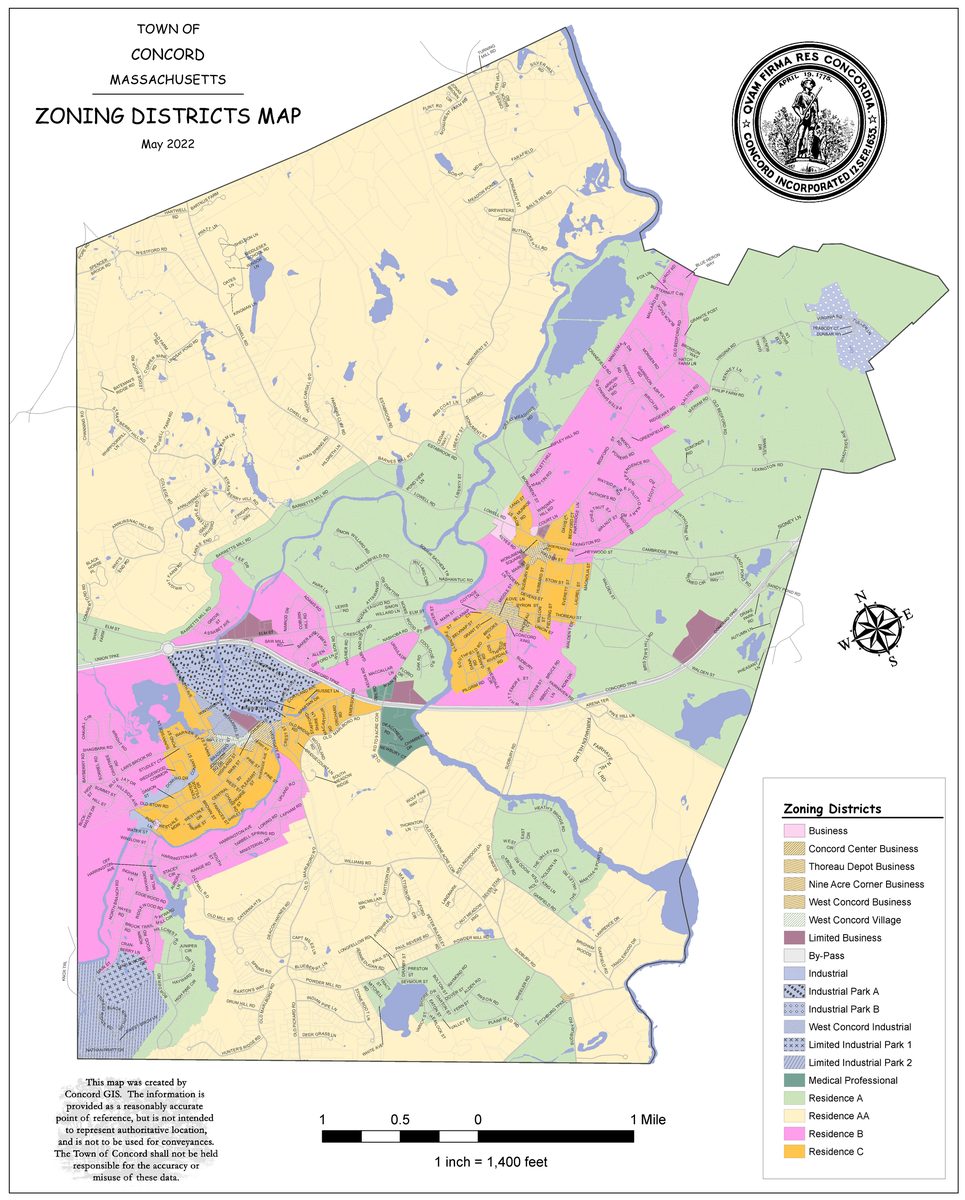
Zoning Map | Concord, MA

758 views
2:22
$50 million loan to help redevelop senior housing complex in ...
NBC10 Philadelphia
106 views
1:27
Over 100 new apartments to open near downtown Springfield
Western Mass News

697 views
2:48
Massachusetts Chapter 40B Housing-"You have no right to ...
Joseph Conforti
Images from Openverse under Creative Commons licenses. Videos from YouTube.
Voices
Curated perspectives — historical figures and your fellow readers.
Play
Exploring all sides of a story is often best achieved with Play.
Most of these play right now — no account needed. Sign up to save scores, keep a streak, and unlock Debate and Predict.
Log in
Sign Up
Higher or Lower
A number from this story, against one from elsewhere in the news — guess which is bigger, then keep the chain going. 5 rounds, 3 strikes; a miss costs a strike and resets your streak.
Example
Anchor
EU tariff revenue
$52B
Big for this kind of number
Mystery
Pentagon AI contract
?
Round 1
Streak: 0
Mystery
?
Keyboard: ↓/L lower · ↑/H higher
0 pts
Best streak: 0 · Rounds: 0
0 points — sign up to put that on the leaderboard.
Now try on this story
Connections
Sixteen names from the news. Find the four hidden groups of four. Four mistakes max.
Loading today's puzzle…
0/4 groups
Mistakes
Sign up to keep a daily streak — a new puzzle lands every day.
Now try on this story
Exit debate?
Your progress in this debate will be lost.
How it works
- 1 Two AI personas square off on this story.
- 2 You predict who'll win each round — correct picks earn XP.
- 3 One crossfire question is yours to fire. Pick it carefully.
Couldn't generate a topic
Select Your Champions
Choose one persona for each side of the debate
DEBATE TOPIC
Choose personas with different perspectives for a more dynamic debate.
SIDE A (PRO)
Select debater for this side:
No debate personas available right now.
SIDE B (CON)
Select debater for this side:
No debate personas available right now.
VS
Get ready to make your prediction...
Round of
Claim
Evidence
Stakes
Crossfire Answer
Closing Statement
Claim
Evidence
Stakes
Crossfire Answer
Closing Statement
Your Crossfire Question
Generating arguments...
Who's Got This Round?
Make your prediction before the referee scores
The referee scores both sides on
Correct predictions earn +20 XP
· Press 1 or 2 to pick
Evidence
40%
Logic
30%
Detail
20%
Style
10%
Round Results
Your Pick
Not this time
(%)
Overall Score
/10
Your Pick
Not this time
(%)
Overall Score
/10
Set the Crossfire
Pick the question both personas must answer in the final round
Crafting crossfire questions...
Choosing a question earns +10 XP crossfire bonus
🏆
Total XP Earned
Cred Change
Predictions
Debate Oracle! You called every round!
Sharp Instincts! You know your debaters!
The Coin Flip Strategist! Perfectly balanced!
The Contrarian! Bold predictions!
Inverse Genius! Try betting the opposite next time!
XP Breakdown
Base completion
+20 XP
Rounds played ( rounds x 5 XP)
+ XP
Correct predictions ( correct x 20 XP)
+ XP
Crossfire bonus
+10 XP
Accuracy
%
Prediction History
Round
You picked:
✓
✗
Now try on this story
Keep debating to level up your credibility and unlock achievements
Organizations Involved
Pinebrook Group
Real estate developer
Developer behind the Camp Thoreau project
Boston-based developer that owns and is redeveloping the Thoreau Club property.
Santander Bank
Commercial bank
Construction lender
U.S. arm of Spain's Banco Santander, headquartered in Boston.
CZ
Concord Zoning Board of Appeal
Municipal board
Approved the Chapter 40B project
The town body that granted 40B approval in April 2025.
The Architectural Team
Architecture firm
Project designer
Boston-area firm that designed the two residential buildings.
MassHousing
State housing agency
Reviewed project financing application
Massachusetts' affordable housing finance agency.
L&G Asset Management
Pension fund asset manager
Developer of second Concord 40B project
British pension fund's American arm; acquired the former Welch's headquarters.
Timeline
January 1969 September 2026
6 events
Latest: 3 days ago
Tap a bar to jump to that date
-
Santander issues $60.7 million construction loan
Latest FinancingLoan clears the way for groundbreaking on the 237-unit Camp Thoreau complex.
-
L&G acquires Welch's HQ for second complex
AcquisitionBritish pension fund arms buys site approved for a 201-unit apartment complex.
-
Concord zoning board approves project
ApprovalZoning Board of Appeal clears the 237-unit plan on a wooded 13.9-acre parcel.
-
Pinebrook files Chapter 40B proposal
ApplicationDeveloper submits plan for 237 units, with project cost near $103 million.
-
Pinebrook acquires Thoreau Club property
AcquisitionBoston-based developer buys the 33-acre athletic club site in Concord.
-
Massachusetts enacts Chapter 40B
LegislationLaw allows developers to bypass local zoning where towns fall below 10% affordable housing.
Historical Context
3 moments from history that rhyme with this story — and how they unfolded.
March 1975 and January 1983
Mount Laurel Doctrines (1975, 1983)
New Jersey's Supreme Court struck down a town's exclusionary zoning, ruling municipalities must provide their 'fair share' of regional affordable housing. The 1983 ruling, Mount Laurel II, gave builders a strong tool to sue towns that resisted.
Then
Dozens of New Jersey towns faced court-ordered affordable housing quotas.
Now
The doctrine remains a landmark precedent for state courts overriding local zoning to address housing shortages.
Why this matters now
Like New Jersey's courts, Massachusetts' Chapter 40B uses state power to override local zoning in towns that exclude affordable housing.
January 2021
Massachusetts MBTA Communities Act (2021)
Massachusetts lawmakers required 177 cities and towns near transit to zone for multifamily housing by right, stripping local boards of discretion over density in designated districts.
Then
Suburbs scrambled to rewrite zoning codes under threat of losing state funding.
Now
It became the state's most aggressive anti-exclusionary zoning measure, though Boston is exempt from it.
Why this matters now
The Camp Thoreau project relies on the older 40B override, but both laws reflect the same state-versus-local fight over who decides what gets built.
1970s-1980s
Early Chapter 40B legal battles (1970s-1980s)
Wealthy Massachusetts towns fought 40B projects in court and at the ballot, arguing local control. The state Housing Appeals Committee repeatedly upheld the law's power to override local denials.
Then
Developers won the right to build in towns that refused affordable housing.
Now
A half-century of precedent made 40B the primary crack in suburban exclusionary zoning.
Why this matters now
Concord's approval of the Camp Thoreau project follows this established path: a developer uses 40B, wins a comprehensive permit, and funds construction.
Sources
(1)Related Stories
Greylock Federal joins MassHousing's accessory dwelling unit loan program
Money Moves
Updated 3 days ago
Boston City Council funds feasibility study for Madison Park vocational school rebuild
Built World
Updated Aug 26
Bedford advanced manufacturing campus lands $62.5M loan
Money Moves
Updated 2 days ago
Robotic housing manufacturer chooses Massachusetts for growth
New Capabilities
Updated 3 days ago
D.R. Horton breaks ground on for-sale townhomes in Sandy
Built World
Updated 3 days ago
Richmond planners back turning old Virginia Home into apartments
Built World
Updated Aug 26