
Pull to refresh
Logo
Boston City Council schedules hearing on continuing its reparations task force

Boston City Council schedules hearing on continuing its reparations task force

Rule Changes Boston, MA local

Nearly four years after creating the five-member body, a council committee will take public testimony on Docket #1243 — with the task force's colonial-era research still unresolved

Overview

Updated 1 hour ago

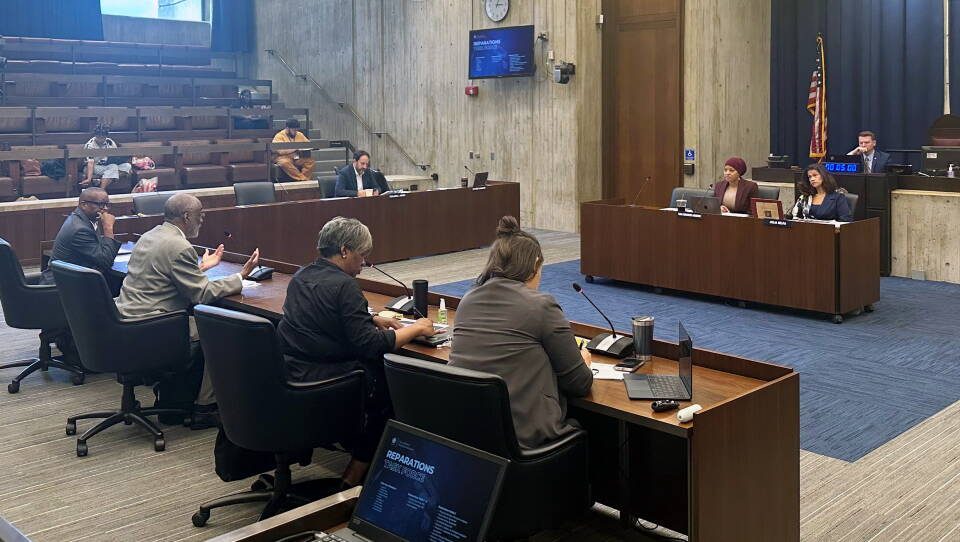
Boston's five-member Reparations Task Force has been meeting since December 2022. On Dec. 1, a City Council committee will hold a virtual public hearing on whether it continues, the first public session on the body's future since its research agenda was thrown into question.

The hearing covers Docket #1243, an order sponsored by Councilors Miniard Culpepper, Julia Mejia and Ruthzee Louijeune and referred to the Committee on Civil Rights, Racial Equity, and Immigrant Advancement on June 24. A hearing does not bind the council: the committee can report the order out, amend it, or let it sit. It arrives after the city dropped a Tufts University study of slavery in Boston, whose researcher was found to have falsified past academic work, leaving members to argue over how to rebuild the record they say any reparations recommendation depends on.

Why it matters

Whether Boston's reparations task force produces recommendations or lapses depends on what the council does with Docket #1243.

Last Monday's email for Boston, MA

Sent Nov 23. It carried:

Get next Monday's: one short email a week. Free. Unsubscribe in one click.

Questions about this story

Free account needed to ask — your question is kept and asked for you right after sign-up. Answers are public.

No questions yet — be the first to ask.

Key Indicators

5
Task force members
The ordinance the council passed in December 2022 created a five-member body, down from the 15-member commission originally proposed.
356
Slaveholder property deeds unearthed
Archaeologist India Glenn's team has assembled deeds and profiles for 356 Boston properties owned by enslavers.
2,300
Enslaved people being mapped
The number of people enslaved in colonial Boston that the task force's mapping project aims to locate.

Voices

Curated perspectives — historical figures and your fellow readers.

Sign up to generate historical perspectives on this story.

People Involved

Organizations Involved

Timeline

December 2022 November 2026

5 events Latest: Today
Tap a bar to jump to that date
  1. Agenda lists Dec. 1 hearing

    Today Procedural

    Published agenda shows the hearing will be virtual, not in the Iannella Chamber as first scheduled.

  2. Task force weighs replacing dropped study

    Research

    Members debate how to cover 1630-1783 after the city set aside the Tufts report.

  3. Continuation order referred to committee

    Legislation

    An order on whether the task force continues becomes Docket #1243 in the civil rights committee.

  4. Colonial property map takes shape

    Research

    Archaeologist India Glenn plots 92 of 1,040 slaveholder properties for the task force.

  5. Council creates the task force

    Decision

    The City Council votes unanimously to establish a five-member reparations task force, sending the measure to the mayor.

Scenarios

1

Council votes to keep the reparations task force running

Possible Resolves by Q2 2027

Discussed by: Supporters of Docket #1243, including its three council sponsors

The Dec. 1 hearing draws testimony in favor of continuation, the committee reports the order out, and the full council adopts it. That keeps the task force in place but does not settle what it studies or who would qualify for any remedy, leaving the scope fight to the task force itself.

2

Task force continues, but its mandate narrows to U.S.-descended families

Possible Resolves by Q2 2027

Discussed by: Task force member Nyheim Way and the Sons and Daughters of Freedman

The council renews the body but writes a narrower scope into the order, limiting the work to African Americans descended from people enslaved in the United States. That would align the city with the position Way has argued inside the task force and would set aside the broader diaspora framing some members and advocates had wanted.

3

Order stalls and the task force goes dormant

Unlikely Resolves by Q2 2027

Discussed by: No public forecaster has predicted this outcome; it is the default if the committee takes no action

The hearing happens, testimony is collected, and the order never reaches a vote. The task force's research contracts wind down and the body stops meeting without a formal decision to end it. Nothing in the record requires the committee to act on a referred order.

Historical Context

2 moments from history that rhyme with this story — and how they unfolded.

August 1988

Civil Liberties Act of 1988

Congress passed, and President Ronald Reagan signed, legislation formally apologizing for the internment of Japanese Americans during World War II and paying $20,000 to each surviving person who had been held. The money came from a trust fund Congress established to cover the payments.

Then

Payments began in 1990, and each recipient received a signed apology letter from the president.

Now

It is the closest thing the United States has to a completed federal reparations program, and the model advocates cite when they argue for cash payments tied to a specific, documented harm.

Why this matters now

Boston's task force is still at the stage that preceded the 1988 law: establishing what happened and who was harmed, before any question of payment.

September 2020 - June 2023

California's reparations task force (2020-2023)

California created the first statewide reparations task force under a law Governor Gavin Newsom signed in September 2020. Over three years the panel built a record on slavery's legacy in a state admitted to the union as free, and in 2023 delivered a report recommending cash payments and other remedies.

Then

The report went to the legislature without a funding mechanism, and the estimated cost of the recommendations ran into the hundreds of billions of dollars.

Now

Lawmakers have enacted some narrower proposals but not the centerpiece cash-payment recommendation.

Why this matters now

It marks the gap between a task force's report and a legislature's action, a gap Boston's task force has not yet had to cross.

Sources

(4)