
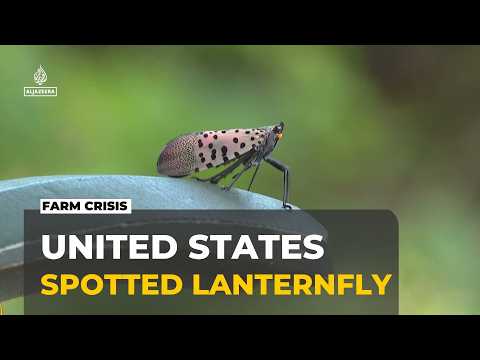

Insect confirmed in more than 145 cities and towns as fall egg-laying season begins
Today: Residents urged to kill lanternfliesNew here? Follow stories to track developments over time. Create a free account to get updates when stories you care about change.
Overview
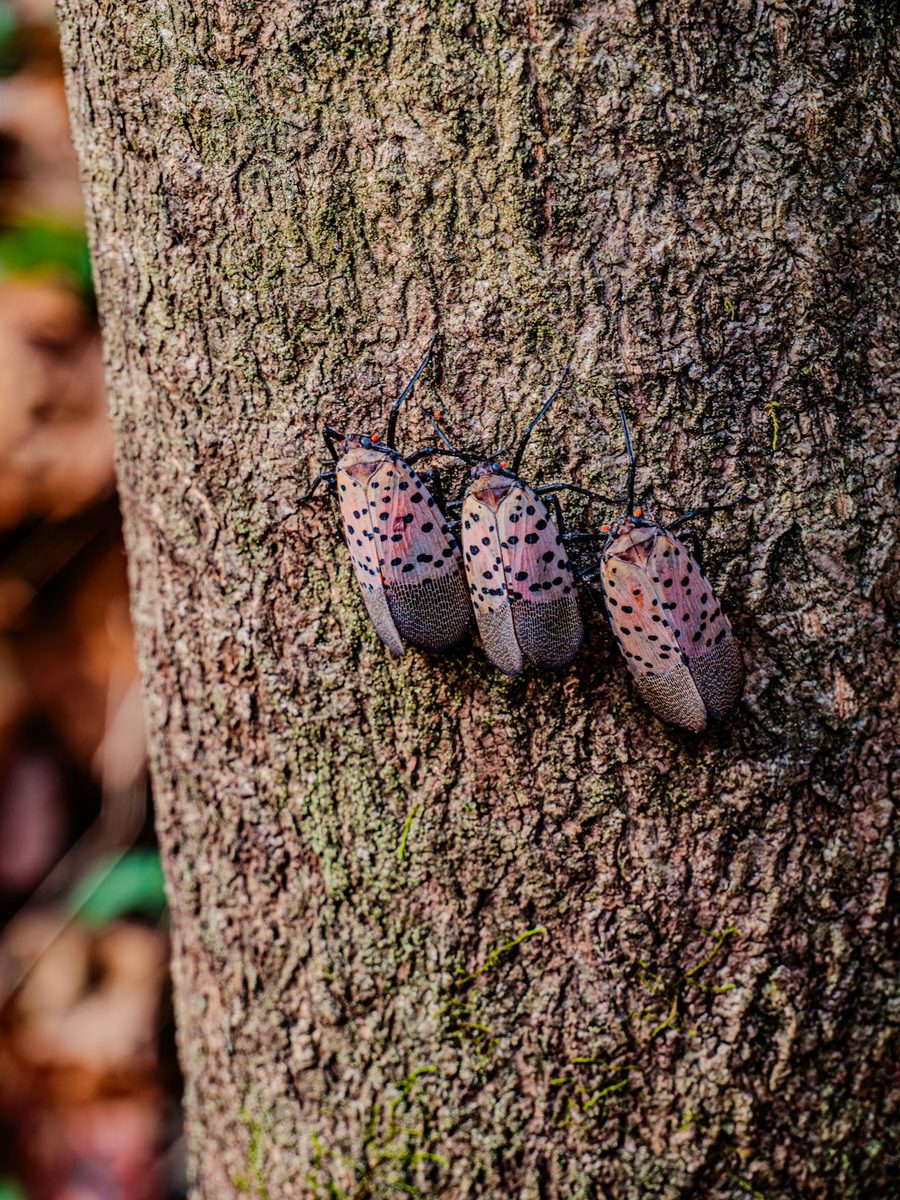
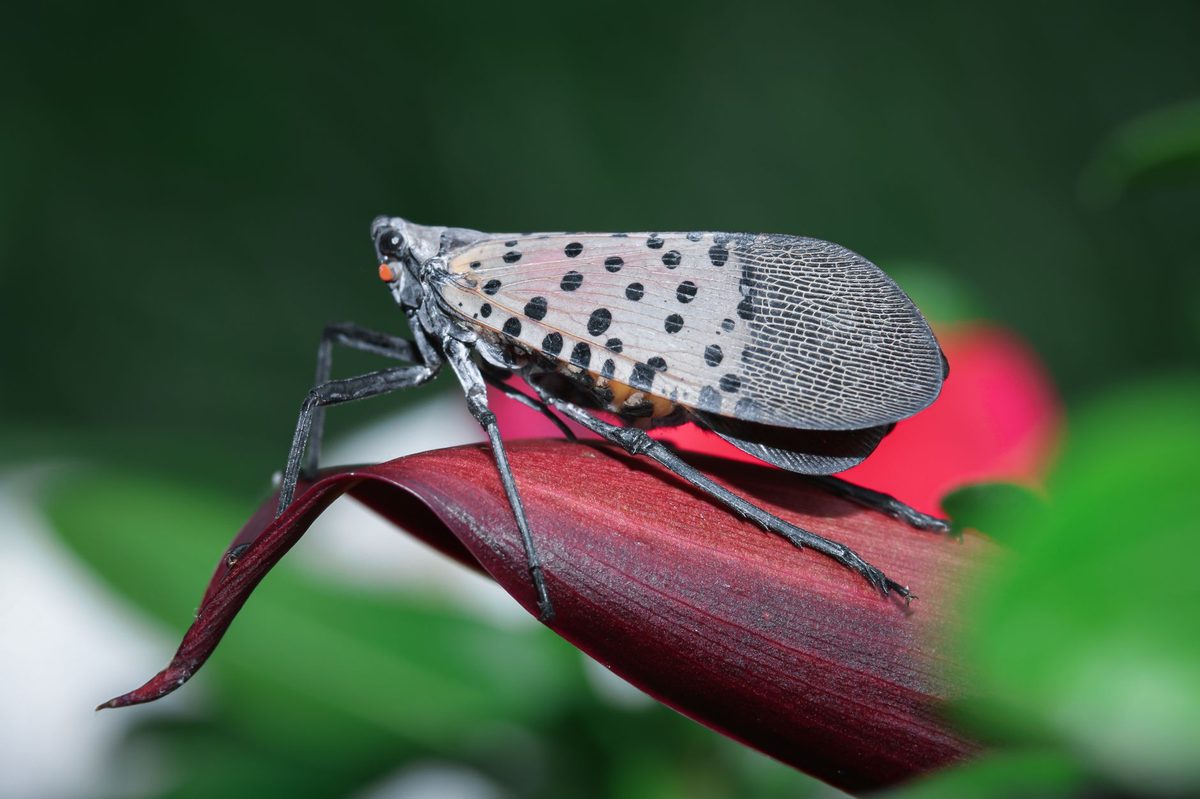
Updated 1 hour agoMassachusetts is asking residents to kill an invasive sap-feeding insect now confirmed in more than 145 of the state's 351 cities and towns. The spotted lanternfly, native to Asia, arrived in the U.S. in 2014 and reached Massachusetts in 2021.
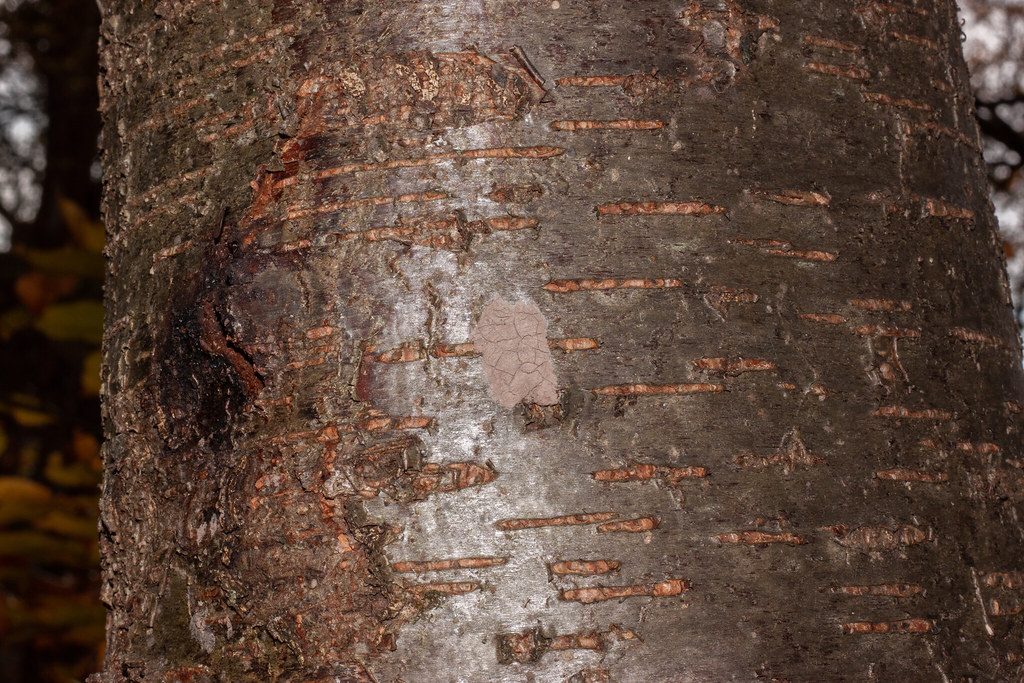
The insects don't bite or sting, but they feed on more than 100 plant species, including grapevines and maple trees. State officials say residents can slow the spread by scraping egg masses off surfaces, vacuuming the insects, and checking vehicles before traveling.
Why it matters
If the spread continues, spotted lanternflies could reach Massachusetts vineyards and maple groves, threatening crops the state's farms depend on.
Questions about this story
Free account needed to ask — your question is kept and asked for you right after sign-up. Answers are public.
No questions yet — be the first to ask.
Key Indicators
Voices
Curated perspectives — historical figures and your fellow readers.
Play
Exploring all sides of a story is often best achieved with Play.
Higher or Lower
A number from this story, against one from elsewhere in the news — guess which is bigger, then keep the chain going. 5 rounds, 3 strikes; a miss costs a strike and resets your streak.
Keyboard: ↓/L lower · ↑/H higher
0 points — sign up to put that on the leaderboard.
Connections
Sixteen names from the news. Find the four hidden groups of four. Four mistakes max.
Sign up to keep a daily streak — a new puzzle lands every day.
Exit debate?
Your progress in this debate will be lost.
- 1 Two AI personas square off on this story.
- 2 You predict who'll win each round — correct picks earn XP.
- 3 One crossfire question is yours to fire. Pick it carefully.
Couldn't generate a topic
Select Your Champions
Choose one persona for each side of the debate
DEBATE TOPIC
Choose personas with different perspectives for a more dynamic debate.
Select debater for this side:
No debate personas available right now.
Select debater for this side:
No debate personas available right now.
Who's Got This Round?
Make your prediction before the referee scores
The referee scores both sides on
Round Results
Set the Crossfire
Pick the question both personas must answer in the final round
Debate Oracle! You called every round!
Sharp Instincts! You know your debaters!
The Coin Flip Strategist! Perfectly balanced!
The Contrarian! Bold predictions!
Inverse Genius! Try betting the opposite next time!
XP Breakdown
Prediction History
People Involved
Organizations Involved
State agency responsible for supporting Massachusetts agriculture and protecting against invasive pests.
Federal agency that coordinates the national response to invasive species, including the spotted lanternfly.
Timeline
September 2014 September 2026
-
Residents urged to kill lanternflies
Today Public AlertMDAR asks residents to kill lanternflies and destroy egg masses as spread reaches 145+ communities.
-
MDAR management update
StatementMDAR updates public on management efforts during National Invasive Species Awareness Week.
-
Hampden County infestation confirmed
DiscoverySpotted lanternfly found in Hampden County, confirming continued western spread.
-
Egg mass warning on nursery stock
WarningMDAR warns egg masses may have been brought in on nursery stock from other states.
-
First known infestation in Worcester County
DiscoveryFirst established spotted lanternfly population found in Massachusetts.
-
Multiple finds across Massachusetts counties
DiscoveryMDAR reports multiple spotted lanternfly finds across several counties, urges public to report.
-
First Massachusetts find
DiscoverySingle dead spotted lanternfly found in Massachusetts.
-
Spotted lanternfly first found in U.S.
DiscoveryFirst U.S. discovery in Berks County, Pennsylvania. Likely arrived on a stone shipment around 2012.
Historical Context
3 moments from history that rhyme with this story — and how they unfolded.
Gypsy moth (spongy moth) in New England (1869)
French scientist Étienne Léopold Trouvelot imported gypsy moths to Medford, Massachusetts for a silkworm experiment in 1869. Some escaped, and the moth spread across the Northeast, defoliating millions of acres of forest.
Massachusetts and other states spent decades attempting control with pesticides and biological agents.
The moth remains established in New England, with periodic outbreaks causing widespread defoliation.
Shows that once an invasive insect becomes established, complete eradication is rarely achieved; long-term management is the realistic goal.
Emerald ash borer reaches the Northeast (2002)
The emerald ash borer, a wood-boring beetle from Asia, was first found in Michigan in 2002. It spread to more than 30 states in under two decades, killing hundreds of millions of ash trees.
Communities spent millions on tree removal and insecticide programs.
Set the template for U.S. responses to invasive wood-boring pests, with quarantine zones and public awareness campaigns.
Shows how an invasive insect can spread rapidly across the U.S. despite control efforts, and how expensive the response becomes.
Asian longhorned beetle in Worcester, MA (2008)
The Asian longhorned beetle was found in Worcester, Massachusetts in 2008. USDA required removal of more than 30,000 infested trees to eradicate the pest.
The beetle was declared eradicated in Massachusetts in 2013 after intensive tree removal.
Set a precedent for aggressive eradication campaigns, showing that early response can contain invasive insects.
Demonstrates Massachusetts has successfully eradicated an invasive insect before, with major intervention and at significant cost.
