
Pull to refresh
Logo
Massachusetts move over law set to cover utility crews and stranded drivers

Massachusetts move over law set to cover utility crews and stranded drivers

Rule Changes Boston, MA local

A compromise bill on Governor Maura Healey's desk would replace the flat $100 fine with a ladder reaching $2,500 and extend the law beyond emergency vehicles and tow trucks.

Overview

Updated 1 hour ago

Massachusetts has required drivers to shift lanes or slow down for police, tow trucks and road crews since 2009. Lawmakers now want that same obligation to cover utility trucks and any driver stranded on the shoulder.

A compromise bill sent to Governor Maura Healey this week would scrap the flat $100 penalty for a ladder that reaches $1,000 on a third offense and $2,500 when a repeat offender injures someone. Healey said she plans to sign it. Supporters point to a 2023 Waltham crash that killed a police officer and a National Grid worker.

Why it matters

Massachusetts drivers who pass a stalled car or a utility crew without slowing could soon face $1,000 fines instead of $100.

Last Monday's email for Boston, MA

Sent Nov 23. It carried:

Get next Monday's: one short email a week. Free. Unsubscribe in one click.

Questions about this story

Free account needed to ask — your question is kept and asked for you right after sign-up. Answers are public.

No questions yet — be the first to ask.

Key Indicators

$2,500
Fine for a repeat offense that injures someone
Applies to a second or later violation that results in injury under the compromise bill.
$1,000
Fine for a third or later offense
Up from a flat $100 maximum under the 2009 law.
23
People killed outside disabled vehicles in Massachusetts, 2019-2025
Figure cited by the lawmakers who wrote the bill.
24
Roadside responders killed per year nationwide
AAA estimate for emergency responders and roadside assistance providers struck on major roadways.

Voices

Curated perspectives — historical figures and your fellow readers.

Sign up to generate historical perspectives on this story.

People Involved

Organizations Involved

Timeline

2009 November 2026

5 events Latest: Yesterday
Tap a bar to jump to that date
  1. Lawmakers agree to widen the law; bill reaches Healey's desk

    Latest Legislation

    The compromise extends the law to utility trucks and any disabled vehicle on the shoulder with hazard or flashing lights, and replaces the flat $100 fine with a tiered schedule.

  2. Healey says she will sign the expansion

    Statement

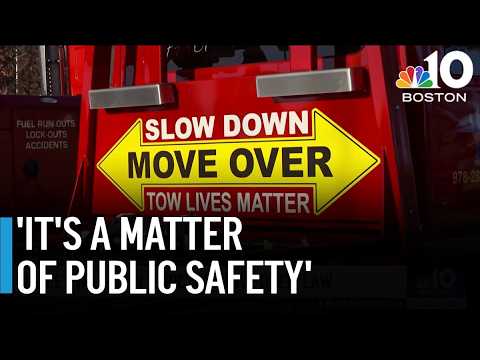
    Asked about the bill at an unrelated event, the governor confirms she plans to sign it and calls it a matter of public safety.

  3. Senate sends compromise bill to the House

    Legislation

    The Senate transmits a compromise version that splits the difference between the two chambers' earlier bills, including the tiered fine schedule.

  4. Waltham roadside crash kills officer and utility worker

    Incident

    Waltham Police Officer Paul Tracey and National Grid worker Roderick Jackson are killed in a crash on a roadside detail. Lawmakers later said work on the expansion dates back about three years to this crash.

  5. Massachusetts passes its move over law

    Legislation

    Drivers must change lanes or slow down for emergency response vehicles, tow trucks and maintenance vehicles with lights on, when safe. Violations carry a fine of up to $100.

Scenarios

1

Healey signs the expanded move over law

Likely Resolves by End of 2026

Discussed by: Governor Maura Healey, who told reporters she plans to sign it; Boston.com

Healey signs the bill, and the new coverage rules and fine schedule take effect on the date the legislation sets. Utility trucks and any disabled vehicle showing hazard or flashing lights join the list of things drivers must move over for or slow down behind, and the Registry of Motor Vehicles picks up the annual awareness campaign requirement.

2

Healey returns the bill with amendments

Unlikely Resolves by End of 2026

Discussed by: No public prediction on record; scenario rests on the governor's amendatory power

Healey sends the bill back to the legislature with changes, most plausibly to the fine schedule or the Registry campaign requirement, forcing another round of votes before anything takes effect. Lawmakers would need to accept the amendments or override before the expansion becomes law.

3

Registry of Motor Vehicles launches the distracted driving campaign

Possible Resolves by End of 2027

Discussed by: Lawmakers who wrote the requirement into the bill text

Once the law is in force, the Registry builds and runs the annual public awareness campaign the bill requires on distracted driving and roadside hazards. The campaign is the piece meant to change behavior before the new fines do, and its launch is the first visible result beyond the statute itself.

Historical Context

2 moments from history that rhyme with this story — and how they unfolded.

2009

Massachusetts enacts its move over law (2009)

Massachusetts joined the states requiring drivers to change lanes or slow down when passing emergency response vehicles, tow trucks and maintenance vehicles with lights flashing, when it was safe to do so. Violators faced a fine of up to $100.

Then

The law set a single, flat penalty and covered a fixed list of vehicles tied to official roadside work.

Now

It stayed largely unchanged for 17 years. Lawmakers behind the expansion counted 23 people killed while standing outside disabled vehicles in Massachusetts between 2019 and 2025, a group the 2009 text did not cover.

Why this matters now

The current bill keeps the 2009 structure and widens who it protects, adding utility crews and ordinary stranded drivers to the list.

2023

Waltham roadside crash (2023)

Waltham Police Officer Paul Tracey and National Grid worker Roderick Jackson were killed in a crash while working a roadside detail in Waltham. Both articles identify the crash as the origin of the expansion effort.

Then

Lawmakers began drafting the bill, a process WBUR reported dates back about three years to the crash.

Now

Tracey's family recently filed a wrongful death lawsuit against National Grid over the crash. When legislative leaders announced the agreement, they cited the Waltham deaths directly.

Why this matters now

The crash explains why utility workers, not just police and tow operators, are the group the bill adds to the protected list.

Sources

(2)