

Pull to refresh
Logo
Supreme Court orders New York to defend its stun gun ban

Supreme Court orders New York to defend its stun gun ban

Rule Changes

Calce v. New York could become the third major Second Amendment case on the 2026-27 docket

Today: Supreme Court orders New York City to respond

Overview

Updated 1 hour ago

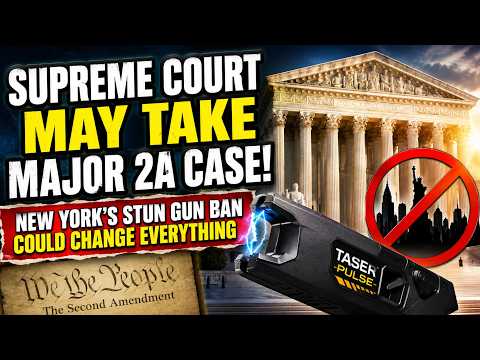
The Supreme Court told New York City on Sept. 13 to explain why its stun gun ban should stand. The order responds to Calce v. New York, a petition challenging the city's prohibition on electronic weapons like tasers and stun guns.

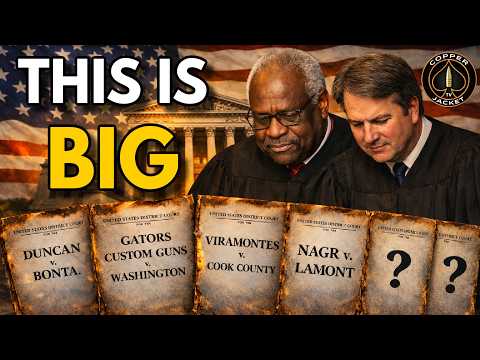
The case echoes Caetano v. Massachusetts, the 2016 ruling where the Court struck down an almost identical ban. If the Court grants review, Calce joins two other gun cases already on the docket, giving the 2026-27 term the heaviest Second Amendment workload in years.

Why it matters

A ruling that stun guns are protected arms could erase similar bans in states that still keep them.

Questions about this story

Free account needed to ask — your question is kept and asked for you right after sign-up. Answers are public.

No questions yet — be the first to ask.

Key Indicators

3
Second Amendment cases on the 2026-27 docket
Calce would join Viramontes v. Cook County and Grant v. Higgins if cert is granted.
Oct 8, 2026
Deadline for New York's response
The city must file its brief opposing certiorari by this date.
Oct 15, 2026
Conference where cert could be decided
The justices could grant or deny review at this private conference.

Voices

Curated perspectives — historical figures and your fellow readers.

Ever wondered what historical figures would say about today's headlines?

Sign up to generate historical perspectives on this story.

People Involved

Organizations Involved

Timeline

March 2016 October 2026

7 events Latest: Today
Tap a bar to jump to that date

Scenarios

1

Supreme Court grants cert in Calce v. New York

Likely Resolves by Nov 30, 2026

Discussed by: Jonathan Turley (Turley.org), Concealed Republican, Firearm For You

The order for a response signals interest, and the Caetano precedent makes denial hard to square. If cert is granted, Calce joins Viramontes v. Cook County and Grant v. Higgins, giving the Court three Second Amendment cases in one term. Merits briefing and argument would follow, with a decision likely by June 2027.

2

Court summarily reverses or vacates the Second Circuit

Possible Resolves by Q2 2027

Discussed by: Jonathan Turley (Turley.org), gun-rights advocates

As in Caetano, the Court could dispose of Calce without full briefing. It might issue a summary reversal or grant, vacate, and remand in light of its pending Viramontes decision. Either route would resolve the case faster than full merits review.

3

Court denies cert, Second Circuit stands

Unlikely Resolves by Nov 30, 2026

Discussed by: None publicly predicting this outcome

The Court could deny review, letting the Second Circuit's affirmance stand and keeping New York City's ban in place. That outcome would sit uneasily with Caetano and might depend on how the Court rules in Viramontes. The order for a response makes this the least likely path.

Historical Context

2 moments from history that rhyme with this story — and how they unfolded.

June 2008

District of Columbia v. Heller (2008)

The Court struck down Washington, D.C.'s handgun ban, ruling the Second Amendment protects an individual right to keep and bear arms for self-defense. The majority tied protection to weapons 'in common use' for lawful purposes.

Then

D.C.'s handgun ban fell, and the right was applied to the states two years later in McDonald v. Chicago.

Now

Created the 'common use' test that now drives the fight over which arms get Second Amendment protection.

Why this matters now

The 'common use' test is the battleground in Calce. New York City argues stun guns aren't in common use, while the petition says that test applies only after the plain text already covers the arms.

March 2016

Caetano v. Massachusetts (2016)

Jamie Caetano was convicted for carrying a stun gun in Massachusetts, where possession was a felony. The state's highest court upheld the ban. The U.S. Supreme Court vacated it in a unanimous unsigned ruling, saying stun guns are 'bearable arms' protected by the Second Amendment.

Then

Massachusetts and other states had to reconsider stun gun restrictions in light of the ruling.

Now

Established that the Second Amendment covers arms beyond firearms, including electronic weapons, even ones not in common use at the founding.

Why this matters now

Calce challenges a stun gun ban nearly identical to the one Caetano struck down a decade ago. New York City's argument that stun guns fall outside the plain text is the same position Caetano rejected.

Sources

(6)