
Pull to refresh
Logo
Franciscan Outreach opens 120-bed shelter in converted West 21st Street building

Franciscan Outreach opens 120-bed shelter in converted West 21st Street building

Built World Chicago, IL local

A vacant 45,000-square-foot building becomes permanent congregate and non-congregate shelter through a city acquisition program

Overview

Updated 1 hour ago

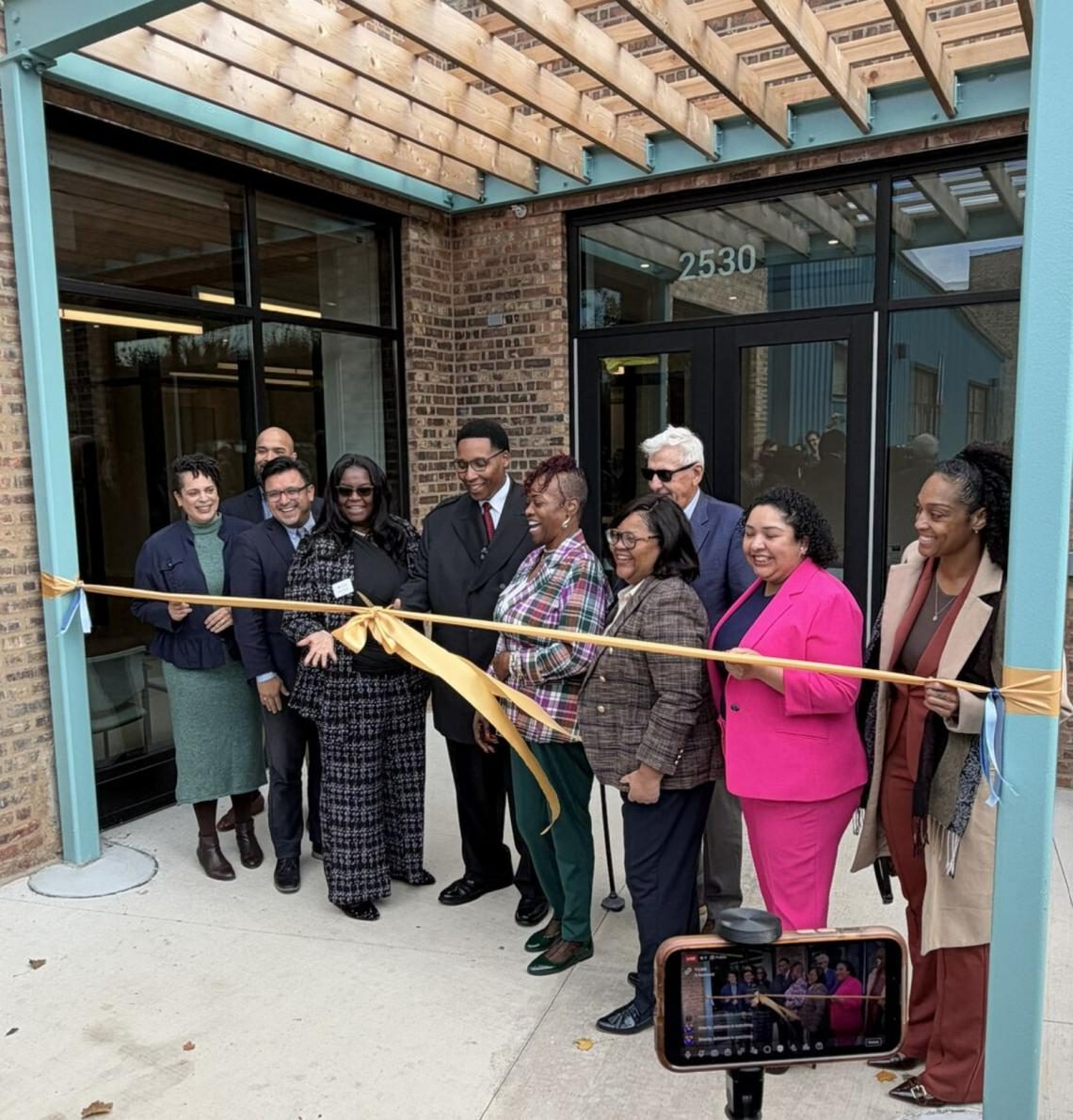
Franciscan Outreach opened a 120-bed shelter at 2508 W. 21st St. on Nov. 20, filling a vacant 45,000-square-foot building on a midblock site between South Rockwell Street and South Western Avenue. The building now holds congregate dormitory space, non-congregate rooms and on-site support-service areas. City officials attended the ribbon cutting.

Since 2020, Chicago has assembled much of its shelter capacity by leasing hotel rooms and standing up temporary sites. This is the other kind: a building a nonprofit now controls, designed for the purpose, meant to stay. Fixed capacity holds up in a cold snap. It is also harder to shrink when demand falls.

Why it matters

Chicago is turning emergency shelter into permanent buildings. These 120 beds will outlast the crisis that prompted them, for better and worse.

Last Monday's email for Chicago, IL

Sent Nov 16. It carried:

Get next Monday's: one short email a week. Free. Unsubscribe in one click.

Questions about this story

Free account needed to ask — your question is kept and asked for you right after sign-up. Answers are public.

No questions yet — be the first to ask.

Key Indicators

120
Shelter beds
Congregate and non-congregate beds at 2508 W. 21st St.
45,000 sq ft
Building size
Footprint of the vacant building converted for shelter and services.
Two shelter models
Congregate and non-congregate
The building pairs shared dormitory space with separate rooms.

Voices

Curated perspectives — historical figures and your fellow readers.

Sign up to generate historical perspectives on this story.

Organizations Involved

Timeline

1 event Latest: Today
  1. Ribbon cut on 120-bed shelter at 2508 W. 21st St.

    Today Opening

    Franciscan Outreach and city officials celebrate the conversion of a vacant 45,000-square-foot building into congregate and non-congregate shelter with on-site services.

Scenarios

1

Shelter reaches full occupancy during the 2026-27 winter

Likely Resolves by Q1 2027

Discussed by: Shelter operators and city housing officials, who track nightly bed use as temperatures drop

Cold weather drives demand and the 120 beds fill. Full occupancy would establish the building as core capacity rather than overflow, and would give Franciscan Outreach a case for expanded service funding.

2

City funds a second building conversion under the same program

Possible Resolves by End of 2027

Discussed by: Chicago housing-policy analysts watching whether the acquisition program scales past its first projects

If this conversion runs smoothly, the Department of Housing commits acquisition money to another vacant building. The program's value depends on repeatability: one shelter is a project, a pipeline is a policy.

3

Budget pressure cuts beds or service hours at the new shelter

Possible Resolves by Q2 2027

Discussed by: Nonprofit providers and city budget analysts who note shelter contracts are among the first lines trimmed when revenue falls short

A city or federal funding gap forces Franciscan Outreach to reduce overnight capacity or weekday service hours. Fixed buildings carry fixed costs, so a cut shows up as fewer usable beds rather than a closed lease.

Historical Context

2 moments from history that rhyme with this story — and how they unfolded.

2020-2022

Chicago's pandemic hotel shelters (2020)

To thin out crowded dormitories during the COVID-19 pandemic, Chicago leased hotel rooms and moved people experiencing homelessness into them. The arrangement gave each person a private room and slowed transmission in congregate sites.

Then

The city rented rooms rather than buying buildings, so the capacity existed only as long as the leases ran.

Now

Most leases ended and the rooms returned to the hotel market, leaving Chicago without a permanent supply of non-congregate shelter.

Why this matters now

The acquisition program behind the 2508 W. 21st St. shelter is the attempt to keep non-congregate capacity without renting it by the night.

2022-2024

Asylum-seeker shelter buildout (2022-2024)

Chicago received tens of thousands of migrants bused from Texas and scrambled to shelter them, first at police stations and park facilities, then at large congregate sites across the city. The system expanded faster than any previous buildout.

Then

The city opened and staffed large temporary shelters on short notice, at significant cost.

Now

Arrivals fell sharply by 2025 and the city began closing sites, leaving a shelter system sized for a surge it no longer had.

Why this matters now

The boom-and-bust showed how fast shelter demand can move. Buying and converting buildings is slower than renting, but the capacity does not disappear when a contract ends.

Sources

(1)