





Pull to refresh
Logo
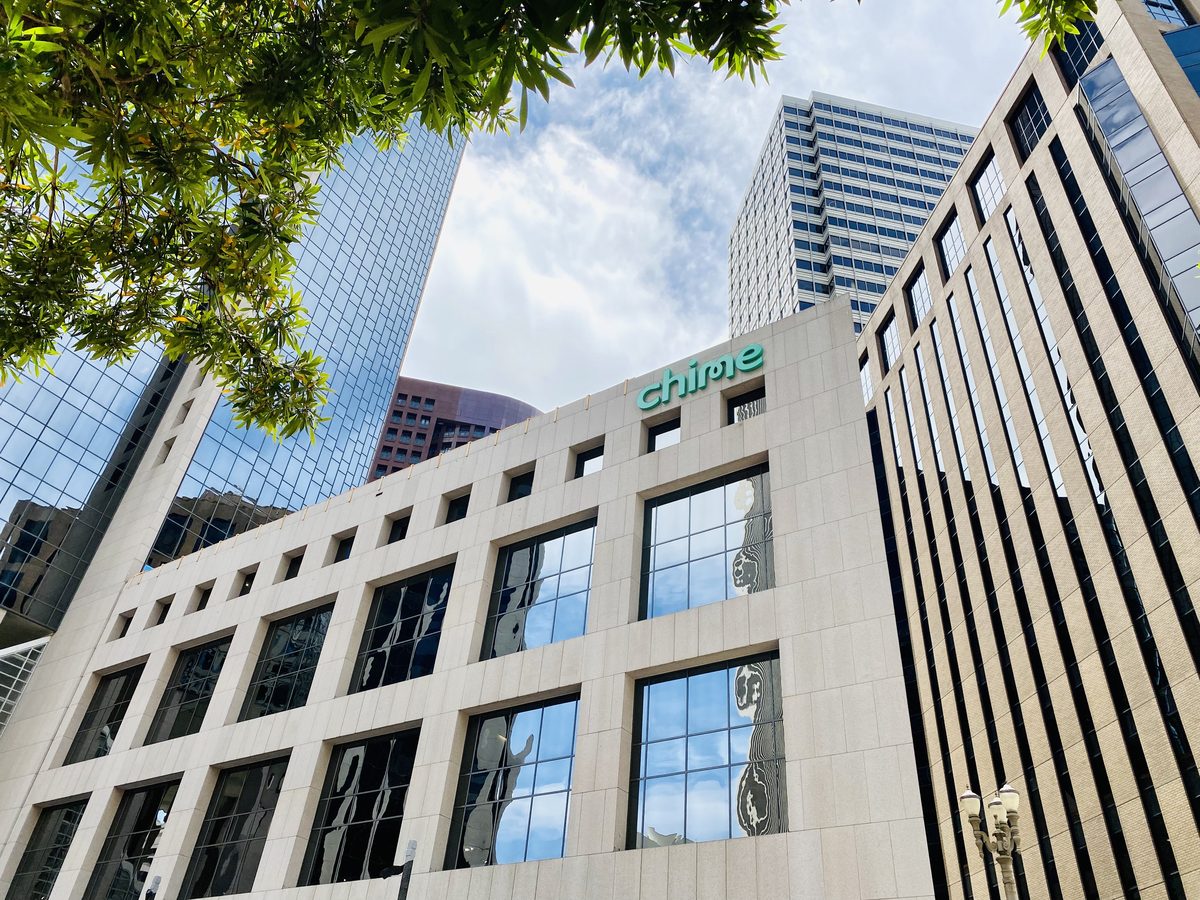
Chime joins the S&P MidCap 400 by filling a merger vacancy

Chime joins the S&P MidCap 400 by filling a merger vacancy

Money Moves

Three straight profitable quarters made the fintech eligible. Black Hills' purchase of NorthWestern opened the seat.

Overview

Updated 2 hours ago

On November 18, every fund that tracks the S&P MidCap 400 has to own Chime Financial. The index provider is adding the fintech to replace NorthWestern Energy, which is being acquired by Black Hills Corp. The seat opened because a merger removed a member, not because a committee judged Chime.

The forced buying is real but small: roughly $120 million to $360 million, or one to three days of Chime's normal trading volume. Underneath it, a more consequential change is underway. Chime has posted three consecutive quarters of GAAP profit as its business shifts from swipe fees on no-fee checking to lending.

Why it matters

Index funds must buy $120 million to $360 million of Chime by November 18. That is mechanical demand, not proof its lending profits last.

Questions about this story

Free account needed to ask — your question is kept and asked for you right after sign-up. Answers are public.

No questions yet — be the first to ask.

Key Indicators

$44M
Third-quarter 2026 GAAP net income
Chime's third consecutive quarter of profit on a GAAP basis.
$718M
Third-quarter 2026 revenue
Up 32% from a year earlier, faster than the 27% growth in the second quarter.
32%
Year-over-year revenue growth
Fourth-quarter guidance implies growth slows to 27% to 29%.
10.9M
Active members
Up 20% year over year.
$270
Annualized revenue per active member
Up 10% year over year.
~$12B
Market value before the index announcement
Roughly half the $25 billion private valuation Chime carried in 2021.
3.97M
Average daily trading volume
About $120 million a day at $30 a share.
0.3–0.4%
Estimated index weight
S&P does not publish expected index flows; this is an analyst estimate.

Voices

Curated perspectives — historical figures and your fellow readers.

Sign up to generate historical perspectives on this story.

People Involved

Organizations Involved

Timeline

June 2025 November 2026

5 events Latest: 2 days ago
Tap a bar to jump to that date
  1. S&P adds Chime to MidCap 400, replacing NorthWestern

    Latest Index change

    The change takes effect before the open on November 18; Chime rose 1.8% after hours.

  2. Chime reports third straight GAAP profit

    Earnings

    Net income was $44 million on $718 million of revenue, up 32%; the company raised guidance.

  3. Chime agrees to buy Stride Bank for $590 million

    Acquisition

    The purchase of its seven-year bank partner would give Chime a national charter and control over lending.

  4. Black Hills and NorthWestern announce all-stock merger

    Merger

    NorthWestern holders receive 0.98 Black Hills shares each; Black Hills holders would own about 56% of the combined company.

  5. Chime prices IPO at $27, opens at $43

    Market

    The offering valued Chime below its 2021 private mark; the stock later fell under the IPO price.

Scenarios

1

Chime's index pop fades within a month

Possible Resolves by Dec 18, 2026

Discussed by: AInvest and The Inference

Index funds must buy by the close on November 17, but the deadline is public and traders can front-run it. AInvest estimates the forced buying at one to three days of normal volume, while The Inference reports DST Global filings showing $433 million of Chime sales since August 19. If those sellers offset the index bid, the stock gives back its post-announcement gain.

2

Fourth quarter confirms Chime's profit is durable

Likely Resolves by Feb 28, 2027

Discussed by: AInvest

Chime's guidance points to $757 million to $767 million of fourth-quarter revenue and continued margin expansion. If GAAP net income stays positive while credit grows as a share of purchase volume, the three-quarter profit streak starts to look structural rather than a one-off.

3

Credit losses outrun Chime's take rate

Possible Resolves by Feb 28, 2027

Discussed by: AInvest

Credit reached 29% of purchase volume in the third quarter, nearly double a year earlier. Higher take rates help until borrowers start missing payments. If first-time losses climb faster than the net take rate, the $44 million quarterly profit looks cyclical and the 68-times-earnings valuation becomes harder to defend.

4

Stride deal closes, putting the interchange exemption in play

Likely Resolves by Q2 2027

Discussed by: AInvest

Chime agreed to buy Stride Bank in September 2026 and expects the deal to close in the first half of 2027, subject to regulatory approval. A national charter gives Chime more control over lending, but growing the balance sheet past $10 billion would end the debit-interchange exemption that helps fund its no-fee accounts. Management says it will stay below that line for the foreseeable future.

Historical Context

2 moments from history that rhyme with this story — and how they unfolded.

June 2025

Chime's initial public offering (2025)

Chime priced its IPO at $27 a share, opened at $43 and closed near $37, valuing the company between $11.6 billion and $15 billion. That was well below the $25 billion private valuation it carried in 2021.

Then

The stock drifted lower, closing at $21.82 in July 2026, about 19% below the IPO price.

Now

The decline raised pressure to show sustainable profit, which Chime did through three profitable quarters in 2026.

Why this matters now

Index inclusion is a partial recovery from that post-IPO slide, not a return to the 2021 peak.

December 2020

Tesla joins the S&P 500 (2020)

S&P Dow Jones Indices announced in November 2020 that Tesla would join the S&P 500 before trading on December 21. Funds tracking the index had to buy the shares by that date, and Tesla's stock had already risen sharply during the year.

Then

Shares moved up into the addition as index funds bought.

Now

The episode became a reference point for how quickly traders anticipate index changes, reducing the size of the pop.

Why this matters now

Chime's 1.8% after-hours gain fits that pattern: the buying deadline is known, so much of the demand is priced in before it happens.

Sources

(9)