
Pull to refresh
Logo
China shifts its main policy rate to an overnight lending rate

China shifts its main policy rate to an overnight lending rate

Rule Changes

The People's Bank of China will steer short-term borrowing costs with a daily 1.25% overnight reverse repo, replacing the seven-day rate it used for years.

Overview

Updated 1 hour ago

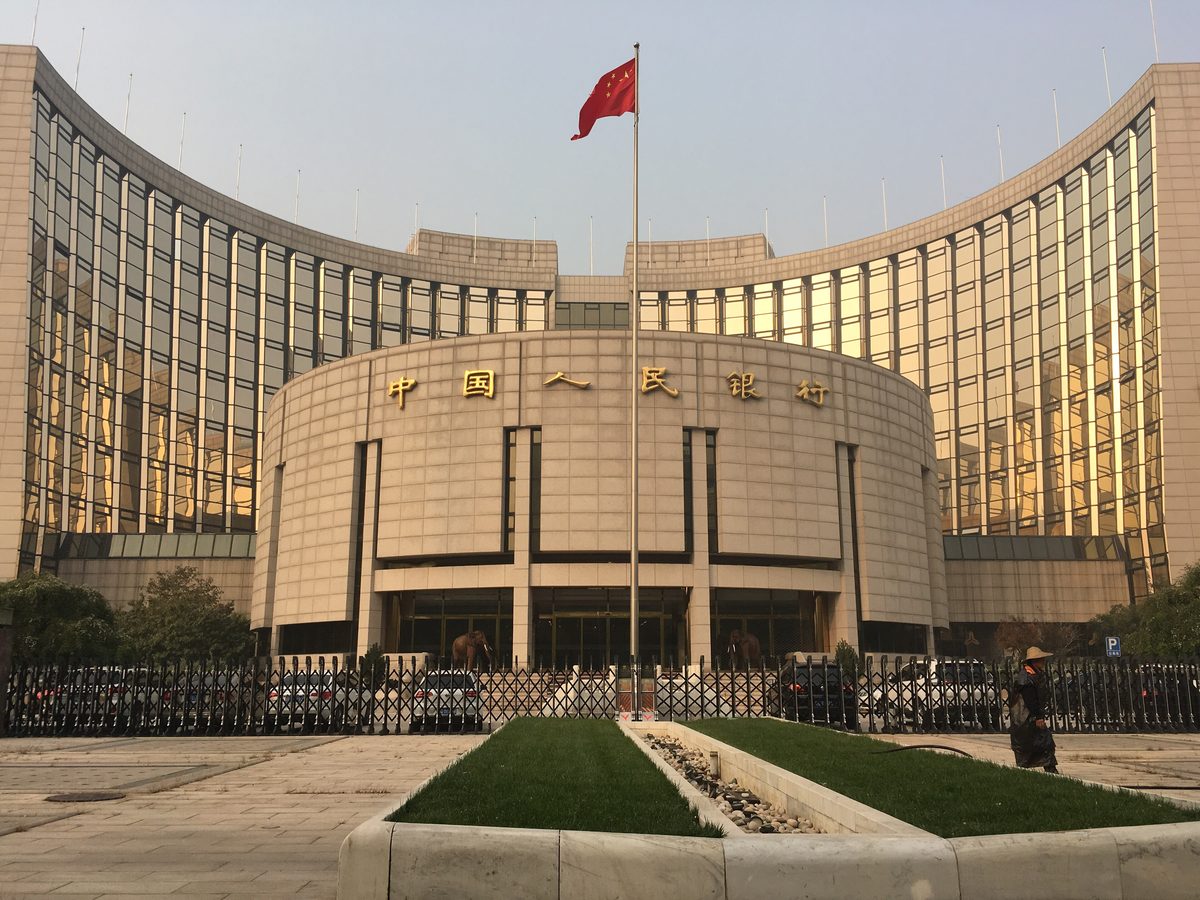
China's central bank now sets the price of overnight money every business day. Starting Nov. 2, the People's Bank of China conducts overnight reverse repurchase agreements at 1.25% and treats that rate as its main policy signal, replacing the seven-day rate it had used as its anchor.

The change is a framework overhaul, not a rate cut. But the overnight rate sits about 15 basis points below the old seven-day anchor, so analysts say it lowers the floor for bank funding and should pull bond yields lower.

Why it matters

A lower floor for short-term funding in the world's second-largest economy can reach banks, bond yields and eventually loan rates.

Questions about this story

Free account needed to ask — your question is kept and asked for you right after sign-up. Answers are public.

No questions yet — be the first to ask.

Key Indicators

1.25%
Overnight reverse repo rate
The new main policy rate, set daily by the People's Bank of China.
¥541B
Cash injected on day one
Overnight reverse repos pumped 541 billion yuan ($81.3 billion) into banks on Nov. 2.
15 bp
Effective floor reduction
Analysts say the overnight anchor lowers the interest-rate framework's floor by about 15 basis points.
90%
Overnight share of money-market trading
Overnight transactions dominate daily money-market activity, which is why the PBOC moved its anchor.
3.0%
One-year loan prime rate
The main loan benchmark, unchanged for 17 months as of October 2026.

Voices

Curated perspectives — historical figures and your fellow readers.

Sign up to generate historical perspectives on this story.

People Involved

Organizations Involved

Timeline

October 2026 November 2026

5 events Latest: Today
Tap a bar to jump to that date
  1. Overnight rate becomes the main policy anchor

    Today Implementation

    The PBOC injects 541 billion yuan ($81.3 billion) through overnight reverse repos at 1.25%, formally making the overnight rate its main policy signal.

  2. PBOC publishes formal operating notice

    Rule Change

    The notice sets the overnight reverse repo rate at 1.25%, recasts seven-day operations as a seasonal tool, and re-anchors other facilities to the overnight rate with unchanged spreads.

  3. PBOC flags daily overnight operations

    Announcement

    The central bank says it will conduct overnight reverse repos every business day and switch seven-day operations to multiple rates from a single fixed one.

  4. PBOC opens nine-day overnight repo window

    Operations

    The PBOC runs overnight reverse repos from Oct. 21 to Nov. 2, capped at 1 trillion yuan a day, to smooth tax and month-end funding pressures.

  5. PBOC governor signals overnight rate shift

    Statement

    Pan Gongsheng says the PBOC will study moving its main open-market operations from seven-day to overnight transactions "at an appropriate time."

Scenarios

1

No LPR cut before mid-2027

Likely Resolves by Q2 2027

Discussed by: Citi analysts

Citi called the switch a mark-to-market adjustment rather than a de facto rate cut and said it did not expect a Loan Prime Rate cut to follow in November. The bank sees 2027 as the more likely window for rate cuts, with renewed credit concerns reinforcing local debt-resolution efforts and keeping liquidity loose in the interim.

2

PBOC cuts its policy rate by end-2027

Possible Resolves by End of 2027

Discussed by: Capital Economics

Capital Economics said the shift gives the PBOC better control over short-term funding but should not be read as easing. It forecasts just 20 basis points of policy rate cuts by end-2027, as the central bank balances competing objectives.

3

DR001 settles near the new anchor

Likely Resolves by Q1 2027

Discussed by: Wen Bin of Minsheng Bank and the PBOC

The PBOC's stated aim is to keep DR001, the market-traded overnight repo rate, close to the 1.25% policy rate with lower volatility. If it works, the overnight rate becomes a steadier signal through tax periods and month-ends.

Historical Context

3 moments from history that rhyme with this story — and how they unfolded.

June 2014

European Central Bank moves to an overnight anchor (2014)

The European Central Bank cut its deposit facility rate below zero and made that overnight rate its main policy signal, shifting emphasis away from its weekly refinancing operations. It was the first major central bank to take a key policy rate negative.

Then

The deposit rate became the benchmark for euro-area money markets.

Now

The ECB has kept an overnight rate as its primary tool since, including through later tightening cycles.

Why this matters now

Shows a major central bank re-anchoring policy to an overnight rate, the direction China is now taking.

August 2019

China's LPR reform (2019)

The PBOC revamped the Loan Prime Rate, tying it to the medium-term lending facility and making it the main benchmark for corporate and household loans. The goal was to improve how policy rates reached borrowing costs.

Then

The LPR replaced the old benchmark lending rate as the reference for new loans.

Now

The LPR became the anchor for mortgage and corporate pricing, though its link to actual lending conditions weakened over time.

Why this matters now

The overnight switch is the next step in the same effort: making the policy rate a clearer signal for market rates.

1980s-present

Federal Reserve targets the overnight federal funds rate (1980s-present)

The Federal Reserve sets a target range for the overnight federal funds rate, the rate banks charge each other for overnight loans. It is the main tool of U.S. monetary policy.

Then

The fed funds rate became the benchmark for U.S. short-term borrowing.

Now

Most major central banks now steer an overnight rate, making China's shift a convergence with standard practice.

Why this matters now

China is adopting the operating framework long used by the Fed and other major central banks.

Sources

(6)