In December 2025, a newly formed Chinese state institute filed for 200,000 satellites with the ITU (International Telecommunication Union), claiming spectrum priority for the largest constellation ever proposed. Under ITU rules, early filers get priority on orbital slots and radio frequencies—buying options in the race against American dominance of low Earth orbit.
Since the December 2025 filing, Beijing warned the UN in January 2026 that Starlink poses safety risks—diplomatic cover while both constellations kept growing. By July 2026, Qianfan had 238 satellites across 14 batches; Guowang stood at 168 in April, targeting 310 by year-end. Brazil authorized Qianfan for commercial service in February, with first customers expected Q4 2026.
Why it matters
The satellites carrying your internet may soon come from Chinese infrastructure—and no one has written the rules for who controls orbital space.
Questions about this story
Free account needed to ask — your question is kept and asked for you right after sign-up. Answers are public.
No questions yet — be the first to ask.
Key Indicators
200,000+
Satellites filed
Total satellites in China's December 2025 ITU filings, dominated by two 96,714-satellite constellations
~10,000
Active satellites today
Current number of operational satellites globally; Starlink alone has passed 10,000 in orbit, accounting for roughly 65% of the total
14 years
Deployment window
Time China has under ITU rules to deploy or forfeit spectrum rights
500+/week
Required launch rate
Satellites per week China would need to deploy to meet the 14-year deadline
20 events
Latest: May 12th, 2026 · 5 months ago
Showing 8 of 20
JK to step
Tap a bar to jump to that date
Jump to
May 2026
Qianfan Eighth Satellite Group Reaches Orbit
LatestLaunch
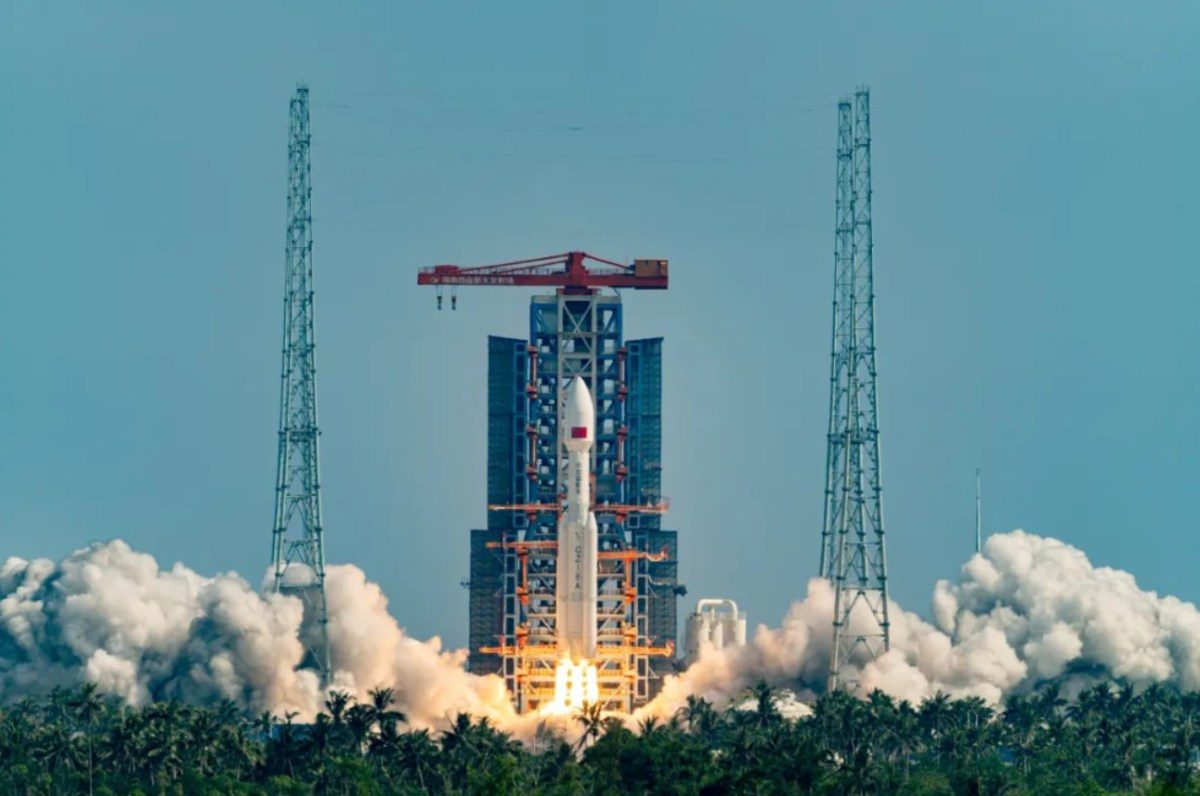
Long March 6A placed 18 Qianfan satellites in near-polar orbit from Wenchang, the constellation's eighth dedicated deployment.
April 2026
China Runs Consecutive Launches for Qianfan and Guowang
Launch
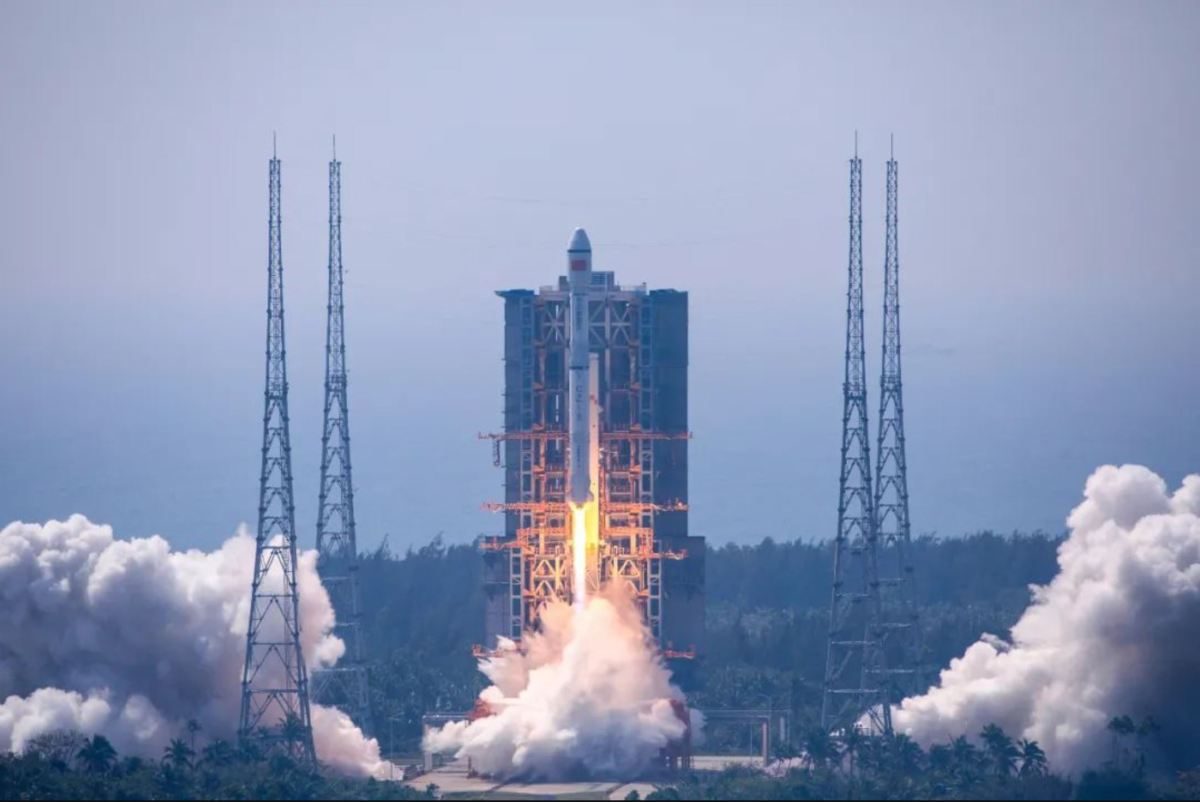
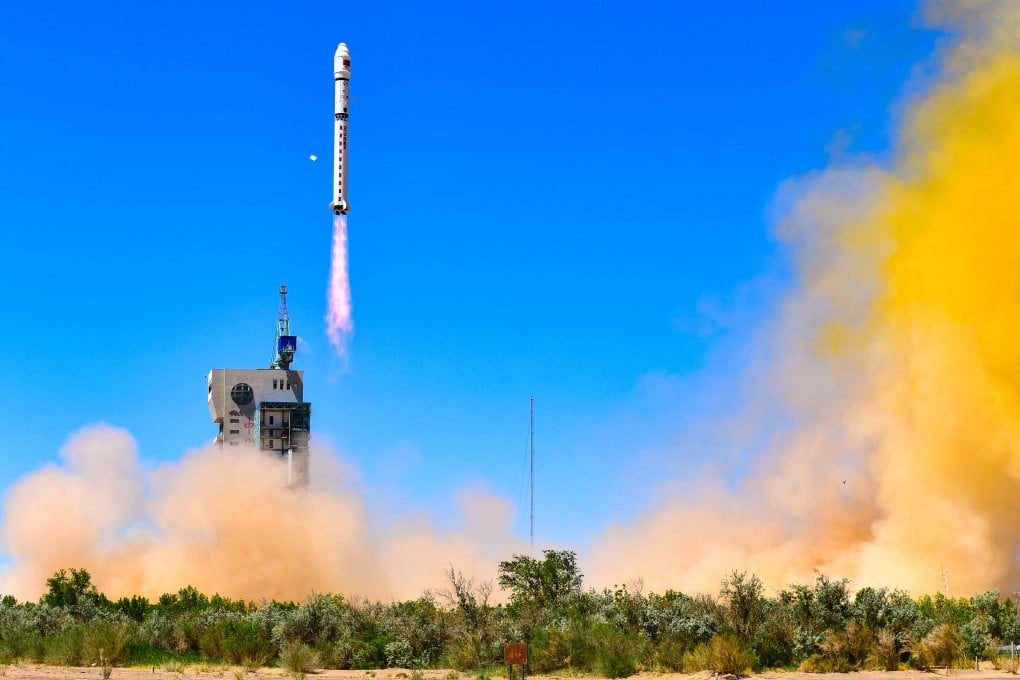
A Long March 8 lifted Qianfan's seventh satellite group on April 7. A Long March 6A followed with Guowang's 21st mission on April 8, pushing Guowang to 168 operational satellites.
March 2026
US Congress Plans WRC-27 Preparatory Hearings
Regulatory
House and Senate Communications subcommittees both scheduled hearings on US preparations for WRC-27, which convenes in Shanghai in October 2027. Megaconstellation coordination rules are among WRC-27's agenda items.
Qianfan Operator Invests in Sea Launch to Expand Access
Corporate
SSST bought an equity stake in a Shanghai-based sea launch company, securing priority customer status for future launches. The move hedges against limited availability on land-based rockets as Qianfan ramps toward 4,000 satellites per year.
February 2026
Starlink Passes 10 Million Subscribers
Milestone
SpaceX reached 10 million paying subscribers across 160 countries, adding the last million in 53 days. The service more than doubled its user base in roughly one year.
Brazil Authorizes Qianfan for Commercial Service
Regulatory
Brazil's telecommunications regulator Anatel approved Qianfan to provide broadband in South America through state telecom firm Telebras, targeting schools and hospitals in underserved regions. Commercial service is expected by Q4 2026.
January 2026
FCC Approves 7,500 More Starlink Satellites
Regulatory
SpaceX receives authorization for additional Gen2 satellites, bringing total approved to 15,000, days after China's massive filing.
China Warns UN of Starlink Safety and Security Risks
Diplomatic
Beijing told an informal UN Security Council session that Starlink poses safety and security risks. China cited a recent Starlink satellite disintegration that generated over 100 debris fragments and the 2021 near-misses with China's space station.
December 2025
Radio Innovation Institute Officially Registered
Corporate
The entity behind the massive filings is formally established in Xiong'an, one day after submitting applications, backed by seven state organizations.
China Files 200,000-Satellite Megaconstellation with ITU
Filing
Radio Innovation Institute submits CTC-1 and CTC-2 applications for 193,428 satellites across 7,320 orbital planes, plus additional filings from China Mobile and others.
China Completes 90th Launch of 2025
Launch
Record-breaking launch year includes 17th Guowang mission, far surpassing 2024's 68 launches.
Guowang Surpasses Qianfan as China's Largest Constellation
Milestone
With 113 satellites deployed, state-owned Guowang overtakes Shanghai-backed Qianfan for second time.
November 2025
Space Debris Forces China's First Emergency Crew Mission
Incident
Shenzhou-20 astronauts discover debris damage to viewport, triggering first emergency launch in China's human spaceflight program.
August 2025
ZhuQue-2E Failure Destroys Four Guowang Prototypes
Incident
Electrical arc discharge causes rocket anomaly, resulting in loss of four prototype Guowang satellites.
February 2025
Long March 8A Debuts for Guowang Deployment
Launch
New rocket variant begins regular Guowang launches, carrying 9 satellites per mission.
August 2024
China Launches First Qianfan Satellites
Launch
Shanghai Spacecom deploys first batch of Qianfan (G60) constellation, creating a second Chinese megaconstellation alongside state-owned Guowang.
July 2021
China's Space Station Maneuvers to Avoid Starlink
Incident
Tiangong performs first of two collision avoidance maneuvers in 2021 due to Starlink satellites, prompting China to file complaint with UN.
April 2021
China Establishes State Satellite Internet Company
Corporate
State Council creates China Satellite Network Group (China SatNet), headquartered in Xiong'an New Area, to build China's answer to Starlink.
September 2020
China Files Initial Guowang Constellation with ITU
Filing
China Satellite Network Group files for approximately 13,000 satellites in two sub-constellations (GW-A59 and GW-2), marking China's official entry into the LEO megaconstellation race.
November 2019
ITU Adopts Megaconstellation Deployment Rules
Regulatory
WRC-19 establishes milestone-based requirements: 10% deployment in 2 years, 50% in 5 years, 100% in 7 years after initial deadline, to prevent spectrum warehousing.
Scenarios
1
Strategic Placeholder: Filings Secure Options, Deployment Scaled Back
Likely
Discussed by: SpaceNews, industry analysts, ITU experts
China uses the filings to establish spectrum priority but deploys far fewer satellites. The 200,000 figure serves as a negotiating position and defensive claim, preventing Western operators from crowding out Chinese options. Actual deployment could follow existing Guowang and Qianfan plans (15,000-30,000 satellites combined) while the CTC filings provide flexibility for future expansion. This matches the pattern of previous ITU filings that claimed more capacity than operators intended to use.
2
Accelerated Deployment: China Races to Fill Orbits
Possible
Discussed by: Chinese state media, Everbright Securities, commercial space analysts
Beijing treats the filing as a genuine deployment target, accelerating launch infrastructure and satellite manufacturing. New commercial launch sites at Wenchang (doubling capacity in 2026), reusable rockets from Landspace and others, and expanded state investment could enable deployment rates approaching Starlink's. This would require sustained political commitment and funding exceeding current commercial space budgets, but aligns with 'satellite internet' designation as national strategic infrastructure.
3
Regulatory Standoff: ITU Framework Tested by Competing Claims
Possible
Discussed by: Space law experts, UN COPUOS observers, telecommunications regulators
China's massive filings prompt challenges from other operators and trigger debate over ITU first-come-first-served principles. Western nations could argue the filings constitute spectrum warehousing despite technical compliance. The 2027 World Radiocommunication Conference could revise milestone requirements or coordination procedures. Outcomes range from tightened rules affecting all operators to fragmentation of the international spectrum allocation system.
4
Orbital Congestion Crisis: Collision Risks Force Coordination
Uncertain
Discussed by: ESA, LeoLabs, University of Southampton researchers, Kessler syndrome analysts
With Starlink already performing 144,000 collision avoidance maneuvers in six months and debris researchers warning LEO is already unstable between 520-1,000 km altitude, any large-scale deployment intensifies collision risks. A significant collision or cascade event could force international coordination requirements beyond current ITU frameworks, potentially including mandatory debris mitigation, capacity limits, or shared space traffic management. This scenario becomes more likely regardless of who deploys, but China's filing heightens urgency.
Historical Context
3 moments from history that rhyme with this story — and how they unfolded.
1 of 3
March-November 2020
OneWeb Bankruptcy and Revival (2020)
OneWeb, backed by SoftBank, filed for bankruptcy in March 2020 with 74 satellites deployed and $3.4 billion spent. The company had spectrum filings for 648 satellites but couldn't sustain launch costs. A UK government-led consortium acquired it for $1 billion in November, and the company eventually merged with Eutelsat in 2023.
Then
OneWeb's spectrum rights were preserved through the acquisition, allowing deployment to continue under new ownership.
Now
Demonstrated that ITU filings alone don't guarantee deployment—financial viability and launch capacity matter more than regulatory priority.
Why this matters now
China's 200,000-satellite filing faces the same fundamental constraint: filings create options, but actual deployment requires sustained funding and launch infrastructure that may not materialize at the scale claimed.
2 of 3
November 2019
ITU WRC-19 Milestone Rules (2019)
At the World Radiocommunication Conference in Sharm el-Sheikh, 193 countries adopted milestone-based deployment requirements for megaconstellations. Previously, operators could reserve spectrum indefinitely by launching a single satellite within seven years. The new rules require 10% deployment in 2 years, 50% in 5 years, and 100% in 7 years after initial deadline—or lose rights proportionally.
Then
Operators faced pressure to accelerate deployment schedules or risk forfeiting spectrum claims.
Now
Created the 14-year framework China is now using—long enough for strategic positioning, short enough to prevent indefinite warehousing.
Why this matters now
China's filing is designed around these rules. The 14-year window provides time to develop launch capacity while the filing itself establishes priority. The rules both enable and constrain China's strategy.
3 of 3
July-October 2021
Starlink-Tiangong Near Misses (2021)
China's Tiangong space station performed emergency maneuvers twice in 2021 to avoid Starlink satellites. Beijing filed a diplomatic note with the UN, calling SpaceX's satellite behavior unpredictable and dangerous. Chinese social media erupted with criticism of Musk, and state media framed Starlink as both a commercial and military threat.
Then
Heightened US-China tensions over space traffic management and legitimized Chinese concerns about American LEO dominance.
Now
Provided political rationale for China's accelerated megaconstellation development as a matter of 'space sovereignty.'
Why this matters now
The incidents transformed satellite internet from a commercial competition into a strategic rivalry. China's 200,000-satellite filing reflects a national determination not to be operationally dependent on or crowded out by American constellations.