

Pull to refresh
Logo
New US solar plants increasingly come with batteries attached

New US solar plants increasingly come with batteries attached

Built World

Co-located batteries were on 2% of new utility-scale solar in 2017. This year it is 16%, and developer filings point above 30% for 2027 and 2028.

Overview

Updated 54 minutes ago

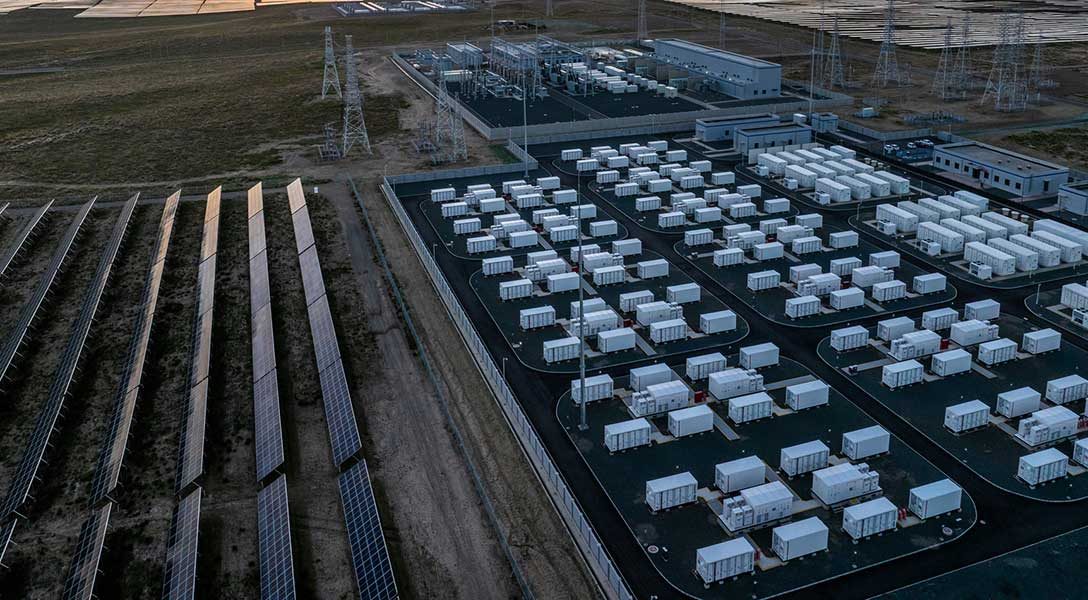
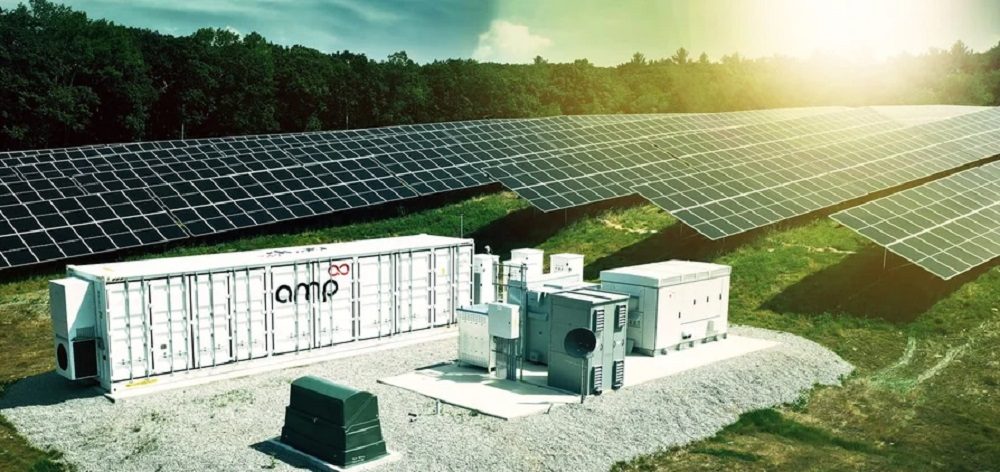
In 2017, about 2% of the new utility-scale solar capacity added in the United States shared a site with a battery. As of September, 16% of this year's additions did, and filings for 2027 and 2028 put the planned share above 30%.

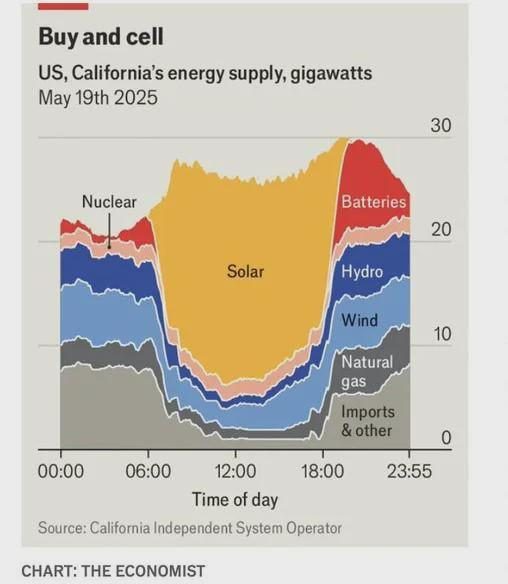
A battery lets a solar plant sell at sunset rather than noon, when wholesale prices in sunny regions fall. It also stretches the value of a single grid connection. The climb is not steady: the share hit 25% in 2023, fell over the next two years, then rebounded.

Why it matters

Batteries are becoming the default partner for new solar, changing when that electricity reaches the grid and what it earns.

Questions about this story

Free account needed to ask — your question is kept and asked for you right after sign-up. Answers are public.

No questions yet — be the first to ask.

Key Indicators

16%
Share of 2026 solar additions co-located with batteries
Measured as of September against utility-scale solar capacity added this year.
2%
Share in 2017
The starting point, when about 5 gigawatts of new solar had a battery on site.
19%
Projected 2026 year-end share
Based on plants scheduled to enter service in the fourth quarter.
30%+
Planned share for 2027 and 2028 additions
From developer plans submitted to EIA, which can change before projects are built.
18%
Share of all US utility-scale solar capacity co-located with batteries
Solar is 13% of total US utility-scale generating capacity.
436
Operating co-located plants at end of 2025
Berkeley Lab count, holding 29 gigawatts of solar and about 17 gigawatts of storage.
361 GW
Proposed solar-plus-storage in interconnection queues
Solar-plus-storage is 86% of all proposed hybrid capacity, per Berkeley Lab.

Voices

Curated perspectives — historical figures and your fellow readers.

Sign up to generate historical perspectives on this story.

Organizations Involved

Timeline

2017 October 2026

9 events Latest: October 30th, 2026 · 1 week ago
Tap a bar to jump to that date
  1. EIA reports the 16% co-location share

    Latest Report

    The agency projects 19% by year-end and above 30% for capacity planned in 2027 and 2028.

  2. SEIA tallies five years of solar and storage growth

    Data

    Texas solar generation rose 421% from 2021 to 2026; its battery capacity grew more than 26-fold.

  3. 16% of 2026 solar additions include storage

    Data

    So far this year, more than 16% of new utility-scale solar capacity is co-located with operable batteries.

  4. Queue data show hybrids dominate planned capacity

    Research

    Berkeley Lab finds solar-plus-storage is 86% of proposed hybrid capacity, about 361 gigawatts.

  5. Mexico writes batteries into solar contracts

    Policy

    CFE awarded 7,411 megawatts across 37 projects, each requiring batteries at 30% of capacity.

  6. Berkeley Lab counts 436 operating hybrids

    Research

    At the end of 2025, co-located plants held 29 gigawatts of solar and about 17 gigawatts of storage.

  7. Share slides over 2024 and 2025

    Data

    The co-located portion fell from its 2023 peak before rebounding this year.

  8. Co-location share reaches 25%

    Data

    A quarter of new solar capacity added that year was paired with batteries, per EIA's inventory.

  9. About 2% of new solar comes with a battery

    Data

    Roughly 5 gigawatts of new utility-scale solar capacity that year was co-located with battery storage.

Scenarios

1

Co-located storage tops 30% of new solar in 2027

Likely Resolves by Q1 2028

Discussed by: U.S. Energy Information Administration, extrapolating from developer plans filed for 2027 and 2028

EIA's projection rests on plans operators submitted, not on projects already built. If the plans hold, a battery becomes standard equipment on new utility-scale solar within two years, and dispatchable solar shifts from pilot projects to the default design.

2

Hybrid plans slip and the 2027 share falls below 25%

Possible Resolves by Q1 2028

Discussed by: Analysts note that planned capacity can be delayed, resized or canceled before projects enter service

The drop from 25% in 2023 to lower shares in 2024 and 2025 shows the number can move down as well as up. Interconnection studies, permitting, financing and equipment lead times could push planned hybrids past their stated dates, leaving 2027 well under EIA's projection.

3

Mexico's battery-mandated solar contracts reach commercial operation

Uncertain Resolves by End of 2028

Discussed by: Energy21 and consultant Caraiva y Asociados, which estimated the battery requirement adds up to $840 million in cost

Mexico's June contracts require batteries on 7,411 megawatts of solar across 37 projects. Energy21 reported that only 17 of the 37 had clear interconnection conditions, and that 30 of 154 planned transmission works were finished. Those bottlenecks decide whether the plants get built on schedule.

Historical Context

3 moments from history that rhyme with this story — and how they unfolded.

1997–2000s

Toyota Prius and the hybrid drivetrain (1997)

Toyota put the Prius on sale in Japan in 1997 with a gasoline engine and an electric motor driving the same wheels. The battery and motor added cost and weight to a small car.

Then

Early sales were modest and depended on fuel prices and tax treatment.

Now

Hybrid drivetrains spread across model lines until most mainstream cars offered one.

Why this matters now

Storage plays a similar role for solar: an added component that raises capital cost but changes what the core product can sell, and when.

1990s–2000s

The combined-cycle gas buildout (1990s–2000s)

Gas plants that routed turbine exhaust through a second turbine got far more electricity from the same fuel. As turbine efficiency improved and gas stayed cheap, utilities built them in large numbers.

Then

Simple-cycle combustion turbines were pushed into peaking and backup roles.

Now

Combined cycle became the backbone of U.S. gas generation, now the country's largest power source.

Why this matters now

Two technologies sharing one site and one grid connection extracted more value from the same input. Solar-plus-storage follows the same logic.

2008

Molten-salt storage at Andasol (2008)

Andasol 1, a parabolic-trough solar plant in southern Spain, opened with tanks of molten salt that held heat for hours after sunset, letting the plant keep generating into the evening.

Then

The plant could sell power into the evening peak, when solar output had fallen to zero.

Now

Thermal storage stayed expensive and limited to a few such plants; lithium-ion batteries later did the same job at falling cost.

Why this matters now

It showed that storage raises the value of solar output, and that the gain depends on how the grid prices evening power.

Sources

(4)