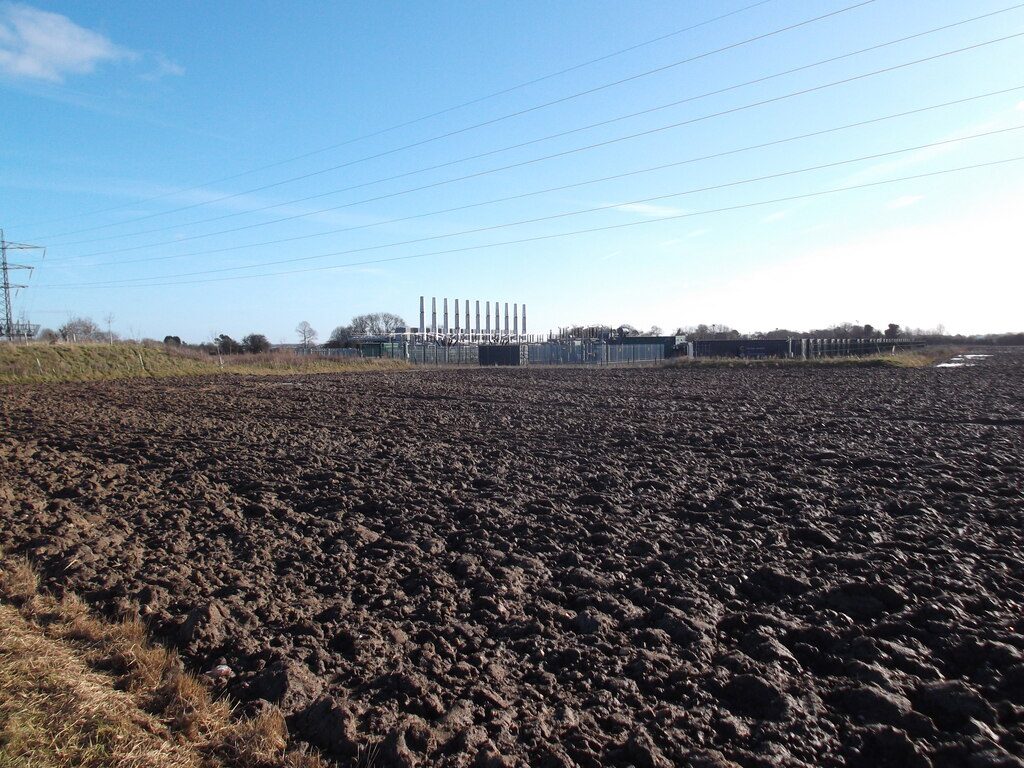
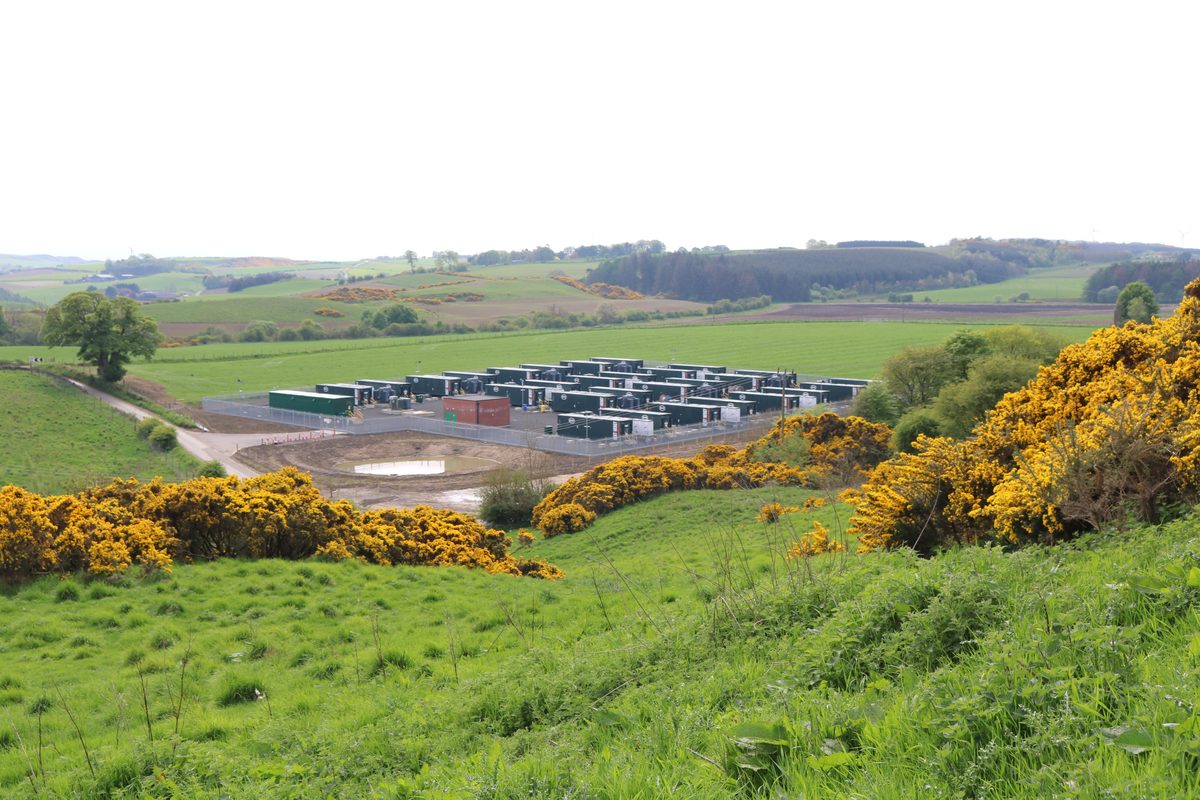
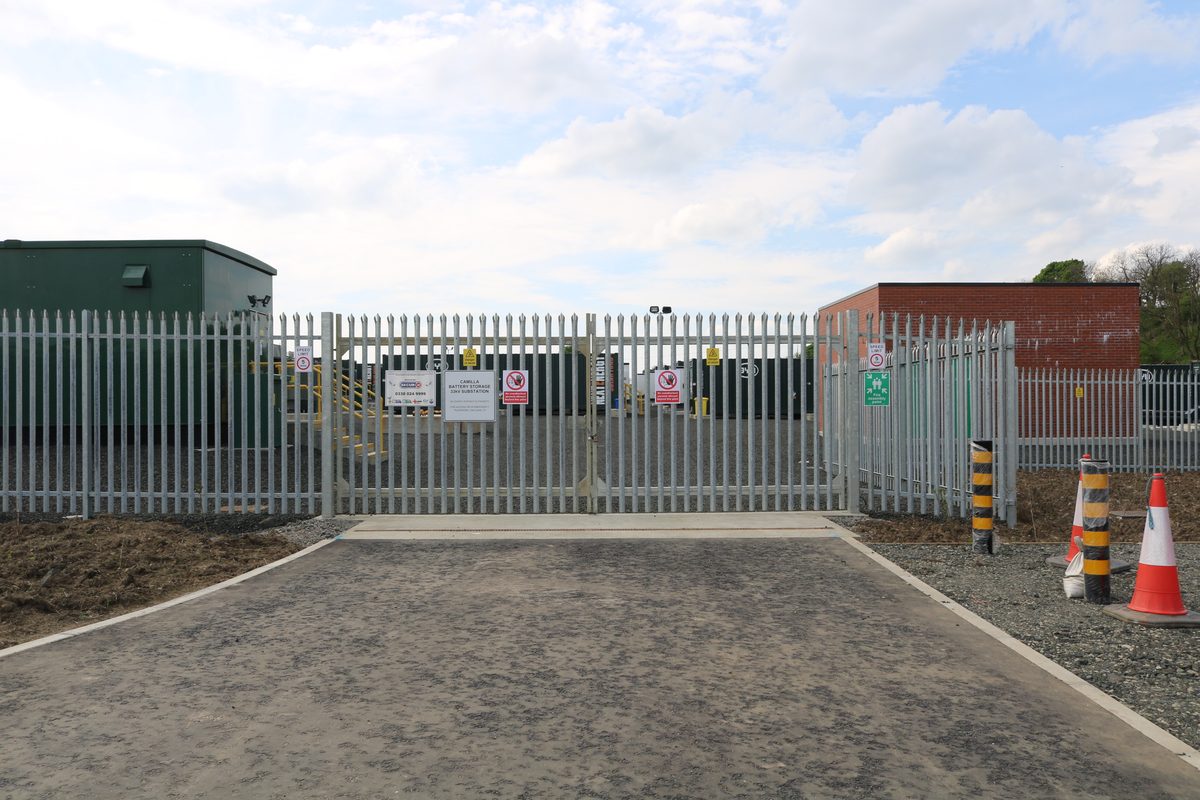
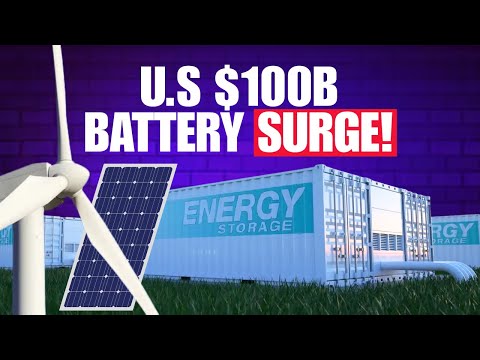
Maine had no utility-scale battery storage until Plus Power's 175-megawatt Cross Town facility in Gorham began operations on February 11, 2026. It can power 19,000 homes for two hours and store surplus wind power from northern Maine for dispatch to Boston during peak demand — the largest on the New England grid at the time.
The project reflects a national boom: U.S. battery storage installations hit a record 58 gigawatt-hours in 2025 alone, bringing cumulative utility-scale capacity to 137 GWh. Texas and California still dominate, but New England addresses winter reliability gaps from constrained natural gas pipelines. Maine's 2021 law mandating 400 megawatts by 2030 continues driving investments.
Questions about this story
Free account needed to ask — your question is kept and asked for you right after sign-up. Answers are public.
No questions yet — be the first to ask.
Key Indicators
175 MW
Cross Town Capacity
Largest battery system on the ISO New England grid when operational (Feb 2026), with 350 megawatt-hours of storage
58 GWh
U.S. Installations (2025)
Record single-year addition, 30% above 2024; cumulative utility-scale now 137 GWh
137 GWh
U.S. Cumulative Capacity (2025)
Total utility-scale battery storage after 2025 record installations
400 MW
Maine's 2030 Target
State law requires this capacity; Cross Town provides 44% of the goal
$750M
Texas Grid Savings
Cost savings from battery deployments since 2023, including during Winter Storm Heather
14 events
Latest: February 24th, 2026 · 7 months ago
Showing 8 of 14
JK to step
Tap a bar to jump to that date
Jump to
February 2026
U.S. Energy Storage Installations Hit Record 58 GWh in 2025
LatestMilestone
SEIA and Benchmark Mineral Intelligence report the largest single-year battery addition on record, a 30% increase over 2024. Cumulative utility-scale capacity reaches 137 GWh, with Texas poised to overtake California in 2026. Over 600 GWh projected by 2030.
Cross Town Becomes New England's Largest Battery
Deployment
Plus Power's 175-megawatt, 350-megawatt-hour Cross Town Energy Storage facility in Gorham, Maine begins operations, marking Maine's first utility-scale battery and the largest on the ISO New England grid.
January 2026
New England Clean Energy Connect Goes Live
Infrastructure
Central Maine Power's 145-mile transmission corridor begins delivering 1,200 megawatts of hydropower from Quebec to the New England grid, complementing battery storage's role in regional reliability.
March 2025
Plus Power Opens Cranberry Point in Massachusetts
Deployment
Plus Power's 150-megawatt, 300-megawatt-hour Cranberry Point Energy Storage facility begins operations in Carver, Massachusetts, the company's first project in New England.
January 2025
Moss Landing Fire Destroys 75% of Facility
Incident
Fire breaks out at the Moss Landing battery storage facility in California, consuming 75% of the world's largest battery plant and forcing evacuation of 1,200 residents. The incident raises questions about battery safety but does not halt industry growth.
December 2024
U.S. Battery Capacity Reaches 26 Gigawatts
Milestone
Cumulative U.S. utility-scale battery storage exceeds 26 gigawatts after a 66% increase in 2024. Texas and California account for 82% of deployments.
August 2024
Maine Wins $147 Million for Long-Duration Storage
Investment
Governor Mills announces a $147 million federal grant for a long-duration energy storage system in Lincoln, Maine, part of a $389 million regional grid innovation grant from the Bipartisan Infrastructure Law.
June 2024
Plus Power Expands Texas Portfolio
Deployment
Plus Power's Anemoi and Ebony facilities become operational in Texas, joining Rodeo Ranch as the state's largest standalone battery at 565 megawatt-hours.
January 2024
Texas Batteries Save $750 Million During Winter Storm
Performance
When Winter Storm Heather hits Texas, battery storage units generate $750 million in market savings by delivering ancillary services and freeing up natural gas generation to meet demand.
September 2023
Texas Batteries Prevent Grid Failure During Heat Wave
Performance
During record temperatures, battery storage supplies electricity to approximately 434,000 Texas homes and helps avoid grid failure. Batteries reduce energy prices by almost 50% after a price spike to $5,000 per megawatt-hour.
July 2021
Plus Power's Gambit Operational in Texas
Deployment
Plus Power's first major project begins operations in Texas, establishing the company as a leading standalone battery developer in the ERCOT market.
June 2021
Maine Sets Storage Targets
Policy
Governor Mills signs LD 528, making Maine the ninth U.S. state with codified energy storage targets: 300 megawatts by 2025 and 400 megawatts by 2030.
December 2020
Moss Landing Phase 1 Comes Online
Deployment
Vistra Energy activates a 300-megawatt battery array at Moss Landing, California, beginning what would become the world's largest battery storage facility at 750 megawatts by 2023.
December 2017
World's Largest Battery Goes Live in Australia
Milestone
Tesla and Neoen complete the 100-megawatt Hornsdale Power Reserve in South Australia, demonstrating that grid-scale batteries can stabilize grids with high renewable penetration. The project saves consumers $150 million in its first two years.
Scenarios
1
Maine Exceeds 400 MW Storage Target Ahead of Schedule
Likely
Discussed by: Maine Department of Energy Resources, Utility Dive analysis
Cross Town delivers 175 megawatts, and Maine had approximately 63 megawatts of utility-scale storage before this project. With four additional stand-alone projects totaling 215 megawatts in ISO New England's interconnection queue, Maine could reach or exceed its 400-megawatt 2030 target by 2028. The state's Department of Energy Resources is preparing another request for proposals for additional battery sites, with a draft expected within a month. Success here would position Maine as a model for other New England states.
2
Battery Storage Prevents New England Winter Grid Emergency
Possible
Discussed by: ISO New England, Form Energy white paper, regional utility analysts
New England's reliance on natural gas creates acute winter reliability risk when pipelines cannot supply both heating and electricity. ISO-NE estimates the region needs 4.5 gigawatts of storage reserves by 2030 to avoid winter outages. As battery capacity grows from projects like Cross Town and Cranberry Point, the region could avoid calling emergency procedures during a future cold snap. The first real test may come in winter 2026-2027 or 2027-2028.
3
Tariffs and Supply Chain Constraints Slow 2026-2027 Deployments
Possible
Discussed by: Wood Mackenzie, Energy Storage Association market forecasts
The U.S. utility-scale storage market is projected to shrink 11% in 2026 and 8% in 2027 as domestic manufacturing scales up and trade policies shift supply chains. Projects using Chinese components like Sungrow's PowerTitan systems could face longer lead times or higher costs. If tariffs tighten further, states like Maine that attracted early investment may see follow-on projects delayed while domestic alternatives ramp up.
4
Battery Fire Forces Regulatory Review of Utility-Scale Projects
Unlikely
Discussed by: MIT Technology Review, Utility Dive, California energy regulators
The January 2025 Moss Landing fire that destroyed 75% of the world's largest battery facility renewed scrutiny of lithium-ion safety. If a similar incident occurs at a New England facility, regulators could impose new permitting requirements, setback distances, or fire suppression standards that slow project development. The industry has recorded only 20 fire-related incidents over the past decade despite a 25,000% capacity increase, but a high-profile failure could still trigger regulatory action.
Historical Context
3 moments from history that rhyme with this story — and how they unfolded.
1 of 3
December 2017
Hornsdale Power Reserve (2017)
After a statewide blackout during 2016 storms, South Australia contracted with Tesla and Neoen to build a 100-megawatt battery in just 100 days. The Hornsdale Power Reserve became the world's largest lithium-ion battery and demonstrated that grid-scale storage could respond to frequency deviations in milliseconds rather than seconds.
Then
In its first two years, Hornsdale saved South Australian consumers over $150 million and provided 55% of the state's frequency control services while cutting those costs by 91%.
Now
Hornsdale proved the commercial viability of grid batteries worldwide, triggering a wave of investment. It was expanded to 194 megawatt-hours in 2020 and became the first battery to provide grid inertia services, enabling higher renewable penetration.
Why this matters now
Cross Town follows the model Hornsdale established: a large battery sited at a grid congestion point that stores intermittent renewable energy and provides rapid response during supply-demand mismatches. Maine's project demonstrates this approach can work in cold climates with winter reliability challenges.
2 of 3
2021-2024
Texas Battery Buildout (2021-2024)
After Winter Storm Uri caused blackouts that killed over 200 Texans in February 2021, battery developers rushed into the ERCOT market. Texas added battery capacity from under 500 megawatts in 2020 to nearly 10.7 gigawatts by end of 2024, a 4,100% increase in four years.
Then
During the September 2023 heat wave, batteries powered 434,000 homes and cut real-time prices nearly 50%. Winter Storm Heather in January 2024 saw batteries generate $750 million in savings.
Now
Texas became proof that market-driven battery deployment can rapidly improve grid reliability. Average summer ancillary service prices fell from $30-125 per megawatt-hour in 2023 to below $5 per megawatt-hour in 2024.
Why this matters now
New England faces similar reliability challenges from extreme weather but has relied on policy mandates rather than pure market incentives. Maine's storage targets and federal grants aim to replicate Texas's capacity growth in a region where natural gas constraints create winter vulnerability rather than summer.
3 of 3
January 2025
Moss Landing Fire (2025)
Fire broke out at Vistra Energy's 750-megawatt Moss Landing facility in California, the world's largest battery storage site. The blaze consumed 75% of the facility's oldest battery arrays, installed in 2020, and forced evacuation of 1,200 nearby residents due to toxic smoke concerns.
Then
California regulators and environmental agencies launched investigations. Community health monitoring expanded to test for heavy metal contamination in nearby wetlands. Vistra faced questions about fire suppression system failures.
Now
The incident did not halt industry growth but intensified focus on battery safety standards, siting requirements, and next-generation chemistries. Analysts noted the industry's overall safety record remains strong with only 20 fire incidents over a decade despite explosive capacity growth.
Why this matters now
Cross Town uses newer Sungrow PowerTitan systems with liquid cooling, addressing some thermal management concerns present in earlier battery designs. The Maine project's rural Gorham location and smaller scale also reduce population exposure compared to Moss Landing's 750-megawatt concentration.