Plants have used the same photosynthesis machinery for hundreds of millions of years, converting just 1 to 2 percent of sunlight into energy. UC Berkeley's Innovative Genomics Institute has published a method using CRISPR edits to boost photosynthesis protein output by more than 30-fold without inserting foreign DNA.
The two companion papers appeared in Nature Biotechnology on April 8, 2026. They tested over 30,000 mutations across regulatory regions of three photosynthesis genes in sorghum. The results create a precision tuning guide for crop genomes.
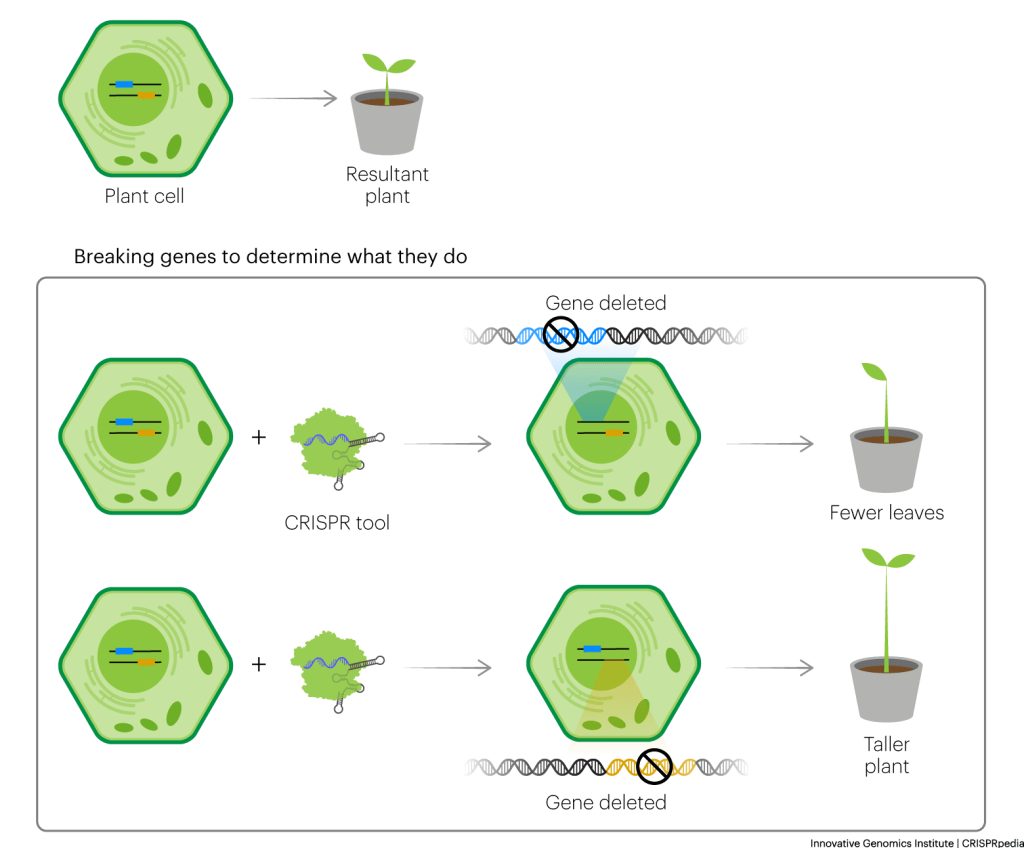
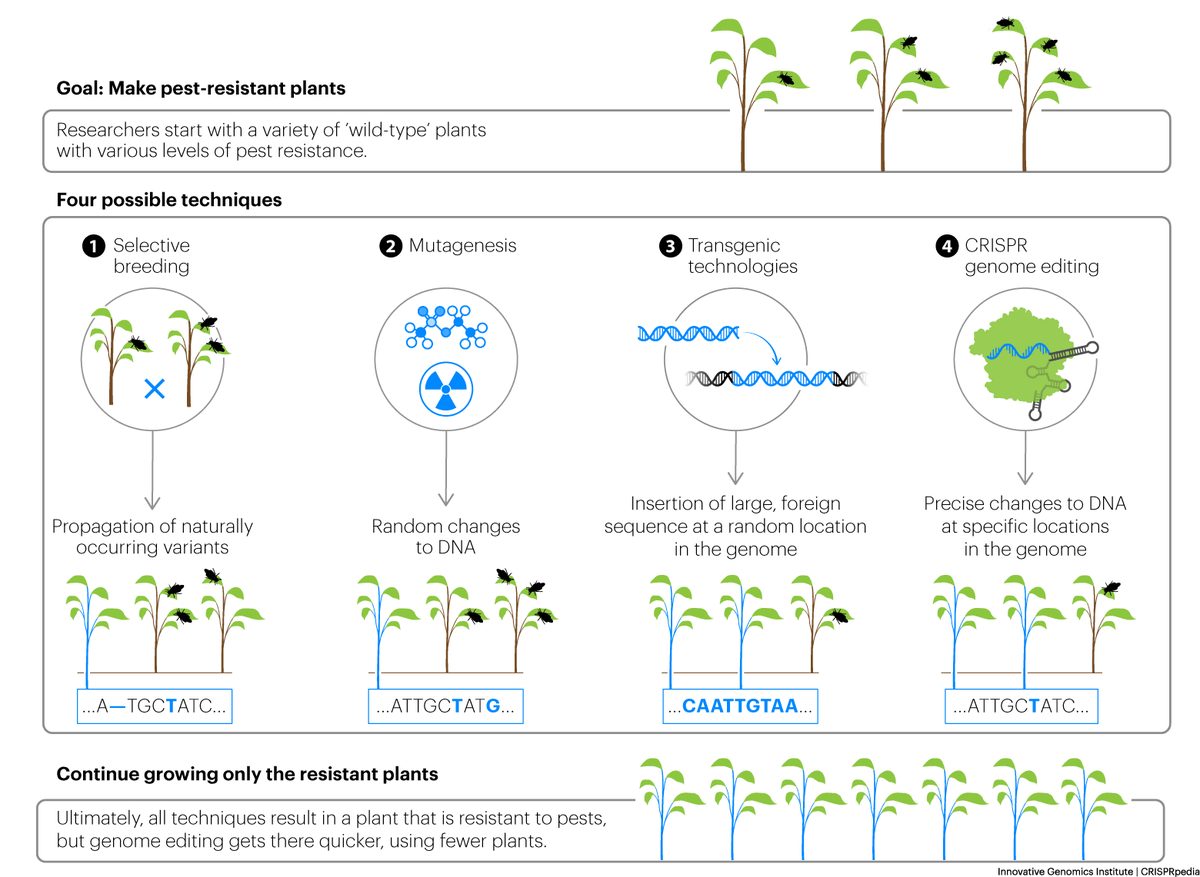
The significance is both scientific and regulatory. By editing the 'volume knobs'—promoter sequences that control how much protein a gene produces—rather than swapping in genes from other organisms, the technique sidesteps strict genetically modified organism regulations in most countries. If these lab-scale results translate to field conditions, they could open a new chapter in crop improvement: one that addresses a fundamental biological limitation the Green Revolution's breeding and conventional genetic engineering never touched.
Why it matters
Improving photosynthesis efficiency by even 10 percent in staple crops could reshape global food production as yields stagnate and population grows toward 10 billion.
Questions about this story
Free account needed to ask — your question is kept and asked for you right after sign-up. Answers are public.
Images from Openverse under Creative Commons licenses.
Videos from YouTube.
Voices
Curated perspectives — historical figures and your fellow readers.
Oscar Wilde
(1854-1900) ·Victorian · wit
Fictional AI pastiche — not real quote.
"Nature, it seems, has been a rather slovenly housekeeper for five hundred million years, squandering ninety-eight percent of the sun's generosity with all the efficiency of a gentleman poet — and now science, that most impertinent of reformers, proposes to edit not the plant itself, but merely the *emphasis* with which it speaks its own instructions. How very like the modern age: to change everything whilst appearing, on paper, to have changed nothing at all."
0% found this insightful
Ever wondered what historical figures would say about today's headlines?
Sign up to generate historical perspectives on this story.
14 events
Latest: April 8th, 2026 · 5 months ago
Showing 8 of 14
JK to step
Tap a bar to jump to that date
Jump to
April 2026
IGI publishes photosynthesis gene-tuning breakthrough in Nature Biotechnology
LatestScientific Publication
Two companion papers in Nature Biotechnology revealed that IGI researchers mapped over 30,000 CRISPR-accessible mutations across the regulatory DNA of three photosynthesis genes in sorghum, identifying edits that boost protein production by more than 30-fold without introducing foreign DNA.
January 2026
Sorghum promoter editing preprint posted to bioRxiv
Scientific Publication
The Berkeley team posted a preprint titled "Architecting cis-regulation to quantitatively tune gene expression in cereals" to bioRxiv, previewing the sorghum CRISPR promoter mapping methodology.
2025
RIPE proves multigene photosynthesis engineering works in food crop field trials
Scientific Milestone
For the first time, the RIPE project demonstrated that simultaneously engineering multiple photosynthesis genes increased yield in soybean field trials without reducing crop quality.
June 2024
Niyogi lab publishes rice PsbS promoter editing proof of concept
Scientific Publication
Krishna Niyogi's group published a study in Science Advances showing that multiplexed CRISPR-Cas9 editing of rice PsbS1 noncoding sequences could achieve transgene-free overexpression of the photoprotection protein — a precursor to the sorghum-scale work.
2023
UK passes law deregulating precision-bred crops
Regulatory
The United Kingdom enacted the Genetic Technology (Precision Breeding) Act, exempting gene-edited organisms from genetically modified organism regulations if the edits could have occurred through conventional breeding.
June 2022
Chan Zuckerberg Initiative funds IGI crop carbon capture research
Funding
IGI received $11 million from the Chan Zuckerberg Initiative to develop CRISPR-based approaches for improving carbon capture in crops, supporting the photosynthesis research program.
2022
RIPE demonstrates ~20% soybean yield gain through photosynthesis tuning
Scientific Publication
The RIPE project published results showing that engineering faster recovery from photoprotection increased soybean yield by approximately 20 percent in field trials.
2021
Japan approves first CRISPR-edited food for sale
Regulatory
Japan approved a CRISPR-edited tomato with increased gamma-aminobutyric acid content, becoming one of the first countries to allow a gene-edited food product to reach consumers.
October 2020
Doudna and Charpentier win Nobel Prize for CRISPR
Recognition
The Royal Swedish Academy of Sciences awarded the Nobel Prize in Chemistry to Jennifer Doudna and Emmanuelle Charpentier for developing CRISPR-Cas9 genome editing.
January 2019
RIPE project achieves 40% biomass increase in field trial
Scientific Publication
Researchers published in Science that engineering a synthetic photorespiratory bypass in tobacco increased biomass by approximately 40 percent in field conditions — the first major proof that redesigning photosynthesis could boost crop productivity.
2016
USDA declines to regulate CRISPR-edited mushroom
Regulatory
The United States Department of Agriculture determined that a non-browning mushroom edited with CRISPR did not require regulation as a genetically modified organism, setting a key precedent for gene-edited crops.
2014
Innovative Genomics Institute founded at UC Berkeley
Institutional
Jennifer Doudna established IGI to translate CRISPR into practical applications in medicine, agriculture, and climate.
2013
First CRISPR edits achieved in plant cells
Scientific Milestone
Multiple laboratories independently demonstrated CRISPR-Cas9 gene editing in rice, wheat, tobacco, and the model plant Arabidopsis.
June 2012
CRISPR-Cas9 published as programmable gene editing tool
Scientific Publication
Jennifer Doudna and Emmanuelle Charpentier published their landmark Science paper demonstrating that CRISPR-Cas9 could be programmed to cut DNA at specific locations, launching the gene editing revolution.
Historical Context
3 moments from history that rhyme with this story — and how they unfolded.
1 of 3
1996-2005
Introduction of transgenic crops (1996-2000s)
Monsanto launched Roundup Ready soybeans and Bt corn in 1996, the first widely planted genetically modified crops. By 2019, farmers worldwide planted 190 million hectares of transgenic crops. The technology delivered real benefits — reduced insecticide use, simplified weed management — but also triggered intense public opposition, especially in Europe.
Then
Rapid adoption in the Americas, India, and China. The European Union effectively banned cultivation of most transgenic crops. Anti-GMO campaigns shaped public perception for decades.
Now
Transgenic crops became the dominant agricultural biotechnology but remained confined to a handful of traits (herbicide tolerance, insect resistance) in a handful of crops. The regulatory and public-acceptance barriers proved as significant as the scientific challenges.
Why this matters now
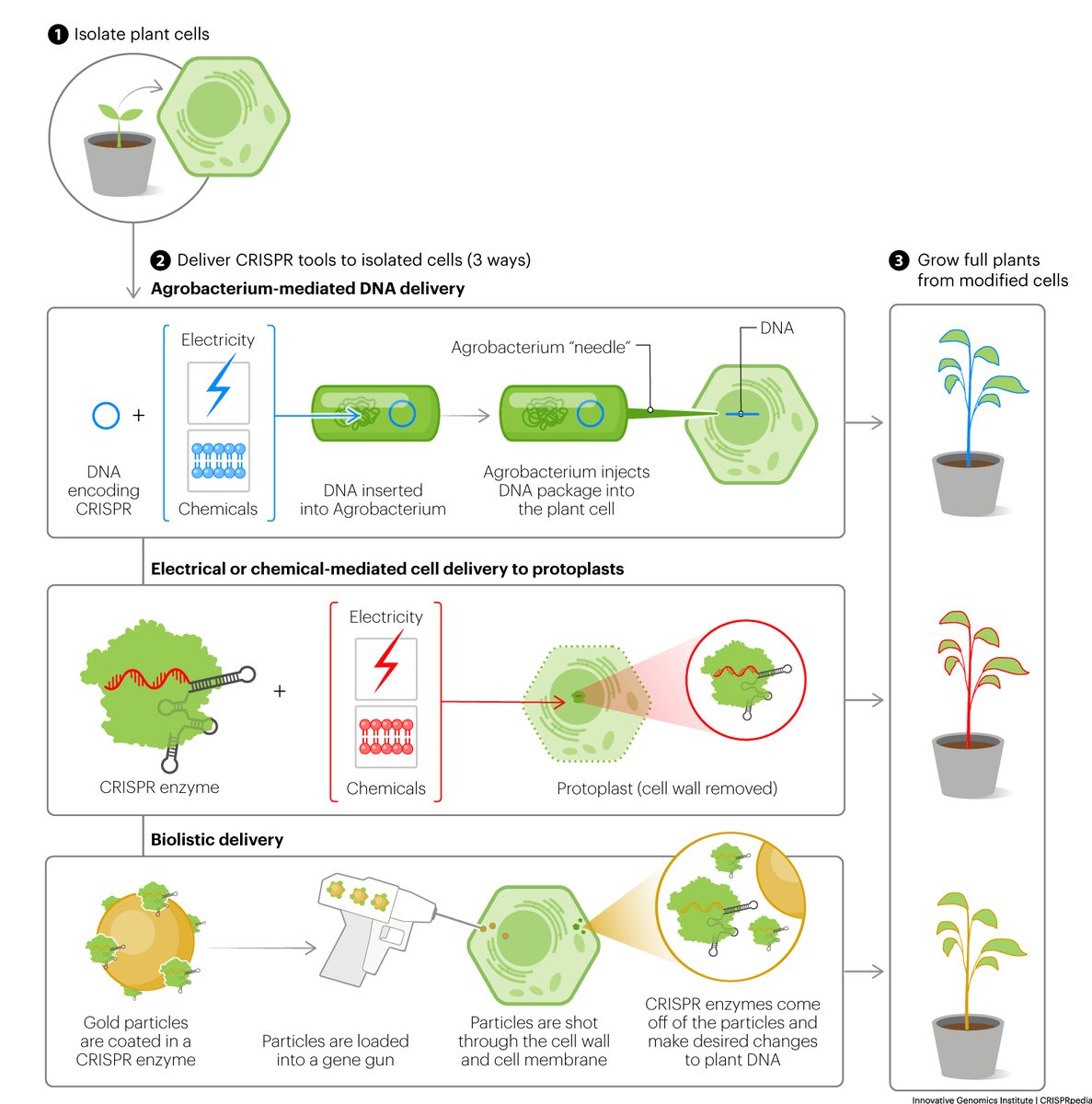
The IGI approach deliberately avoids the feature that made transgenic crops controversial: inserting foreign DNA. By editing the crop's own regulatory sequences, the technique is classified as non-transgenic in most jurisdictions, potentially avoiding the decades-long public backlash and regulatory deadlock that limited the reach of the first generation of genetically modified crops.
2 of 3
January 2019
RIPE Project photorespiratory bypass (2019)
Paul South and colleagues at the RIPE project published in Science that engineering a synthetic shortcut around the wasteful photorespiratory pathway increased tobacco biomass by approximately 40 percent in field trials — the first proof that redesigning photosynthesis could substantially boost crop productivity under real growing conditions.
Then
The result energized the field and attracted significant new investment. The RIPE team began translating the approach from model plants into food crops including soybeans and cowpeas.
Now
By 2025, RIPE had demonstrated that multigene photosynthesis engineering increased soybean yields in field trials. The result established that photosynthesis improvement is not just theoretically possible but agronomically meaningful.
Why this matters now
The RIPE result proved that better photosynthesis leads to bigger harvests. The IGI study provides a complementary tool — a way to achieve similar protein expression changes without transgenic insertion, potentially making these improvements accessible in more crops and regulatory environments.
3 of 3
1960s-1980s
The Green Revolution (1960s-1980s)
American agronomist Norman Borlaug developed semi-dwarf wheat varieties with shorter stems that could support heavier grain heads when treated with fertilizer. Combined with irrigation and synthetic fertilizers, these varieties tripled Mexico's wheat production by the 1960s and nearly doubled wheat yields in India and Pakistan between 1965 and 1970.
Then
Borlaug won the 1970 Nobel Peace Prize. India went from dependence on food imports to self-sufficiency. Global cereal production grew by over 150 percent between 1950 and 1992.
Now
The Green Revolution is credited with saving over a billion lives from famine, but it relied on high external inputs — fertilizer, irrigation, pesticides — that caused environmental damage and favored large-scale farmers over smallholders.
Why this matters now
The Green Revolution improved crops by optimizing plant architecture and nutrient responsiveness, but never touched photosynthesis efficiency itself. The IGI breakthrough targets the one biological constraint that Borlaug's approach left in place — opening a genuinely new frontier rather than extending an existing one.