
Pull to refresh
Logo
Dallas schedules public hearing on housing finance corporation's tax-exempt bonds

Dallas schedules public hearing on housing finance corporation's tax-exempt bonds

Money Moves Dallas, TX local

Federal tax law requires elected officials to approve private activity bonds after residents can speak. The December 9 notice names no dollar amount.

Overview

Updated 4 minutes ago

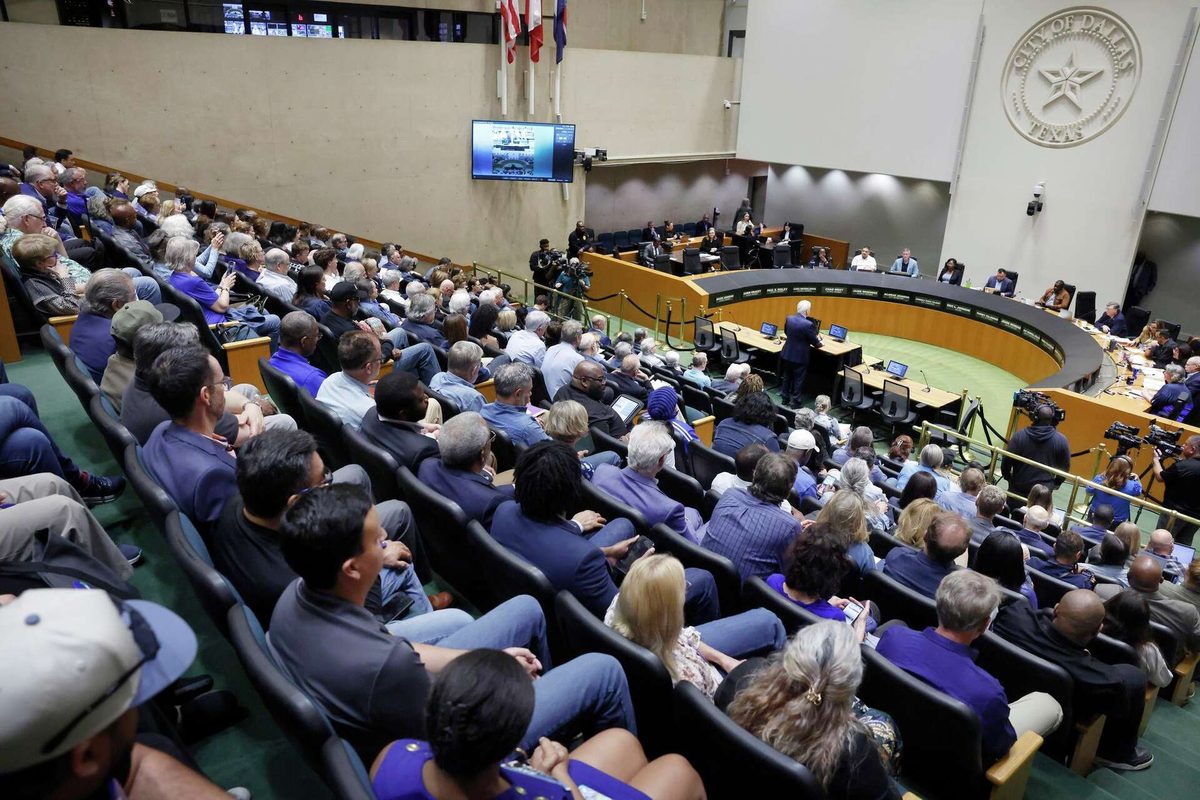
Dallas has noticed a public hearing for December 9 on whether the City Council will approve tax-exempt mortgage revenue bonds issued by the Dallas Housing Finance Corporation. Residents can speak before the council acts. The item appears in the council's published agenda dated November 23.

The hearing is not a Dallas invention. Federal tax law denies tax-exempt status to private activity bonds unless the elected officials of the relevant government approve them after a public hearing. Congress created that requirement in 1982 and codified it as Section 147(f) of the Internal Revenue Code in 1986. For multifamily housing bonds, this approval is normally the last public checkpoint before a project's financing closes.

What the December 9 item does not say is how much. The published text authorizes bonds "in one or more series" but carries no dollar figure and names no development. Agenda items are routinely deferred, withdrawn or moved, so the hearing may not take place as noticed.

Why it matters

This hearing is the only formal public checkpoint before Dallas signs off on tax-exempt apartment financing whose size the notice does not state.

Last Monday's email for Dallas, TX

Sent Nov 16. It carried:

Get next Monday's: one short email a week. Free. Unsubscribe in one click.

Questions about this story

Free account needed to ask — your question is kept and asked for you right after sign-up. Answers are public.

No questions yet — be the first to ask.

Key Indicators

1982
Year Congress required public hearings for private activity bonds
The Tax Equity and Fiscal Responsibility Act of 1982 attached a public approval requirement to tax-exempt private activity bond issuance.
1986
Year the approval rule was codified as Section 147(f)
The Tax Reform Act of 1986 rewrote private activity bond rules and put the elected-representative approval in Section 147(f).
1
Public hearing on the item
Scheduled for the council's December 9, 2026 meeting.

Voices

Curated perspectives — historical figures and your fellow readers.

Sign up to generate historical perspectives on this story.

Organizations Involved

Timeline

September 1982 December 2026

4 events Latest: Today
Tap a bar to jump to that date
  1. Public hearing scheduled on bond approval

    Upcoming Hearing

    Residents can speak before the council decides whether to approve the issuance.

  2. Agenda publishes December 9 bond hearing

    Today Notice

    The council's published agenda lists a public hearing on approving Dallas Housing Finance Corporation multifamily bonds.

  3. Approval rule codified as Section 147(f)

    Legislation

    The Tax Reform Act of 1986 rewrote private activity bond rules and placed the elected-representative approval in the tax code.

  4. Congress requires public approval for private activity bonds

    Legislation

    The Tax Equity and Fiscal Responsibility Act imposed a public hearing and elected-official approval step on tax-exempt private activity bonds.

Scenarios

1

Dallas council approves the bonds after the December 9 hearing

Likely Resolves by Jan 31, 2027

Discussed by: The published agenda, which frames the hearing as a step toward approval

The most common path. The hearing is held, a handful of residents speak or none do, and the council votes to approve the issuance as the applicable elected representative. Because the item's stated purpose is to authorize approval, this is what the agenda is built for. The bond amount would then become public through the issuer's subsequent filings.

2

Hearing held, item deferred without a vote

Possible Resolves by Q1 2027

Discussed by: The agenda's own caveat that items are regularly deferred, withdrawn or moved

Deferral is routine in Dallas council practice. The item could be held down at the December 9 meeting, sent back to committee, or carried to a later agenda while the issuer and city negotiate terms. A deferral would not kill the financing but would push the approval past the noticed date and leave the public record without a decision.

3

Item pulled before the hearing and never heard

Unlikely Resolves by Dec 9, 2026

Discussed by: No public indication; included because agenda items can be withdrawn

The issuer could pull the item if the underlying project financing falls apart or the bond amount changes enough to require re-noticing. In that case the December 9 hearing would not occur and the public record would show a withdrawal rather than a decision. Nothing in the published agenda suggests this is in motion.

Historical Context

3 moments from history that rhyme with this story — and how they unfolded.

September 1982

Tax Equity and Fiscal Responsibility Act (1982)

Congress passed a broad deficit-reduction law that, among many other provisions, restricted tax-exempt private activity bonds. Lawmakers were reacting to years of complaints that local issuers could borrow at tax-exempt rates for private projects with little public scrutiny. The law required a public hearing and approval by elected officials before such bonds could be issued.

Then

Local governments and housing finance agencies had to add a noticed hearing and an elected-body vote to their bond closings.

Now

The approval step became a permanent feature of the municipal bond process and survives, in amended form, in the current tax code.

Why this matters now

The December 9 Dallas hearing exists because of this requirement. It is the procedural descendant of a 1982 anti-abuse rule.

October 1986

Tax Reform Act of 1986

Congress rewrote the rules for tax-exempt bonds, creating the modern private activity bond category, capping how much each state could issue, and placing the elected-representative approval in Section 147(f). Multifamily housing bonds were kept as a permitted use under the new volume cap.

Then

State and local issuers had to track annual volume cap allocations and document public approval for each bond series.

Now

Section 147(f) remains the operative rule cited in Dallas's agenda item four decades later.

Why this matters now

The agenda item quotes Section 147(f)(2)(E) directly. That citation is the 1986 law still doing its work.

October 1986

Low-Income Housing Tax Credit created (1986)

The same 1986 law created the Low-Income Housing Tax Credit, a federal credit allocated to states for affordable rental construction. A separate, smaller version of the credit, commonly called the 4% credit, requires that a project be substantially financed with tax-exempt bonds.

Then

Developers began pairing tax-exempt multifamily bonds with the 4% credit to finance affordable apartments.

Now

The pairing became the standard structure for bond-financed affordable housing, which is why housing finance corporations issue these bonds at all.

Why this matters now

If the Dallas bonds are paired with 4% credits, the council's approval is not just a tax formality. It is the gate that lets the project claim the credit.

Sources

(1)