
Pull to refresh
Logo
Dallas raises no objection to tax-credit bid for 360-unit affordable housing project

Dallas raises no objection to tax-credit bid for 360-unit affordable housing project

Built World Dallas, TX local

Council approved the tax-credit bid Sept. 9; state housing agency to decide later this year

September 9th, 2026: Public hearing on tax credit application

Overview

Updated Oct 18

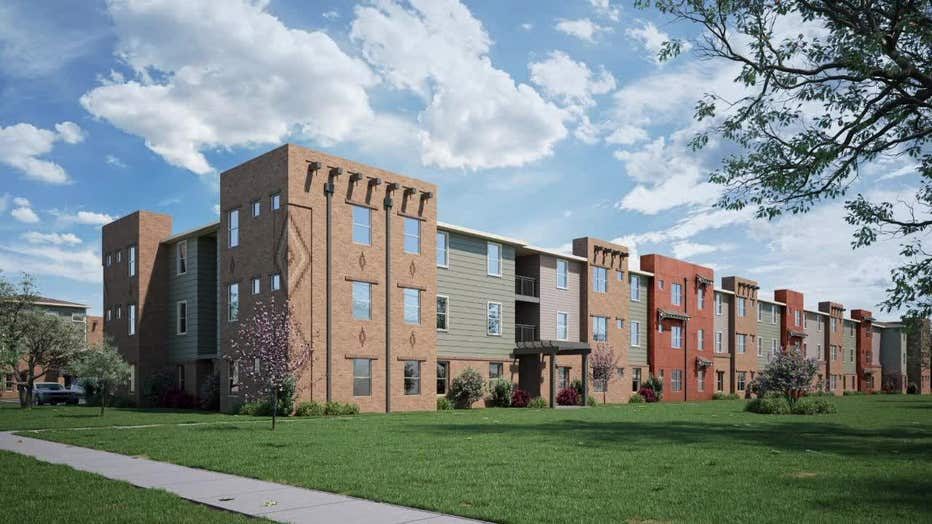
The Dallas City Council voted Sept. 9 to support the West Davis Family Apartments, a 360-unit affordable housing project on the former Mount Carmel campus at 4600 West Davis Street. The resolution of no objection backs the developer's application for 4% low-income housing tax credits from the Texas Department of Housing and Community Affairs.

All 360 units would rent to households earning at or below 60% of the Dallas area's median income. A 280-unit senior building is planned on the same campus, and the council approved its tax-credit bid the same day. The state agency decides on both applications later this year.

Why it matters

The council backed the tax-credit bid. If the state awards the credits, 360 families get homes; if not, the project may stall.

Monday: what changed in Dallas, TX

One short email a week with the openings, closings, permits and council votes we covered. Free. Unsubscribe in one click.

Questions about this story

Free account needed to ask — your question is kept and asked for you right after sign-up. Answers are public.

No questions yet — be the first to ask.

Key Indicators

360
Proposed housing units
West Davis Family Apartments would add 360 units for low-income residents.
4%
LIHTC rate requested
Application seeks non-competitive 4% Low Income Housing Tax Credits from TDHCA.
Sept 9, 2026
Council approval date
City Council approved the resolution of no objection for the tax credit application.

Voices

Curated perspectives — historical figures and your fellow readers.

Ever wondered what historical figures would say about today's headlines?

Sign up to generate historical perspectives on this story.

Organizations Involved

Timeline

3 events Latest: September 9th, 2026 · 2 months ago
  1. Public hearing on tax credit application

    Latest Hearing

    City Council receives comments on Dallas Leased Housing Associates XIII, LP's application for 4% LIHTC for West Davis Family Apartments.

  2. City Council approves resolution of no objection

    Government action

    After a public hearing, the Dallas City Council approved the resolution of no objection backing the 4% low-income housing tax credit application for the 360-unit West Davis Family Apartments.

  3. City Council agenda published

    Public notice

    Agenda lists public hearing for Sept. 9 on West Davis Family Apartments LIHTC application.

Scenarios

1

Council supports, TDHCA awards credits, project builds

Likely Resolves by End of 2026

Discussed by: Developers and housing advocates

After the hearing, the council passes a resolution of support. TDHCA sees local backing and awards the 4% non-competitive credits. Construction begins within a year, adding 360 affordable units to Dallas's inventory.

2

Council opposition or silence derails application

Unlikely Resolves by End of 2026

Discussed by: Community groups, affordable housing critics

Residents voice strong opposition at the hearing, and the council withholds a resolution of support. Without a local signal, TDHCA may deprioritize the application or reject it, forcing the developer to reapply next year or abandon the project.

3

Council approves with conditions, project revised

Possible Resolves by Q2 2027

Discussed by: City staff, moderate council members

The hearing surfaces moderate concerns about density or traffic. The council passes a resolution of support conditioned on the developer reducing unit count or adding amenities. TDHCA accepts the revised plan, and credits are awarded with modifications.

4

State awards credits, construction moves forward

Likely Resolves by End of 2026

Discussed by: Developers and housing advocates

With the council's resolution of no objection in hand, Dallas Leased Housing Associates XIII waits on TDHCA's decision on the 4% non-competitive credits. An award would fund the 360 family units and, separately, the 280-unit West Davis Senior building on the same campus.

5

State passes over the application, developer reapplies

Possible Resolves by End of 2026

Discussed by: Community groups tracking the project

If TDHCA passes over the application, the developer could revise and resubmit in the next annual cycle. The application notes the project sits within a mile of another affordable development that received credits in the prior three years, a factor TDHCA weighs.

Historical Context

2 moments from history that rhyme with this story — and how they unfolded.

October 1986

Low Income Housing Tax Credit creation (1986)

Congress created the Low Income Housing Tax Credit as part of the Tax Reform Act of 1986, giving states a federal incentive to spur affordable housing development. Developers receive tax credits over 10 years, which they sell to investors for upfront equity.

Then

Dozens of affordable projects launched across the country, funded by private capital attracted by the credits.

Now

LIHTC became the primary federal tool for producing and preserving affordable rental housing, funding nearly 3 million homes by 2020.

Why this matters now

West Davis Family Apartments relies on this same mechanism—the 4% non-competitive credit—to make its 360 units financially viable.

December 2017

2017 Tax Cuts and Jobs Act impact on LIHTC

The TCJA reduced corporate tax rates, which lowered the value of tax credits to investors. It also introduced a new 4% minimum floor for certain credits, helping some projects but capping others.

Then

LIHTC equity prices fell, forcing many developers to scale back or restructure projects to remain feasible.

Now

States adapted by adjusting allocation formulas and using new financing tools like tax-exempt bonds to keep projects alive.

Why this matters now

The hearing on West Davis occurs under this post-2017 environment, where credit pricing and local support matter more than ever for a 360-unit project's bottom line.

Sources

(6)